




 135
/ 7 MIN READ
135
/ 7 MIN READ

This is rightly said to be India’s coming decade of outperformance. Besides its technology and budding manufacturing prowess, India is at a demographic advantage. Its workforce will soon surpass one billion people, making it the largest working-age population in the world. This advantage, coupled with rising education levels, holds enormous potential for India's economic and social progress and India must adopt an unconventional approach that goes beyond relying on job creation by public and private sectors. Embracing entrepreneurship as a possible option for women is an underutilized opportunity that can have a multiplier effect on economic and social outcomes.
Empowering women, unlocking future
Despite significant advancements in education, it is undeniable that women still encounter formidable structural, social, and economic obstacles in accessing employment, engaging in the workforce, and pursuing entrepreneurship. Industry estimates tell the same story— the number of women-owned enterprises in India ranges between 13.5–15.7 million, representing 20 percent of all enterprises. There is little doubt that providing a level playing field for women entrepreneurs can be a game changer for individuals, societies, and economies alike.
For starters, entrepreneurship presents a transformative opportunity for women to take on a central rather than peripheral role in the economy.
Women entrepreneurs are more inclined to hire other women and are less susceptible to gender-based stereotypes. In fact, promoting women's entrepreneurship can lead to positive outcomes, due to their community-focused outlook on running businesses. Additionally, women's entrepreneurship enables more women to attain greater financial independence, autonomy, and control and can lead to higher rates of women staying in the workforce. The key to unlocking India's development trajectory lies in ironing out any roadblocks in realizing the potential of the largely unaddressed women entrepreneurs.
Leapfrogging to success with technology
As we course correct, a closer look reveals the need for a multifaceted push to improve women’s involvement in starting businesses. Besides focussed interventions on skill development, driving financial awareness and funding, access to role models and mentors, and providing the right infrastructure to run scalable businesses can support growth. The adoption of technology, particularly online selling, has created a realm of possibilities for women entrepreneurs, enabling them to initiate and expand their businesses in unprecedented ways. It has also provided an expansive online customer base, especially for those women entrepreneurs with limited mobility.
E-commerce has helped women entrepreneurs navigate cultural and social challenges, keeping them from giving up on their ambitions. E-commerce offers substantial advantages in terms of flexibility, especially for women who bear caregiving responsibilities or reside in areas with scarce job prospects. By leveraging e-commerce, women can launch and operate a thriving enterprise from the comfort of their homes. This allows them to work from any location, granting them greater autonomy over their work schedules and facilitating a better work-life balance.
Furthermore, by maintaining an online presence, women-led businesses can operate round the clock, even when owners are unavailable physically. This, in turn, empowers women to commence and conduct business operations on their own terms, utilizing the internet to attain financial independence and self-sufficiency. Finally, with the online marketplace, women can sell their products to customers all over the country, without having to worry about ancillary needs like building distribution networks, managing logistics, and receiving payments.
A new dawn is upon us
As e-commerce continues to break down barriers and empower women in the world of business, more and more such businesses are emerging from every nook and corner of the country.
Today, women entrepreneurs are pioneering new markets and more gender-responsive innovations. A case in point is Himalayan Origins, a company based in Dehradun that offers a range of skincare and hair care products. Co-founders Soumya and Neha Parmar started this business to provide consumers with products that support sustainable living. Today, a loyal customer base purchases their products- from the home state Uttarakhand, all the way to Andaman and Nicobar.
These journeys illustrate how e-commerce has leveled the playing field for women entrepreneurs in India, allowing them to showcase their talent, creativity, and hard work on a national stage. With technology and e-commerce, there's no limit to what women entrepreneurs can achieve, and the impact they can create.


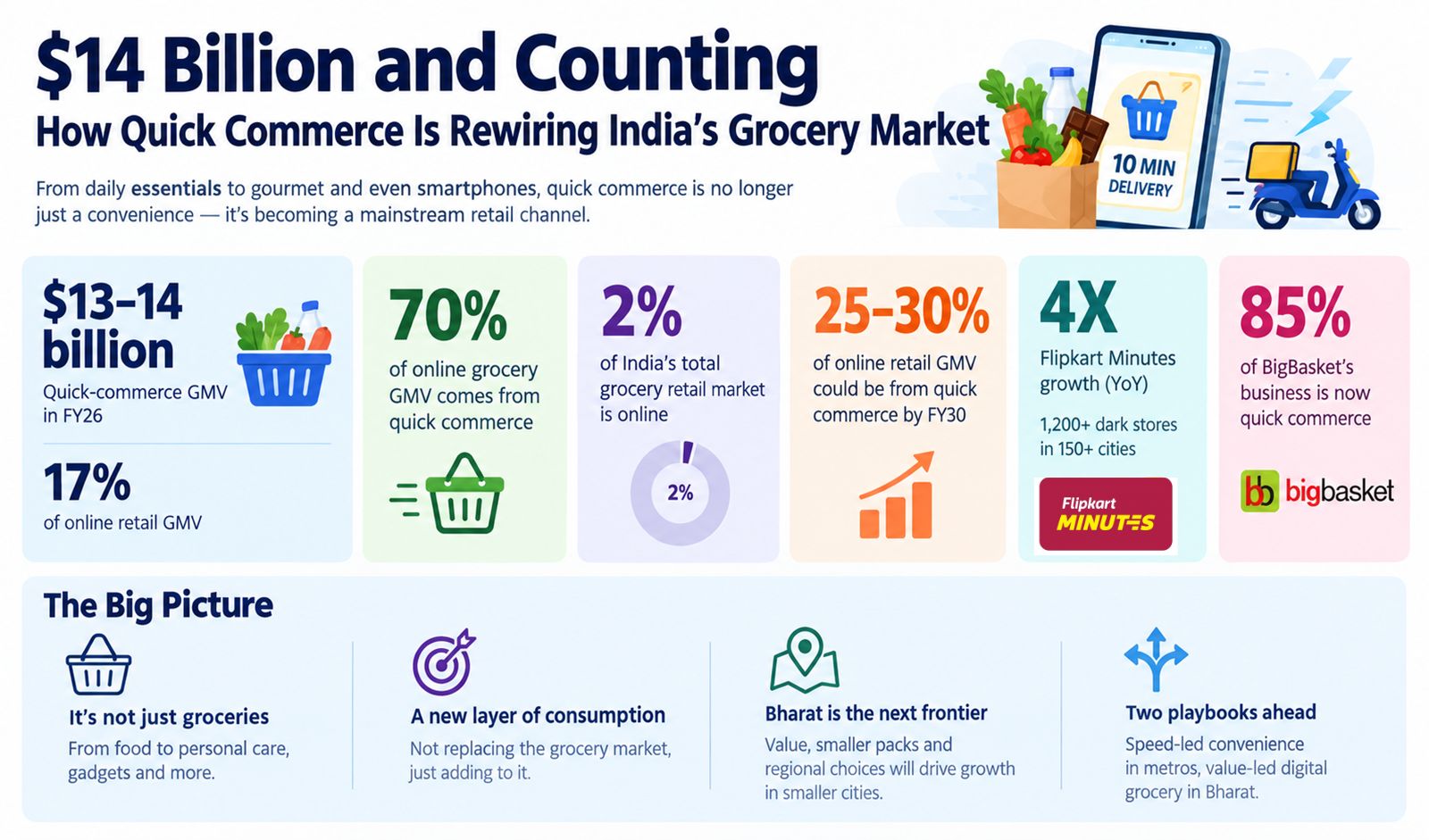
From milk and vegetables to chocolates, ready-to-cook meals, gourmet foods and even smartphones, quick commerce is moving from a convenience proposition to a mainstream retail channel — forcing food, grocery and FMCG companies to rethink assortment, pricing, packaging and distribution.
For years, India's online grocery story was built around planned shopping. Today, the grocery basket is increasingly being built around intent rather than planning — a missing ingredient at breakfast, a chocolate late at night, a protein drink after a workout, dosa batter that runs out unexpectedly, or a last-minute festival purchase.
India's quick-commerce GMV reached roughly $13-14 billion in FY26, accounting for about 17 percent of online retail GMV, while the channel commands around 70 percent of online grocery GMV. Yet online grocery itself remains only around 2 percent of India's total grocery retail market, highlighting the headroom that remains.
Redseer estimated that quick commerce could represent 25-30 percent of online retail GMV by FY30. The implication is significant: quick commerce is not replacing India's grocery market overnight. It is creating a new layer of consumption on top of it.
From Convenience Channel to Mainstream Retail
The strongest evidence of this shift is coming from the platforms themselves.
Flipkart Minutes, which launched in August 2024, said it has grown 4X year-on-year, reaching nearly 1,200 micro-fulfilment centres across more than 150 cities by September 2026. Around 60 percent of customers return to shop on the platform, according to Flipkart.
The company had already crossed 1,000 micro-fulfilment centres across 130-plus cities and 8,000-plus pin codes by June, illustrating how rapidly the network has expanded in less than two years.
But the more important change is happening inside the basket. Flipkart stated its Tier II-plus customer base has grown nearly 25X year-on-year, while its Gen Z customer base has grown nearly 5X. Gourmet and specialty grocery has grown 8X, men's grooming nearly 6X, and pet food 5X year-on-year.
Kunal Gupta, Senior Vice President and Head of Flipkart Minutes, says the platform is consequently becoming more than a daily-essentials proposition. “In two years, Flipkart Minutes has evolved from a convenience offering into a broader shopping channel, with customers using it for much more than their daily essentials.”
BigBasket's Bet: Make Quick Commerce the Default
Few companies illustrate the structural shift better than Bigbasket. The Tata-owned grocery player made a decisive move in late 2024 when it decided to shift its business towards quick commerce, merging its scheduled-delivery and quick-commerce entry points and expanding its dark-store infrastructure. The move represented a major change in the company's operating model.
“Before 2025, around 60-70 percent of our business was slotted delivery, and only 30–40 percent was Q-commerce,” said Seshu Kumar Tirumala, Chief Operating Officer, BigBasket.
The company subsequently opened around 800 dark stores, giving nearly 90 percent of its original customers access to quick commerce, with an assortment of around 20,000-25,000 products delivered in 10-15 minutes. According to Tirumala, the business has subsequently been growing 5-10 percent month-on-month for the past 12 months.
Most strikingly, quick commerce now accounts for around 85 percent of BigBasket's business, compared with virtually nothing when the company began the transition.
Food Companies are Redesigning for the 10-Minute Basket
Redseer estimated India's packaged food and beverage market at more than $100 billion, with the market expected to reach approximately $150 billion by 2030. Its research estimated that quick-commerce GMV within packaged F&B could rise from around $4 billion today to more than $25 billion by 2030.
The channel is already gaining meaningful share in individual categories. The research points to more than 20 percent of batter sales coming through quick commerce. Frozen ready-to-cook food on the channel is estimated at around $375 million, while chilled categories such as batter are around $400 million.
Mrigank Gutgutia, Partner at Redseer Strategy Consultants, describes this as a shift from distribution to demand creation. “Quick commerce is emerging as a structural force in the packaged food and beverages market, driven by its ability to capture demand at the point of intent.”
The implication, he said, extends beyond distribution. “What was once seen primarily as a distribution channel is now starting to shape category strategy, innovation priorities, and investment decisions across the ecosystem.”
The Next Battleground is Bharat
Despite the extraordinary growth, India's quick-commerce story is still heavily urban. Roughly 70-75 percent of quick-commerce GMV is concentrated in the top eight metros.
That creates the industry's biggest opportunity — and one of its biggest questions. Can the economics of dark stores, riders and 10-minute delivery work at India's smaller-city scale?
The early signals are mixed but increasingly interesting. Flipkart said its Tier II-plus customer base on Minutes grew nearly 25X year-on-year, with cities such as Ambala, Barabanki, Bhagalpur, Durgapur, Kanpur, Roorkee, Siliguri, Salem and Tiruppur seeing strong growth.
BigBasket, meanwhile, said it sees broadly similar demand patterns across metros and Tier I, II and III markets, although serving Tier III markets is operationally more difficult.
But Redseer offered an important counterpoint: the next wave of grocery digitization in Bharat may not necessarily be won through speed. It said more than 90 percent of India's grocery market remains with kiranas, while Bharat consumers tend to prioritize value, smaller packs, regional assortment, and affordability.
That means the industry's next phase may split into two distinct models: speed-led convenience in urban markets and value-led digital grocery in Bharat.
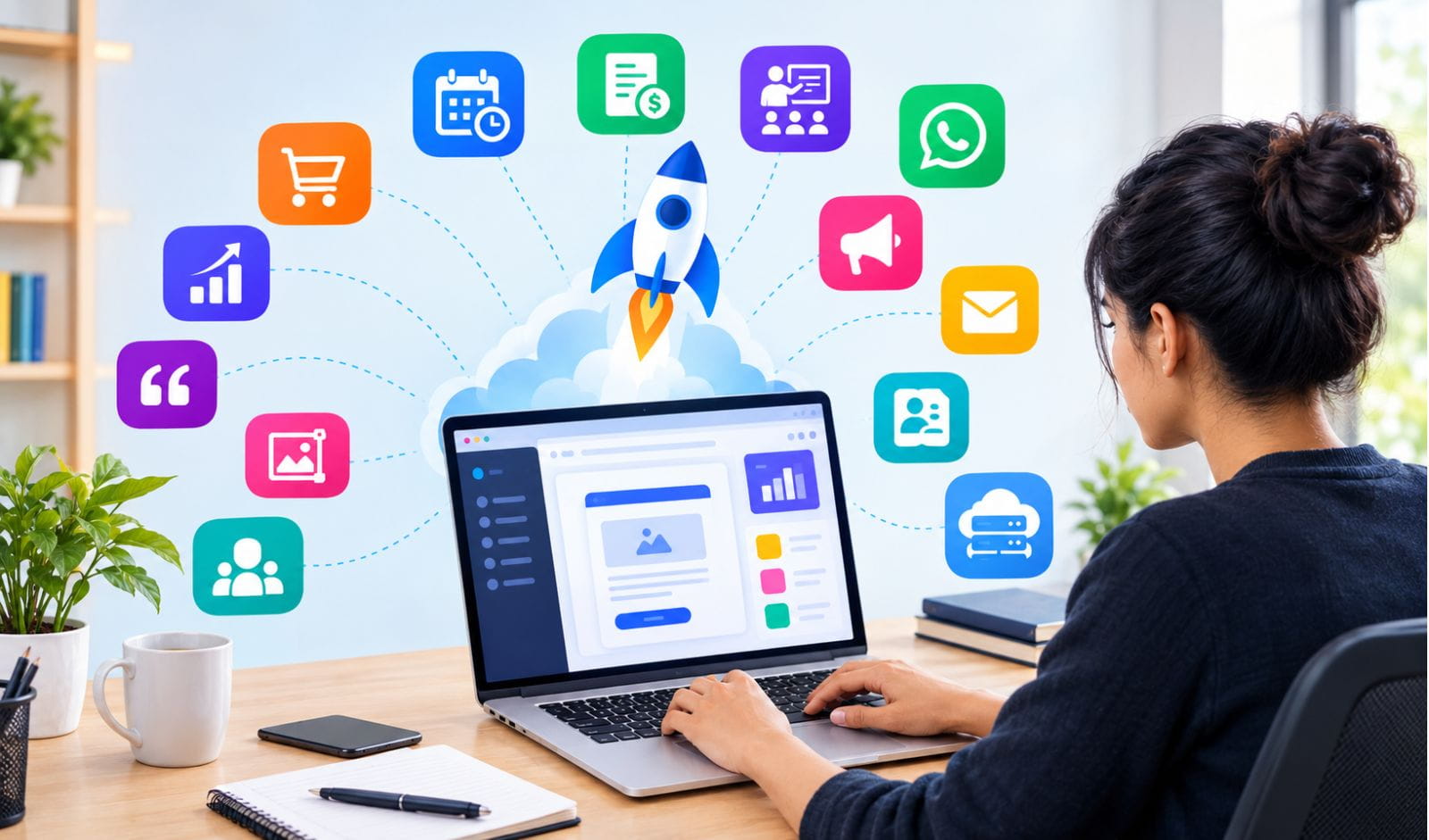
Now that you are able to bring your SaaS ideas to life without having any development knowledge whatsoever, it has transformed the industry completely.
India has the fastest-growing micro SaaS marketplace in the world, giving you a strong audience base to target if you’re ready to launch a micro SaaS business of your own.
With that being said, launching a new digital product into the market isn’t foolproof. It has been said that up to 90% of startups are expected to fail, so it’s clear that having strong SaaS ideas is what separates the successful creators from the rest.
How to Build a Micro SaaS App
If you’re somebody who has never built your own app before, it can seem like an intimidating prospect. Since you’ve long known that the process requires the help of an experienced development team and takes a long time to complete, finding out that you can build your own without any help may leave you with a lot of questions.
There is now a range of platforms that allow you to build a SaaS app without having to write a single line of code. All you need to do is type out your idea in as much detail as possible, and the tool will generate a working app for you. Everything from file storage to hosting can be managed by the builder, so you can launch your app without having to worry about the complexities.
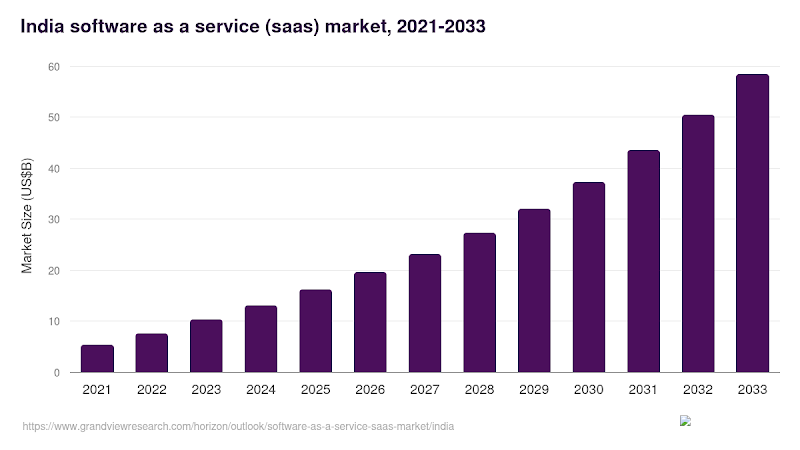
Having the option to build and launch your very own micro SaaS app in a fraction of the time has completely changed how the SaaS industry looks. As we can see from the graph below, the market has been continuously growing every single year as more and more people jump at the opportunity to get involved.
Between now and 2033, the SaaS market is only expected to keep on growing. In fact, it’s estimated that it’ll have grown by over 197%. As more people come up with new SaaS ideas, it’s only going to create more competition, so the sooner you launch your very own micro SaaS business, the more opportunity you have to get seen.
SaaS Ideas You Can Build For Yourself
Now that building a micro SaaS product can be done without requiring any development knowledge, it has opened up new opportunities for you to launch a new platform solo.
The key is finding unique SaaS ideas that offer real value to your target audience. Since everyone has the capability to launch their own micro SaaS app, the exclusivity isn’t in having the resources to do so, but in having an original idea that appeals to users.
Let’s discuss twelve examples of micro SaaS app ideas to give you some inspiration for your very own project.
Appointment booking system
Whether a business offers beauty services or corporate consultations, booking in customers through phone calls or messages is not only incredibly time-consuming for the employees, but can also be frustrating for customers. Creating a micro SaaS booking system will make it easier for people to book a time slot that works for them and receive automated reminders about their upcoming appointment.
Invoice generator
For people manually writing up invoices for every customer they work with, it’s going to eat into their time. Building an invoice generator is a simple yet effective micro SaaS product to build, but it will manage everything from cost breakdowns to tax calculations.
Training planner
Keeping on top of a team's training programs can become complex when the business has to plan onboarding material for new starters as well as refresher sessions for existing employees. This is where it comes in helpful to have access to a training planner that creates custom programs according to job descriptions and sends prompts when the next course is due.
WhatsApp assistant
India has the largest number of WhatsApp users in the world, making it a go-to platform for many businesses. From a customer service perspective, this can require a lot of ongoing time and effort. Building a micro SaaS platform that sends automated replies to inquiries using pre-written responses will take a lot of pressure off their shoulders.
Social media copy generator
Everyone already knows how important it is to maintain a regular stream of social media content, but I’m sure they also know how demanding it is to keep on top of. Setting up a copy generator is a great SaaS idea to help people pull together engaging social media captions and ad copy.
Mailing list cleaner
Over the years, the collection of email addresses a business has built up is bound to include some that are no longer valid or users who are not interested in their content. Building a mailing list cleaner that is designed to remove any poor-quality leads will not only increase their engagement rate, but also reduce the likelihood of triggering spam filters.
Resume enhancer
Now that AI is becoming a go-to tool for Indian job seekers looking to improve their applications, there is a great opportunity to turn this into a SaaS business model. This would allow users to submit a copy of their resume, and the tool would suggest improvements that would better align it with the particular role they are looking to apply to.
Product description creator
For people who run an ecommerce business and continuously list new products, there is an opportunity to create a tool that automates the creation of product descriptions. They can be set up to follow a particular template and use the right tone of voice to suit the brand’s image.
Competitor price tracker
The ecommerce world is forever changing, and keeping up with competitor activity can feel like a job in itself. There is an SaaS business opportunity to create a competitor price tracker that business owners can use to continuously monitor any changes among their immediate competitors and receive alerts to draw their attention to them.
Quote estimator
A tool can be created that automates the quote creation process, cutting out a lot of admin work for the business owner. It will make informed decisions based on the scope of the work, the estimated time needed, and the GST tax calculations for Indian customers. This not only saves time but also gives customers a more accurate quote to base their decision on.
Social media image resizer
There are many ways someone can resize a photo for social media, but they often require a subscription to advanced photo editing software and can be confusing when it comes to the various sizing variations. Creating a tool that makes it easy to resize an image according to the preset requirements of different social platforms offers a high level of convenience to users.
Meeting summarizer
The days of somebody being assigned the role of note-taker in a meeting are becoming outdated. There is an SaaS business opportunity to create meeting summarizers that record in-person or virtual meetings and then turn the transcript into a concise summary that can be accessed by attendees, highlighting the action points.
Bringing Your Micro SaaS Ideas to Life
Thanks to AI builders, the launch of SaaS apps is no longer reserved for larger businesses across India that have the budget to work with development teams. Now that you can create your very own micro SaaS products alone, there is a huge opportunity on your doorstep.
Even though the builder tools are available to you, having good SaaS ideas is the biggest obstacle currently standing between you and a successful launch. You need to make sure that you have found a strong foundation based on customer demand and market research, and this part cannot be rushed.
The micro SaaS market is continuing to grow, so getting involved sooner rather than later is a great way to get yourself seen and grow your audience before other entrants to the market crop up.
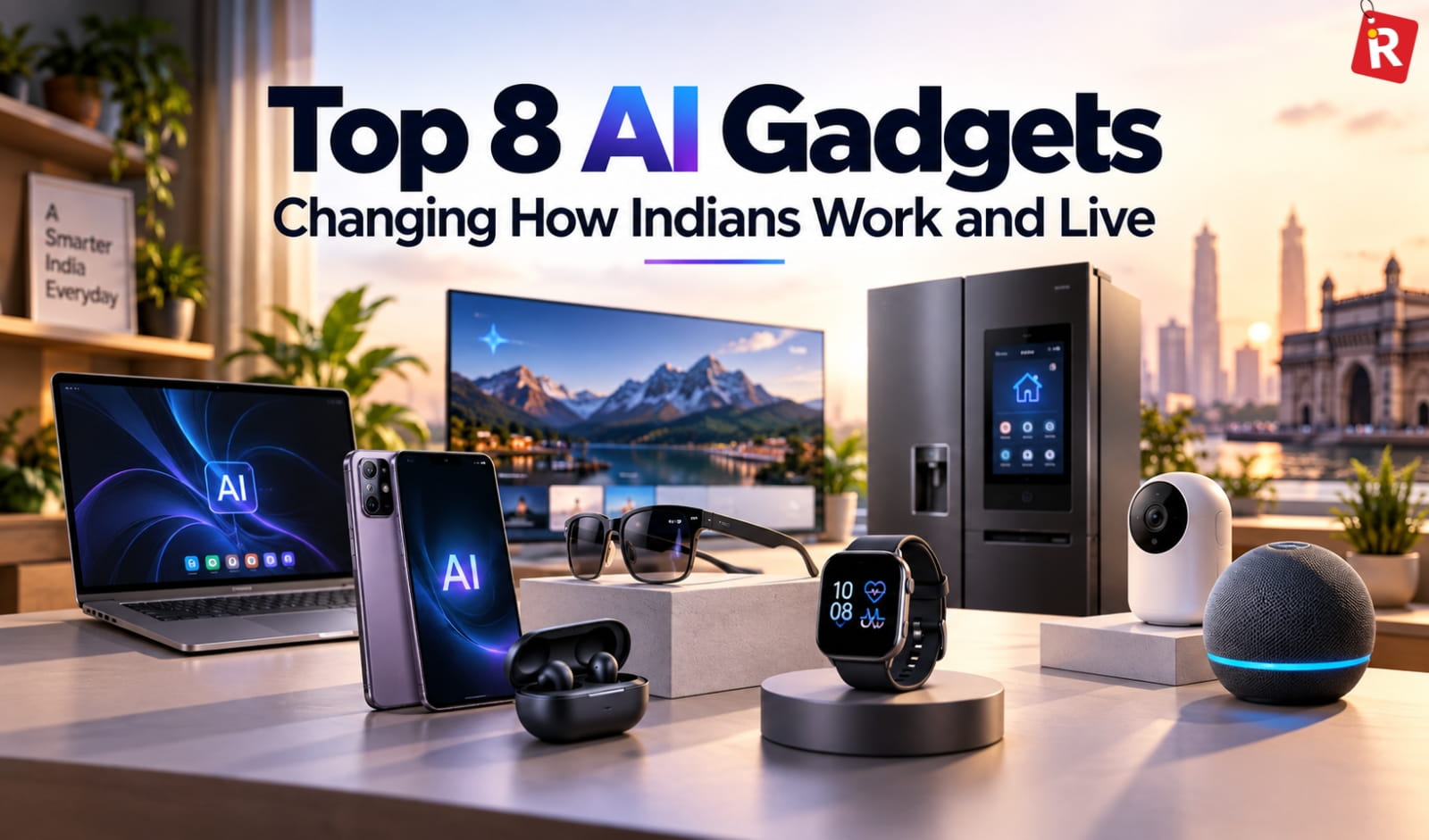
Artificial intelligence is no longer limited to chatbots and smartphone apps. In 2026, AI is increasingly being built directly into the devices people use for work, communication, entertainment, fitness and everyday household tasks.
From AI PCs that can assist with productivity to smart glasses that provide hands-free information, the category of AI-powered hardware and smart devices is expanding rapidly. Amazon India has launched a dedicated AI Store covering smartphones, laptops, TVs, wearables and home appliances, while searches for AI-powered devices on the platform have reportedly risen 60 percent year-on-year.
The shift is particularly interesting because AI is becoming less about having another app and more about making existing devices more useful.
Here are eight categories and products helping shape India's next phase of connected living.
1. AI Smartphones
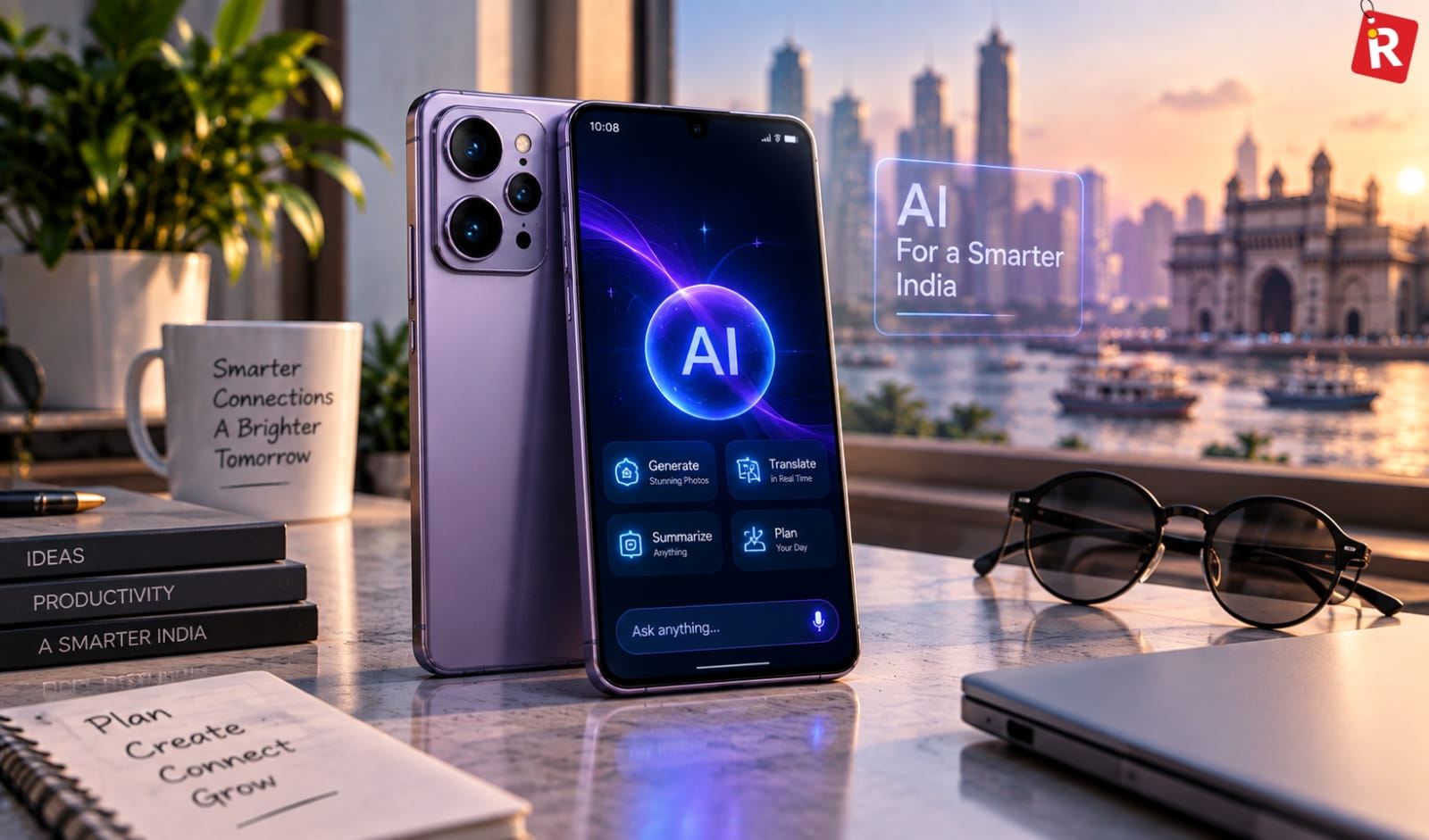
Smartphones remain the most accessible entry point into AI-powered hardware. Today's AI smartphones increasingly combine generative AI, image editing, translation, summarisation, voice assistance and on-device processing with the functions consumers already use every day.
Brands including Samsung, Google, Apple, OnePlus and Xiaomi are building AI capabilities into their premium and mainstream smartphone portfolios.
Google's Gemini Intelligence is also being integrated more deeply into Android, with the company expanding AI experiences across phones and other connected devices including watches, glasses and laptops.
For Indian consumers, the appeal is straightforward: AI can reduce the number of steps required to complete everyday tasks, from editing photographs and summarising information to managing communications.
Retail trend: AI is increasingly becoming a smartphone upgrade factor alongside cameras, processors and battery life.
Read also Top 5 Wireless Power Bank Brands in India Powering the Next Generation of Mobile Users
Top 5 Dishwasher Brands in India for Modern Kitchens in 2026
Top 10 AI Tools for eCommerce: From Management to Marketing
2. AI Laptops and PCs
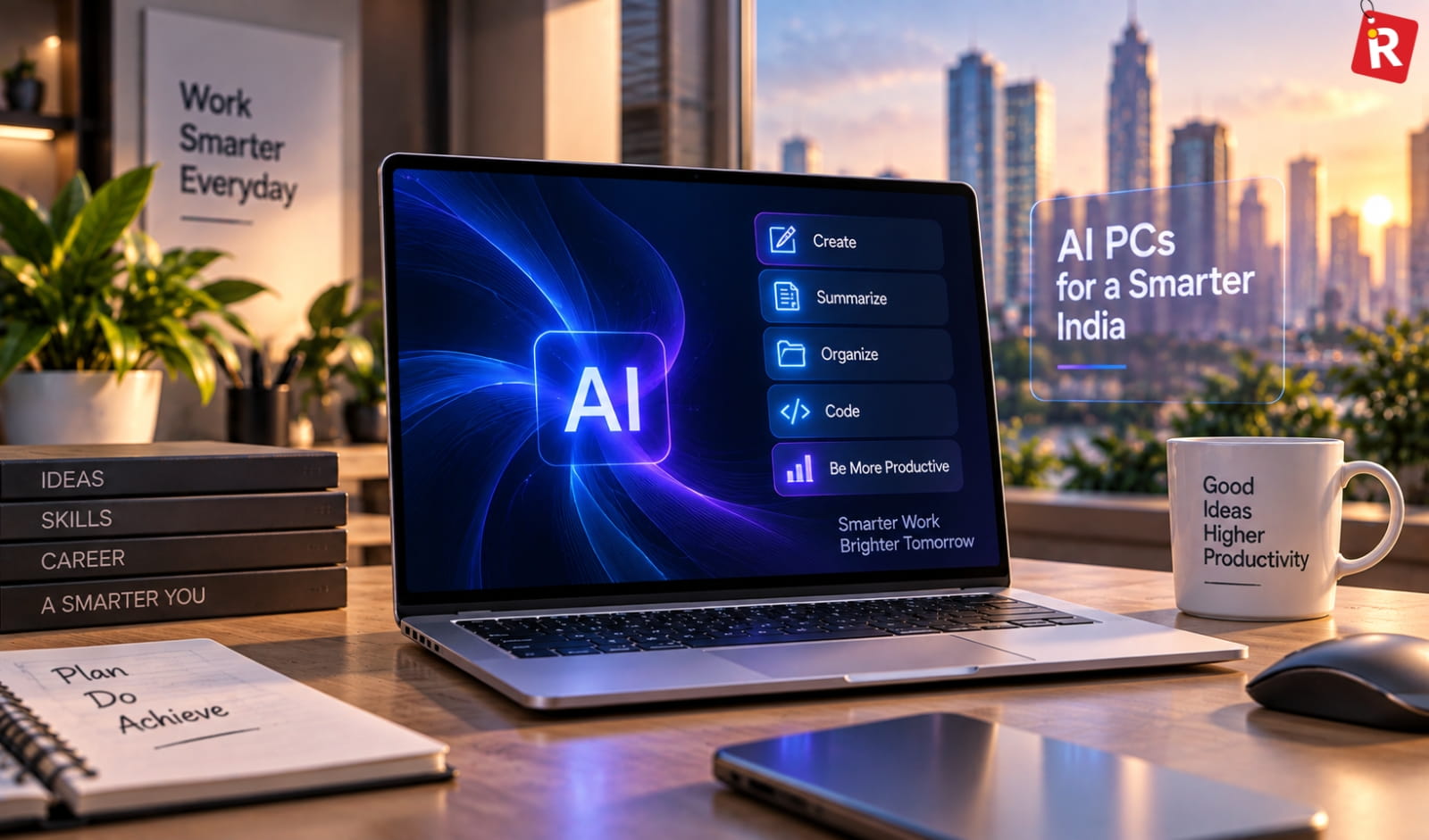
The rise of AI PCs is changing the role of laptops from conventional productivity machines into more personalised computing devices.
Brands such as Lenovo, HP, Dell, Asus, Acer and Microsoft are building AI capabilities into newer laptops, with dedicated processors and software designed to support features such as transcription, summarisation, creative tools and productivity assistance.
Lenovo's 2026 portfolio, for example, includes AI PCs, AI desktops and connected accessories, alongside its Copilot+ PC lineup.
For professionals, students and creators, the key shift is that some AI processing can happen directly on the device rather than relying entirely on cloud services.
Retail trend: AI PCs are turning AI capability into a hardware specification consumers can compare when upgrading their computers.
3. AI Smart Glasses
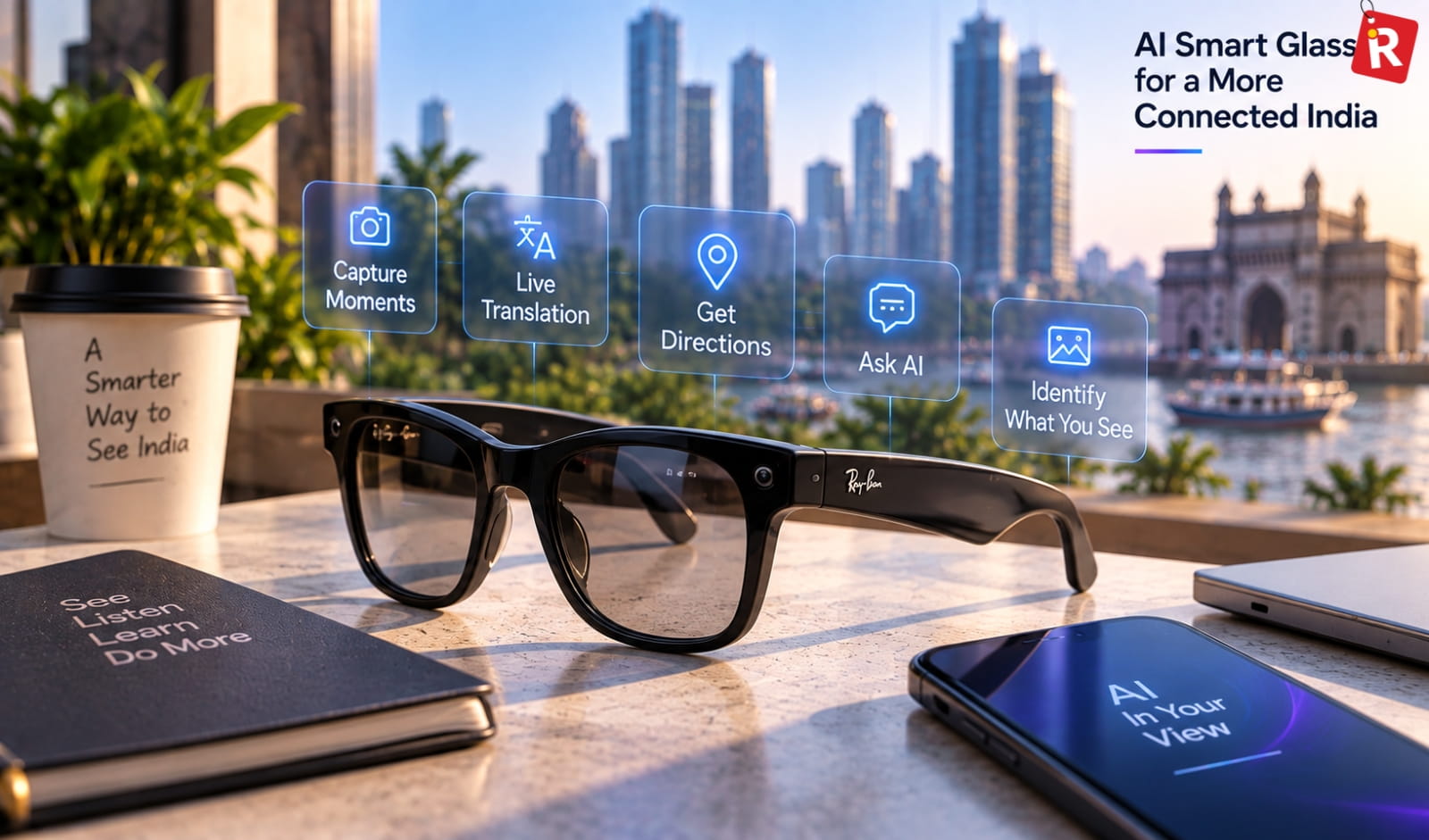
Smart glasses are emerging as one of the most visible new forms of AI-powered hardware.
Ray-Ban Meta has already brought AI glasses to Indian consumers, while Google's Android XR ecosystem is expanding toward intelligent eyewear.
The attraction is hands-free interaction. Users can use compatible glasses to capture photographs and videos, access information, communicate and interact with AI without constantly reaching for their smartphones.
Google's upcoming intelligent eyewear ecosystem is designed around features including navigation, translation, visual understanding, messaging and task assistance.
Samsung and Google are also working with eyewear brands Gentle Monster and Warby Parker on intelligent eyewear, demonstrating how technology and fashion are increasingly converging.
Retail trend: Smart glasses are moving AI from the screen to the user's field of view and creating a new intersection between technology, fashion and lifestyle.
4. AI Smartwatches and Fitness Wearables
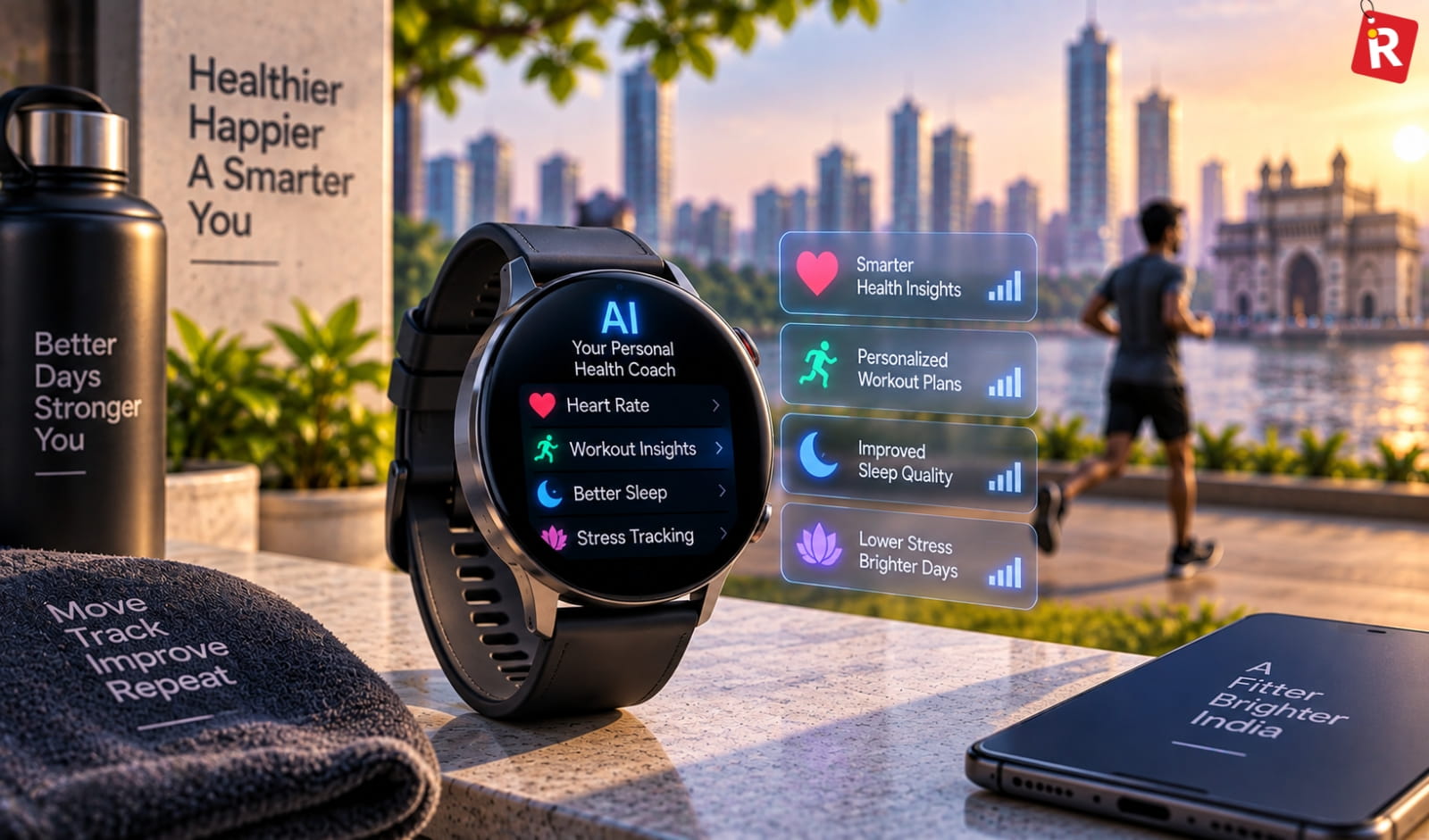
The smartwatch market is moving beyond basic notifications and step counting toward health, fitness and personalised insights.
Brands such as Apple, Samsung, Garmin, Google and Fitbit are competing across increasingly sophisticated wearable categories.
Recent Indian wearable-market data shows that while overall shipment volumes have faced pressure, premiumisation is creating opportunities for advanced smartwatches, smart glasses and wristbands. IDC data cited by Moneycontrol showed smart-glasses shipments in India rising 38.3% year-on-year in Q2 2026, while wristbands more than doubled.
AI can make wearable data more useful by helping users interpret patterns rather than simply presenting raw numbers.
Samsung's Galaxy Watch 9, for example, is gaining deeper access to Gemini, allowing users to interact with the AI assistant directly from the wrist.
Retail trend: Consumers are increasingly looking for wearables that provide meaningful health, fitness and productivity functions rather than simply counting steps.
5. AI TVs and Entertainment Devices
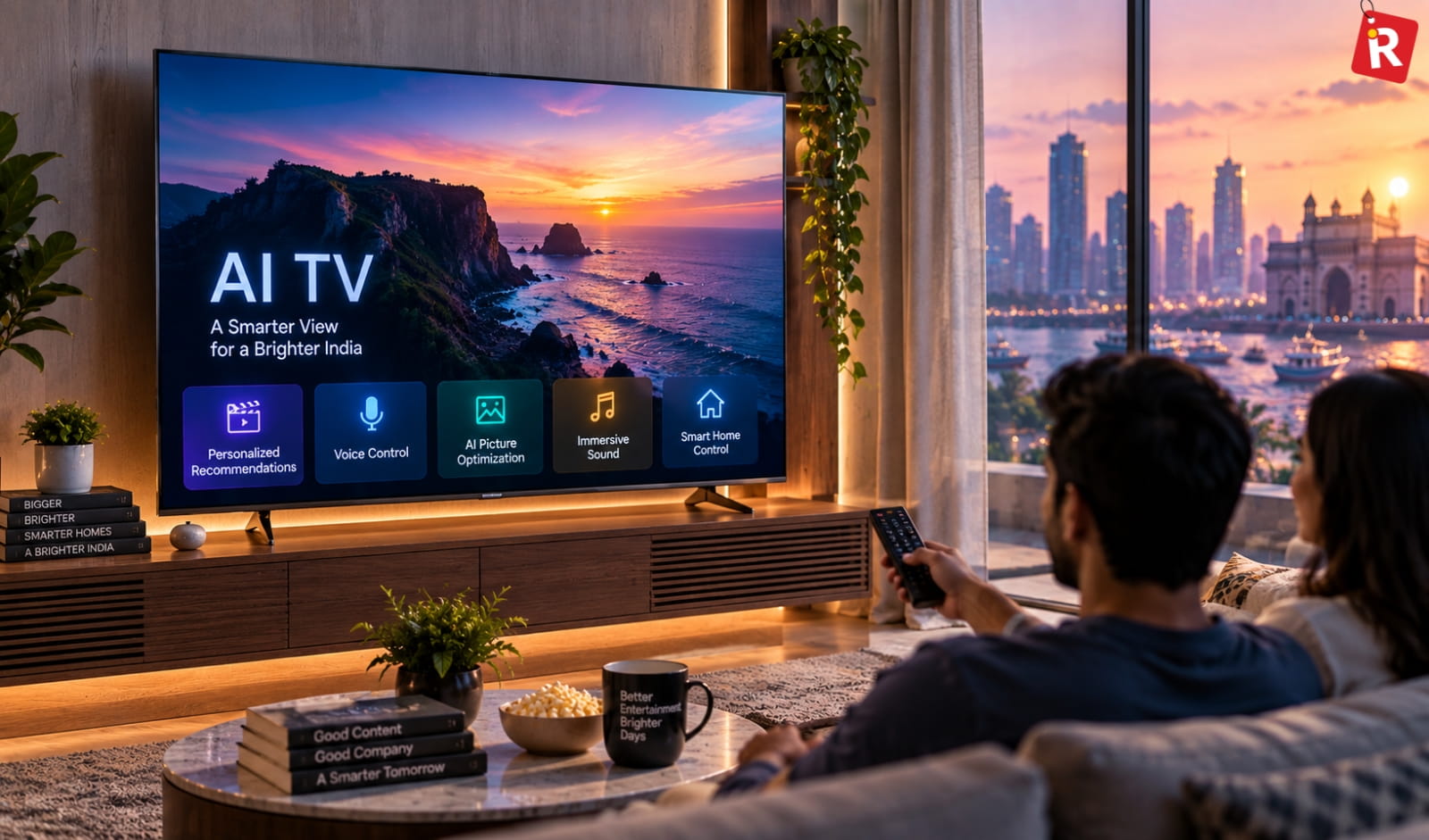
AI is also changing the living-room experience.
Brands such as Samsung, LG, Sony and TCL are integrating AI capabilities into newer televisions and connected entertainment ecosystems.
The technology can extend beyond picture optimisation to voice interaction, content discovery, personalisation and connected-device control.
Amazon India's AI Store currently includes AI televisions alongside smartphones, laptops, wearables and home appliances, indicating that AI is becoming a cross-category consumer-electronics proposition.
Retail trend: AI is becoming part of the broader smart-home ecosystem rather than remaining a feature limited to smartphones and computers.
6. AI-Powered Home Appliances
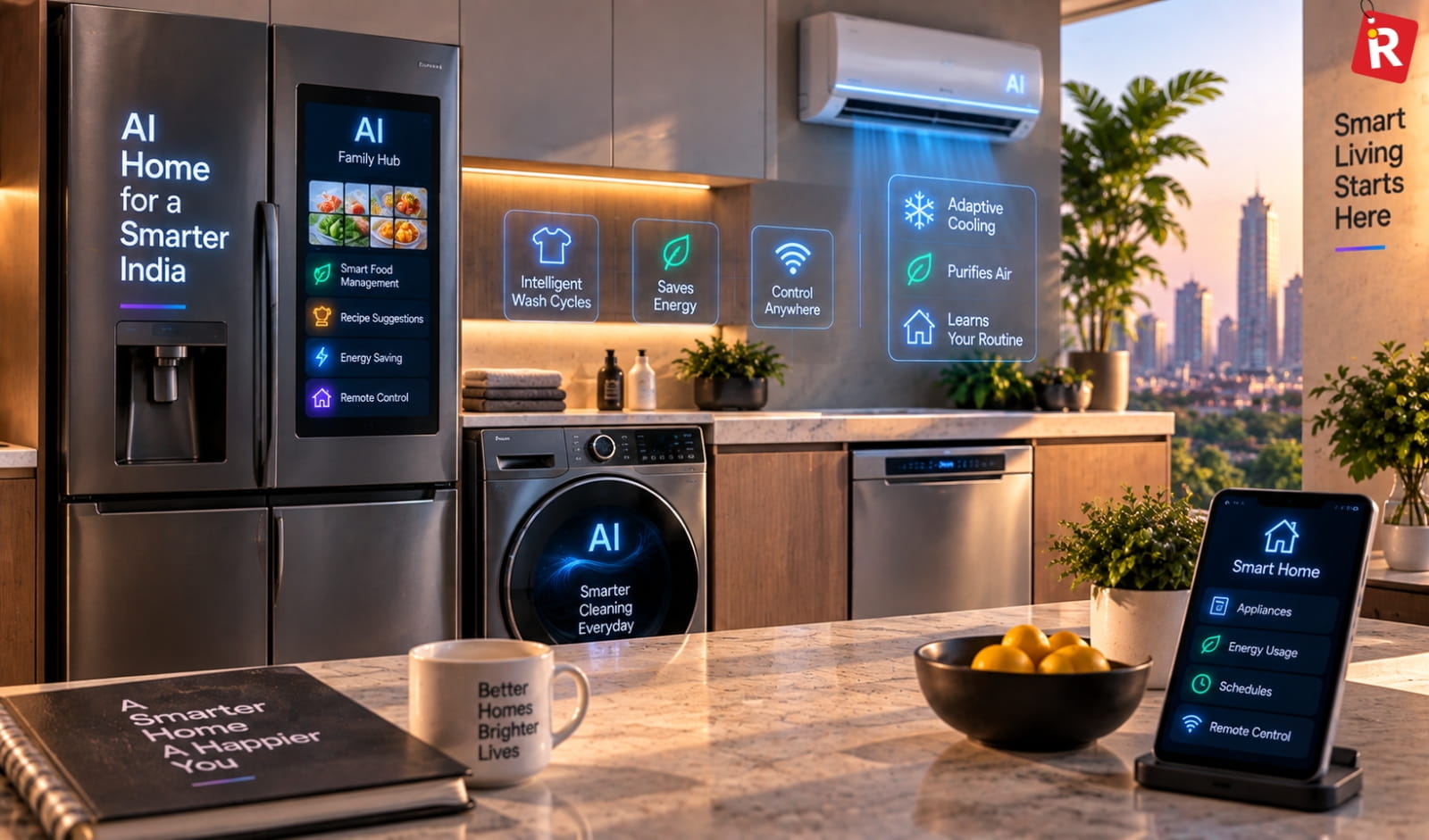
The next major shift is happening inside the home.
Samsung, LG, Bosch and other appliance brands are integrating AI into refrigerators, washing machines, air conditioners and other connected appliances.
Samsung's 2026 Bespoke AI lineup, for example, includes a Family Hub refrigerator with AI Vision and Google Gemini capabilities, alongside AI-powered air-conditioning and connected-home features.
The larger idea is ambient intelligence: appliances can increasingly learn usage patterns, automate certain functions and help consumers manage energy and everyday routines.
Retail trend: AI is transforming the definition of a premium home appliance from simply being connected to being more adaptive and context-aware.
7. AI Earbuds and Audio Devices
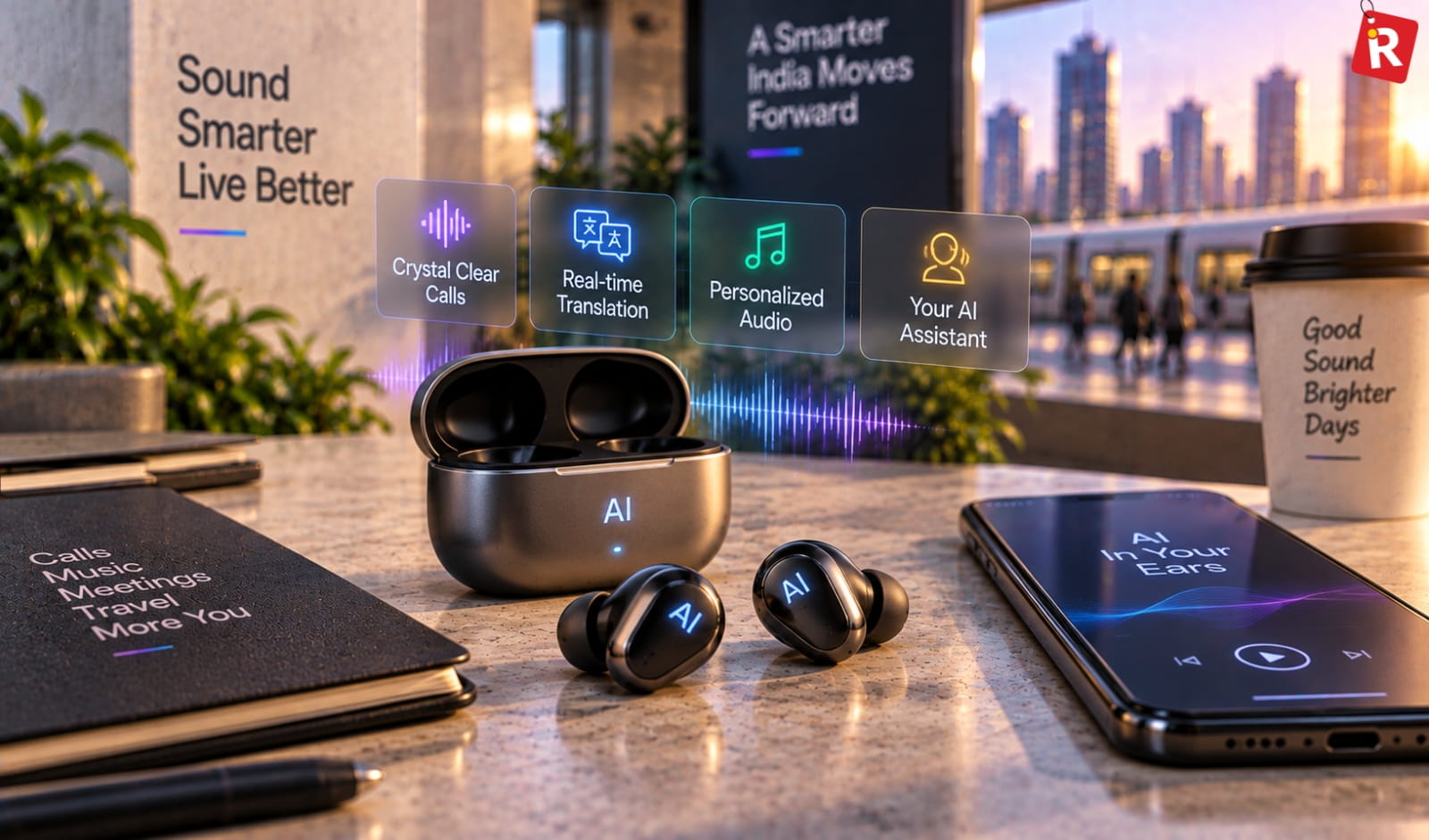
Wireless earbuds are evolving from simple audio accessories into compact AI interfaces.
Brands including Apple, Samsung, Google, Sony, Bose and Nothing are competing across premium audio, while AI capabilities are increasingly connected with voice assistants, translation, calls and device ecosystems.
For hybrid workers and consumers constantly moving between work and personal activities, earbuds can become a convenient way to access information without looking at a screen.
The broader Indian wearable market continues to be led by earwear, although the category is becoming more mature as consumers increasingly look toward higher-value products and richer functionality.
Retail trend: Audio devices are increasingly becoming part of the AI interface rather than just an entertainment accessory.
8. AI-Powered Smart Home Hubs and Connected Devices
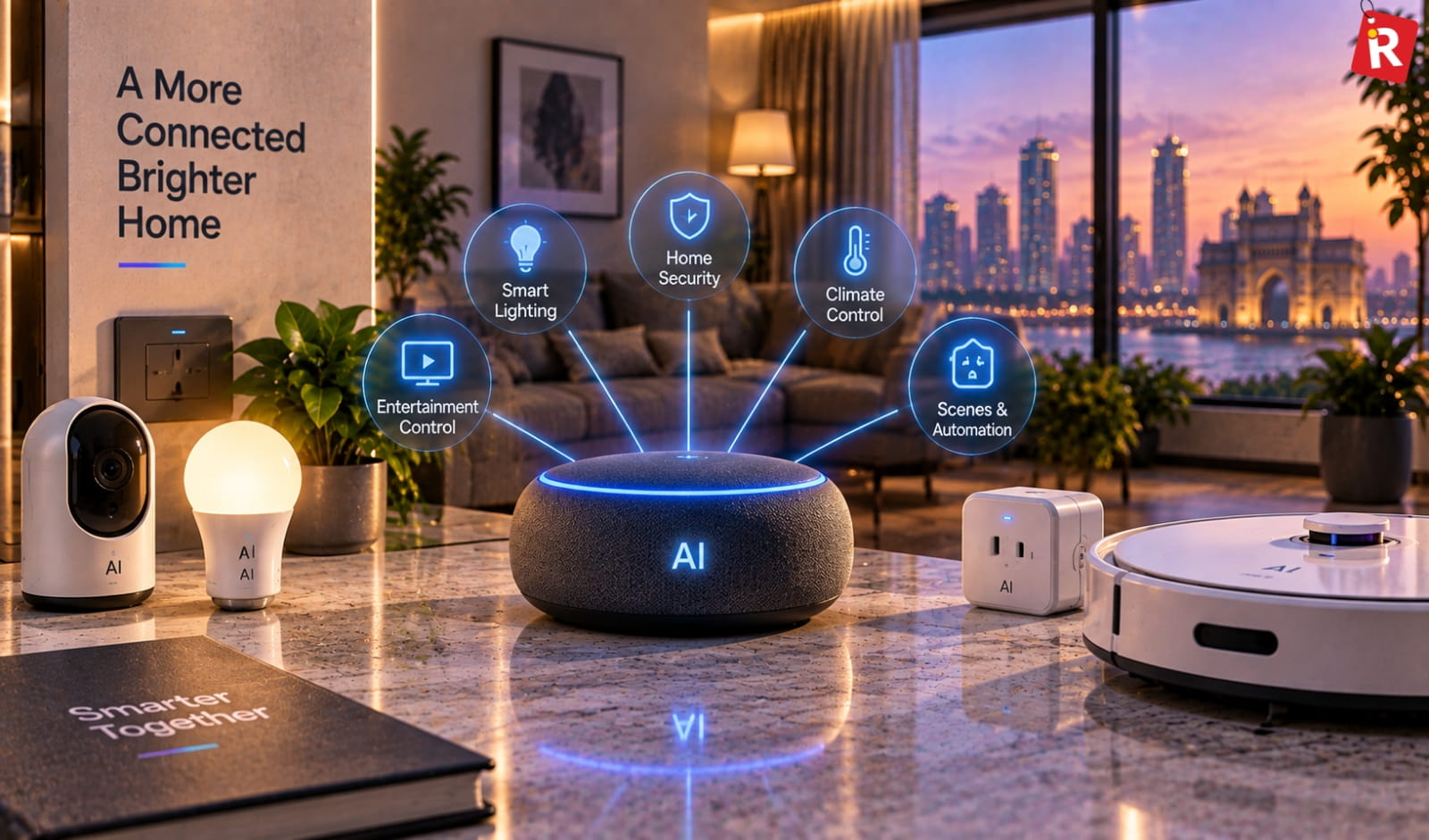
The final piece of the AI gadget ecosystem is connectivity.
Smart speakers, displays, cameras, routers, sensors and connected appliances can increasingly work together through platforms such as Google Home, Amazon Alexa and Samsung SmartThings.
The objective is to create an ecosystem in which consumers do not have to manage every device individually.
This is particularly relevant as AI moves from individual products toward connected experiences. Google's Android strategy, for instance, is extending Gemini across phones, watches, cars, glasses and laptops.
Retail trend: The next phase of smart-home adoption could increasingly be driven by how well devices work together rather than by individual specifications.
How AI Gadgets Are Changing Indian Consumer Behaviour
The growth of AI-powered hardware is changing what consumers expect from their devices.
From features to assistance
Consumers are gradually moving from asking whether a product has AI to asking what the AI actually does.
This distinction matters. A useful AI feature can save time, automate repetitive work or make information easier to access, while an AI label alone does not necessarily create meaningful value.
From screens to hands-free computing
Smart glasses, watches and earbuds demonstrate another important shift: consumers are getting more ways to interact with technology without constantly looking at a smartphone.
From standalone products to ecosystems
The biggest technology brands are increasingly connecting smartphones, laptops, wearables, appliances and home devices.
Google's expansion of Gemini across multiple device categories and Samsung's AI Home strategy are examples of this broader ecosystem approach.
From metro adoption to broader Indian demand
Amazon India says nearly two-thirds of searches for AI devices on its platform come from Tier 2 and Tier 3 cities, suggesting that interest in AI-powered hardware is not restricted to India's largest urban markets.
Explore more: Best 5G Smartphone Brands With Huge Discounts Know Before It Ends
Top Japanese Watch Brands in India That Indian Retailers Should Know for Precision and Reliability
5 Best Wireless Earbuds Brands in India 2026 for Calls and Music
What This Means for India's Retail Market
The rise of AI gadgets is creating a new layer of competition in consumer electronics.
Previously, consumers typically compared products on specifications such as processor, camera, battery, screen size or storage. AI is now becoming another product differentiator.
For retailers, this creates an opportunity to explain use cases rather than technical jargon.
A consumer may not necessarily understand an NPU or an on-device AI model, but they can understand faster photo editing, automatic meeting summaries, personalised recommendations, hands-free navigation or smarter energy management.
This is also why AI hardware is likely to increasingly overlap with categories such as fashion, fitness, healthcare technology, home appliances, entertainment and professional productivity.
The Future of AI-Powered Hardware in India
The AI gadget market is moving toward a more connected and less visible form of computing.
Smartphones and laptops will remain important, but the next wave is likely to involve devices that operate more naturally around consumers — from AI glasses and watches to connected appliances and ambient home technology.
The bigger retail opportunity is therefore not simply selling an AI gadget. It is selling a device that solves a real consumer problem through AI.
As AI becomes embedded across more product categories, the brands that can demonstrate a clear everyday benefit may have a stronger opportunity to turn AI from a technology trend into a mainstream consumer behaviour.
FAQs on Top AI gadgets in India
What are AI gadgets?
AI gadgets are hardware devices that use artificial intelligence to provide features such as voice assistance, image recognition, personalised recommendations, automation, translation, health insights or content generation.
What are the top AI gadgets in India?
The major categories include AI smartphones, AI laptops, smart glasses, AI smartwatches, AI earbuds, AI TVs, AI home appliances and connected smart-home devices.
What are the best AI gadgets of 2026?
The answer depends on the use case. AI smartphones and laptops are focused heavily on productivity and creation, while smart glasses, smartwatches and connected appliances are expanding AI into hands-free computing, fitness and home automation.
Which brands are making AI-powered hardware?
Major technology brands including Samsung, Google, Apple, Meta, Lenovo, HP, Asus, LG, Sony and others are developing or integrating AI across consumer hardware categories.
Are AI gadgets useful for everyday life?
Their usefulness depends on the specific implementation. The strongest use cases are generally those that reduce repetitive tasks, provide contextual information, improve accessibility, assist productivity or automate routine activities.
What is the future of AI-powered hardware and smart devices?
AI hardware is moving toward connected ecosystems in which smartphones, computers, wearables, glasses and home appliances can work together. This could make AI increasingly embedded in everyday activities rather than something consumers access only through separate applications.
Key Takeaway
The Top 8 AI Gadgets in India are no longer limited to smartphones and laptops. AI is spreading across smart glasses, wearables, earbuds, televisions, home appliances and connected devices, creating a broader market for AI-powered hardware and smart devices.
For Indian retailers and brands, the bigger opportunity will be explaining how AI improves the consumer experience — not simply putting the word "AI" on a product page.
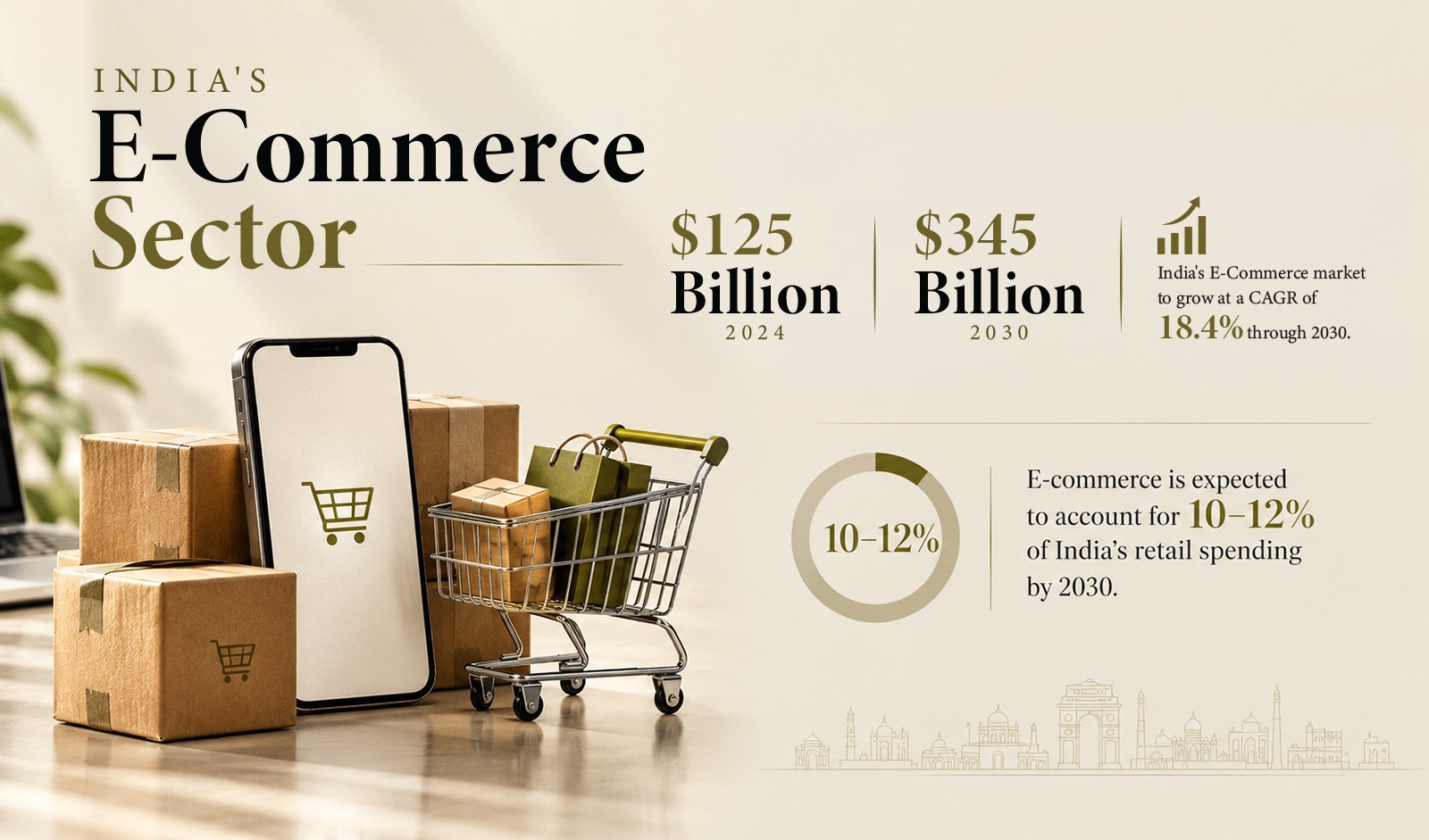
India’s e-commerce sector is entering a defining phase of expansion, driven by rapid digital adoption, changing consumer behavior, artificial intelligence (AI), and the explosive growth of quick commerce. From a market valued at around $125 billion in 2024, India’s e-commerce industry is projected to reach $345 billion by 2030, reflecting the country's emergence as one of the world's fastest-growing digital retail markets.
The next stage of growth will extend well beyond India's major metropolitan centres. A combination of rising incomes, wider internet access, increasing smartphone penetration and the emergence of new consumer segments is expected to bring millions of additional shoppers into the digital economy.
A Market Approaching a New Scale
India’s e-commerce market is projected to grow at a compound annual growth rate of 18.4 percent through 2030, according to the Infisum report. By the end of the decade, online commerce could account for approximately 10–12 percent of India's total retail spending, contribute around 2.5 percent to GDP, and serve between 420 million and 440 million online shoppers.
Traditional business-to-consumer e-commerce is expected to remain the largest component of the market, accounting for nearly two-thirds of total e-retail gross merchandise value. However, the structure of the market is changing rapidly as newer formats such as quick commerce, direct-to-consumer brands and social commerce gain momentum.
This transformation is also being supported by the expansion of digital infrastructure. Consumers are becoming increasingly comfortable purchasing everything from groceries and fashion to electronics, household products and personal-care items online.
Quick Commerce Changes the Rules
Among the most significant developments in Indian e-commerce is the rise of quick commerce. What began primarily as a grocery-delivery proposition has evolved into a broader retail model built around speed, convenience and hyperlocal fulfilment.
The quick-commerce market is estimated to reach $65–70 billion by 2030 and could account for 45–50 percent of incremental e-retail growth over the next five years. Supporting this expansion will be a dramatic increase in India's dark-store network. The number of dark stores is expected to rise from approximately 2,525 facilities in 2025 to around 7,500 by 2030.
Blinkit currently leads the segment, with an estimated 44 percent market share and 900 million orders processed in FY26. Zepto and Swiggy Instamart follow with approximately 25 percent and 20 percent, respectively.
The competitive landscape, however, is becoming broader. Large e-commerce companies are increasingly entering quick commerce by leveraging existing customer relationships, logistics networks, and product catalogues.
Amazon Now, for instance, is positioned as an extension of the broader Amazon shopping ecosystem, combining rapid delivery with established consumer trust, product selection and Prime benefits. Rather than limiting quick commerce to groceries, its proposition can extend into categories such as electronics, home essentials and baby care.
Flipkart Minutes is also expanding its presence in the rapidly developing segment. Its challenge will be to strengthen consumer adoption through consistent service, better inventory visibility and a clear value proposition.
The evolution of quick commerce suggests that the distinction between conventional e-commerce and rapid delivery is gradually becoming less pronounced. Consumers increasingly expect both choice and speed, forcing platforms to compete on convenience, reliability, pricing, and selection simultaneously.
AI Becomes a Core Growth Engine
Technology will play an equally important role in determining the future of India's e-commerce industry. Artificial intelligence and machine learning are expected to improve retail productivity by 35–37 percent by 2030, while changing how consumers discover, evaluate and purchase products.
AI-powered shopping assistants could make online shopping more conversational and intuitive. Instead of searching through hundreds of products, consumers may increasingly describe what they need in natural language and receive personalised recommendations.
Other emerging technologies—including virtual try-ons, personalised product discovery, predictive recommendations and voice-enabled shopping—are expected to further reduce friction in the purchasing journey.
For businesses, AI also offers significant opportunities beyond the consumer interface. Better demand forecasting can help retailers reduce inventory costs and stockouts, while AI-powered logistics can improve delivery planning and warehouse efficiency.
The result could be an e-commerce ecosystem that is not simply faster, but also more intelligent and responsive to local consumer demand.
Gen Z and Smaller Cities Expand the Consumer Base
India's next wave of digital commerce will be shaped by a new generation of consumers. Gen Z already represents nearly one-third of online shoppers and is expected to become the country's largest digital-spending cohort by 2030.
This generation is influencing how brands market and sell products. Social media, influencers, short-form video, creator recommendations and personalised experiences are becoming increasingly important in the path from product discovery to purchase.
At the same time, India's e-commerce opportunity is moving decisively beyond metropolitan markets. Around 66 percent of new D2C orders now originate from Tier II and III cities, highlighting the growing importance of smaller urban centres.
Nearly 150 million new online shoppers are expected to enter India's digital economy by 2030. Reaching these consumers will require companies to adapt their strategies to local preferences, languages and purchasing behaviour.
Vernacular content, regional influencers, localised product offerings and flexible payment options could become critical tools for brands seeking to build deeper relationships with consumers outside India's largest cities.
Opportunities for D2C and Emerging Brands
The expansion of India's digital consumer base is creating opportunities for thousands of direct-to-consumer businesses. Digital platforms have significantly lowered the barriers to market entry, allowing emerging brands to reach customers without building large physical retail networks.
Categories such as beauty and personal care, fashion, food, home products and specialised consumer goods are particularly suited to D2C models.
Social commerce is also creating new routes to purchase, with consumers increasingly discovering products through creators and online communities rather than conventional advertising.
For smaller brands, the challenge will be converting digital visibility into sustainable economics. Rising advertising costs, intense competition, and customer acquisition pressures mean that long-term success will depend increasingly on repeat purchases, brand loyalty, and efficient fulfilment.
Growth Must Be Balanced with Profitability
Despite the positive outlook, India's e-commerce sector faces significant challenges. Companies must balance aggressive expansion with sustainable unit economics.
Fraud, product returns, customer acquisition costs, regulatory changes, and profitability pressures remain important concerns. Quick-commerce companies in particular face the challenge of maintaining delivery speed while controlling the costs associated with dense fulfilment networks.
Khadim, one of India's largest footwear retailers, has migrated its 260-store network to Fynd Store OS, marking a significant milestone in its omnichannel transformation journey. The move represents the full-scale expansion of a partnership that began in August 2022 and is aimed at streamlining store operations, improving efficiency, and creating a more self-sufficient retail ecosystem.
Through the migration, Khadim has consolidated store operations, CRM support, and marketplace commerce onto a single unified platform. The integration is designed to simplify day-to-day retail management while providing greater visibility and control across its extensive store network.
A key aspect of the implementation is the complete platform handover to Khadim's internal teams. This enables store and operations teams to independently manage critical functions such as store profile updates, employee mapping, new employee registrations, discounts, offers, and other operational configurations. By reducing dependence on external support for routine tasks, the retailer is building a more agile and responsive operating model.
Fynd has also integrated its platform with Khadim's RMS system, creating a seamless flow of information across channels. The integration supports smoother order processing, invoice updates, tracking, and visibility, helping the retailer improve operational accuracy and customer service.
To ensure successful adoption across all locations, Fynd has implemented a structured support framework that includes regular refresher training sessions, readiness assessments, performance reviews, and store-level tracking. These initiatives are helping store teams become more proficient in using the platform and maximizing its capabilities.
In addition, the platform supports Khadim's promotional and commerce requirements, including prepaid order discounts, delivery charge configurations, and gift-based offers. This flexibility allows the retailer to execute marketing campaigns and customer engagement initiatives more effectively across its omnichannel ecosystem.
“Scaling omnichannel operations across a large store network requires strong technology, process discipline, and store-level adoption,” said Ragini Varma, Chief Business Officer - India, Fynd. “With Khadim, our focus has been on enabling a more self-sufficient operating model through Store OS migration, RMS integration, training, CRM support, and platform handover. This partnership demonstrates how Fynd can help retail brands build a scalable, future-ready omnichannel foundation. This partnership reflects what a truly self-sufficient omnichannel foundation looks like in practice.”
Highlighting the impact on store operations, Kaushik Dutta, Assistant General Manager - Sales, Khadim added, “We were looking for a platform that could help us simplify complex workflows, improve store adoption, and empower our teams to manage day-to-day operations with greater independence. Fynd’s Store OS, our teams are better equipped to manage daily workflows, support customers efficiently, and scale digital commerce across our store network.”
Going forward, the partnership will focus on strengthening central support functions, warehouse dispute reconciliation, and further automation initiatives. These efforts are expected to help Khadim enhance operational efficiency and move closer to operating as a fully self-sufficient omnichannel retailer.
Swiggy is strengthening its customer engagement strategy through a strategic partnership with MoEngage, an AI-native customer engagement platform. The collaboration is aimed at helping the on-demand convenience platform deliver more relevant and personalized experiences to its millions of users by leveraging AI-powered insights, automation, and omnichannel engagement capabilities.
As a trusted brand serving customers across multiple categories, Swiggy selected MoEngage to further enhance its customer engagement capabilities at scale. The platform's enterprise-grade features are helping the company automate customer journeys and streamline communication across various touchpoints, enabling more efficient and personalized interactions with users.
The partnership has already begun delivering measurable results. By utilizing MoEngage's automation capabilities, Swiggy's marketing team has significantly reduced manual effort involved in managing campaigns and customer communications. This has allowed teams to shift their focus from operational tasks to strategic planning, customer insights, and creative innovation.
"At Swiggy, our ambition is to make every customer interaction feel relevant, timely, and valuable," said Niranjan Sane, AVP - Growth at Swiggy. "MoEngage gives us the scale, reliability, and AI-driven intelligence to do exactly that. The platform's capabilities have enabled us to engage more effectively, while maintaining a robust security framework.”
In addition to leveraging omnichannel engagement capabilities, Swiggy is also utilizing MoEngage's Merlin AI Agents to strengthen customer communication across its platform. The Content AI Agents are helping the company create personalized push notifications and in-app messages, enabling faster content creation while improving the relevance of customer interactions.
The use of AI-driven content generation allows Swiggy to communicate with customers in a more targeted manner based on their preferences and behavior. This supports the company's broader goal of delivering timely and meaningful engagement while maintaining consistency across channels.
"Swiggy represents the future of customer engagement, a brand that understands that relevance at scale requires intelligence, not just volume," stated Raviteja Dodda, CEO & Co-Founder of MoEngage. "We're proud to partner with brands that are embracing AInative platforms to transform how they connect with customers."
Looking ahead, Swiggy plans to explore MoEngage's Merlin AI Decisioning capabilities. The feature is designed to help brands optimize customer engagement strategies, improve campaign effectiveness, and make more informed decisions through AI-powered intelligence. As customer expectations continue to evolve, the adoption of AI-driven engagement tools is expected to play a critical role in helping Swiggy deliver personalized experiences while driving operational efficiency and business growth.

Jaquar Group, a leading brand in complete bathroom and lighting solutions, has partnered with Salesforce to accelerate its digital transformation journey and create a more connected, data-driven enterprise. Through the collaboration, the company aims to unify customer engagement across its business units, improve operational efficiency, enhance productivity, and drive revenue growth using an AI-powered, mobile-first platform.
As part of the transformation initiative, Jaquar Group will deploy a comprehensive suite of Salesforce solutions across its operations. The company will utilize Consumer Goods Cloud to improve sales efficiency, while CPQ and Partner Community Cloud will help streamline pricing processes and strengthen collaboration with channel partners. Additionally, Field Service will enable internal teams and contractors to deliver more effective on-ground service, improving customer experiences and response times.
To support enterprise-wide decision-making, Jaquar will also implement Tableau, Salesforce’s analytics platform, enabling the organization to leverage data-driven insights across sales and service functions.
With operations spanning more than 55 countries and a workforce exceeding 12,000 employees, Jaquar is adopting Salesforce as its end-to-end customer-facing platform across key divisions, including Bath and Light. The initiative is expected to provide a comprehensive 360-degree view of customers while connecting previously siloed data sources, allowing for faster and smarter business decisions.
Arundhati Bhattacharya, President and CEO at Salesforce – South Asia said, “Digital transformation today is not just a business initiative — it is a strategic imperative that defines resilience, relevance, and long-term value creation. Jaquar Group’s commitment to harnessing the power of data, AI, and automation across its ecosystem reflects a bold, future-facing mindset. At Salesforce, we are privileged to partner with visionary organisations like Jaquar that are not only reimagining customer engagement but also setting new benchmarks for operational excellence in the manufacturing and consumer goods sector — and are well positioned to benefit from the next wave of innovation with agentic AI.”
Rajesh Mehra, Director and Promoter, Jaquar Group stated, “As customer expectations continue to evolve, we believe the future of manufacturing and retail lies in data agility, mobile responsiveness, and real-time decision-making. This collaboration is more than just a tech upgrade, it’s about futureproofing our organisation by embedding intelligence into every customer interaction and operational touchpoint.”
Ninad Raje, CIO, Jaquar Group added, “As markets become more dynamic and digitally driven, staying ahead requires adaptive systems, intuitive platforms, and proactive insights. This partnership represents a transformational shift—moving beyond conventional upgrades to reimagining how we operate and engage. By integrating smart capabilities across our ecosystem, we are laying the foundation for a connected, intelligent enterprise built to thrive in the next era of commerce."

Reliance Industries has announced plans to build India’s first AI-driven data centre designed specifically for Meta Platforms, marking a significant milestone in the country’s rapidly expanding digital infrastructure ecosystem.
The facility will be developed in Jamnagar, Gujarat, and is expected to be completed within the next two years. Under the agreement, Reliance will construct a 168-megawatt data centre that will be leased to Meta upon completion. While financial details of the project have not been disclosed, Reliance indicated that the facility has scope for future expansion, underscoring the long-term strategic nature of the collaboration.
The project represents a major step in strengthening India’s position as a global hub for artificial intelligence, cloud computing, and digital infrastructure. Designed to support Meta’s growing AI requirements, the data centre will contribute to the company’s global infrastructure network while also supporting India’s digital economy ambitions.
Reliance selected Gujarat as the location for the facility due to several strategic advantages. These include access to robust infrastructure, availability of renewable energy and water resources, proximity to western submarine cable landing stations, and connectivity through Jio’s extensive fiber network. Together, these factors are expected to provide the scalability and reliability required for next-generation AI workloads.
Commenting on the development, Mukesh Ambani, Chairman and Managing Director of Reliance Industries, said, “This partnership with Meta marks a transformative moment for India’s digital infrastructure. Building India’s first built-to-suit data centre for a global technology leader of Meta’s scale demonstrates India’s readiness to be at the forefront of the global AI revolution.”
Meta views the project as a critical addition to its expanding global AI infrastructure footprint. The company continues to invest heavily in data centres worldwide to support advanced AI applications, computing requirements, and digital services.
Mark Zuckerberg, Founder and CEO of Meta, said, “We're proud to be working with Reliance to build our first AI-enabled data center in India. This world-class facility in Jamnagar will help us scale our AI infrastructure globally while deepening our long-term investment in India's economy.”
The announcement comes amid a surge in data centre investments across India, driven by rising demand for AI and cloud computing services. Reliance has already committed to investing approximately ₹10 trillion over the next seven years across data centres, renewable energy, and other infrastructure projects. The sector is also attracting substantial investments from domestic and international players, highlighting India’s growing importance in the global digital economy.
The Reliance-Meta partnership is expected to play a pivotal role in advancing AI infrastructure capabilities while reinforcing India’s position as a key destination for future technology investments.
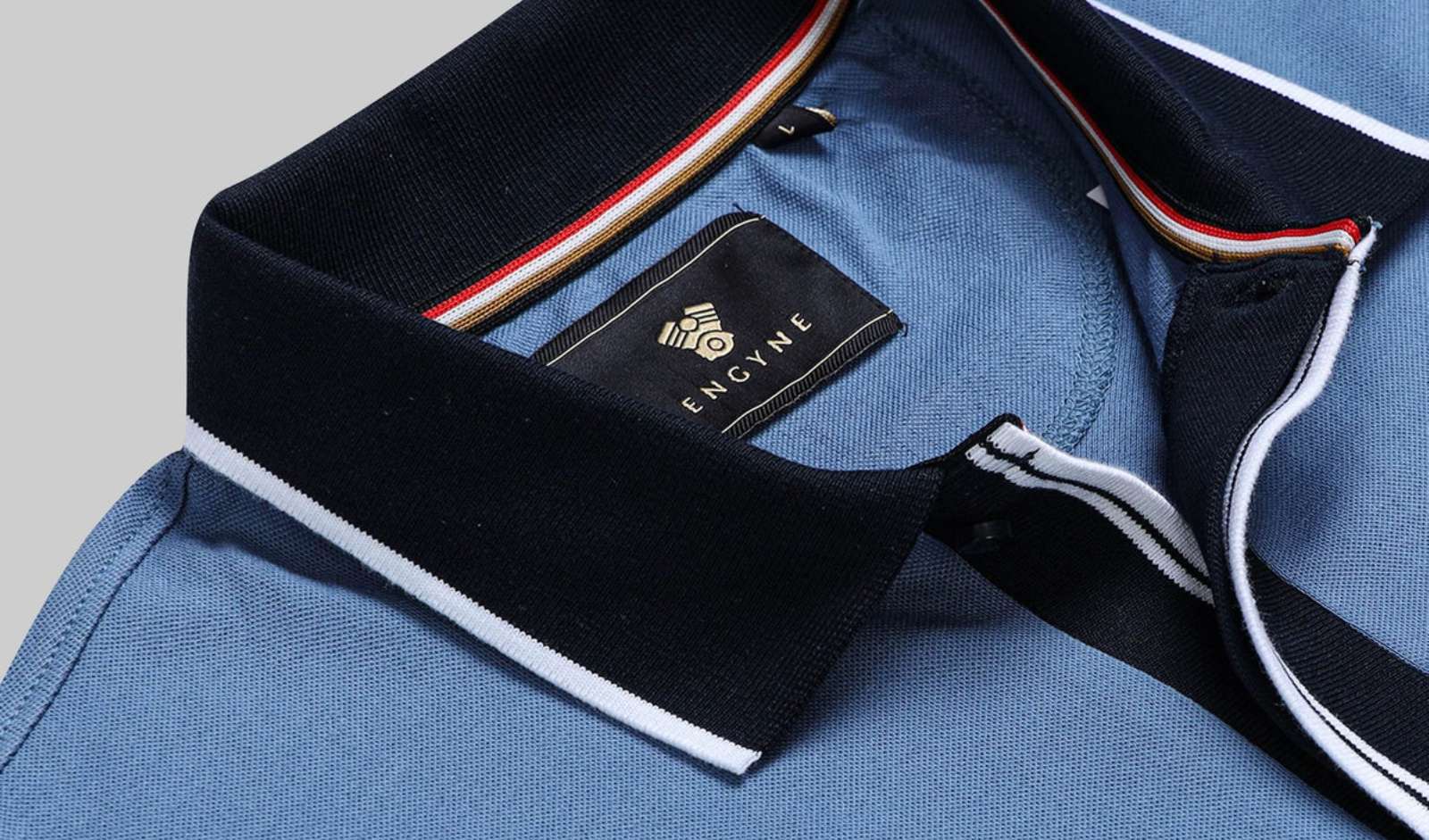
ENGYNE, a premium menswear label known for its refined design and high-quality craftsmanship at accessible pricing, has announced a new collaboration with StyleZen, an AI-driven, app-based fashion platform. StyleZen offers curated looks and doorstep delivery within 60 minutes, bringing together technology, speed, and personalization in men’s fashion retail.
The partnership aims to enhance convenience and accessibility for style-conscious professionals and millennials across India’s NCR region. By combining ENGYNE’s focus on quality and fit with StyleZen’s AI-led styling platform, the two brands are introducing a new retail experience that blends smart technology with fast fulfillment.
The curated collection includes polos, shirts, knitwear, and jackets, reflecting StyleZen’s minimalist design philosophy interpreted through ENGYNE’s contemporary aesthetic. The color palette features deep navy, olive, charcoal, marigold, and clay, offering versatility across professional and casual wear.Each piece is crafted from high-quality fabrics such as Supima cotton, blended textiles, and fine jersey. The garments feature bio-washes, textured weaves, and subtle embroidery to maintain a clean, modern look while ensuring comfort and durability throughout the day.
Dinesh D, Director and Co-Founder of ENGYNE said, “Our association with StyleZen felt organic because both brands believe in making fashion intuitive and personal. The process allowed us to explore new directions in form, texture, and expression while retaining the design discipline ENGYNE stands for. This collection is about the modern man who wants his clothes to reflect confidence without effort. It is thoughtful, sharp, and true to our idea of accessible luxury.”
This collaboration strengthens ENGYNE’s digital presence and brings the brand closer to consumers seeking flexibility and immediacy in fashion retail. The campaign visuals highlight the versatility of the collection across work, travel, and leisure, underlining the brand’s approach to style that moves with the wearer.
With this partnership, ENGYNE continues to expand its digital and creative footprint, merging design-led craftsmanship with the efficiency of app-based retail. The collection is now available through ENGYNE’s online store and the StyleZen app, offering customers an elevated shopping experience built on speed, style, and convenience.
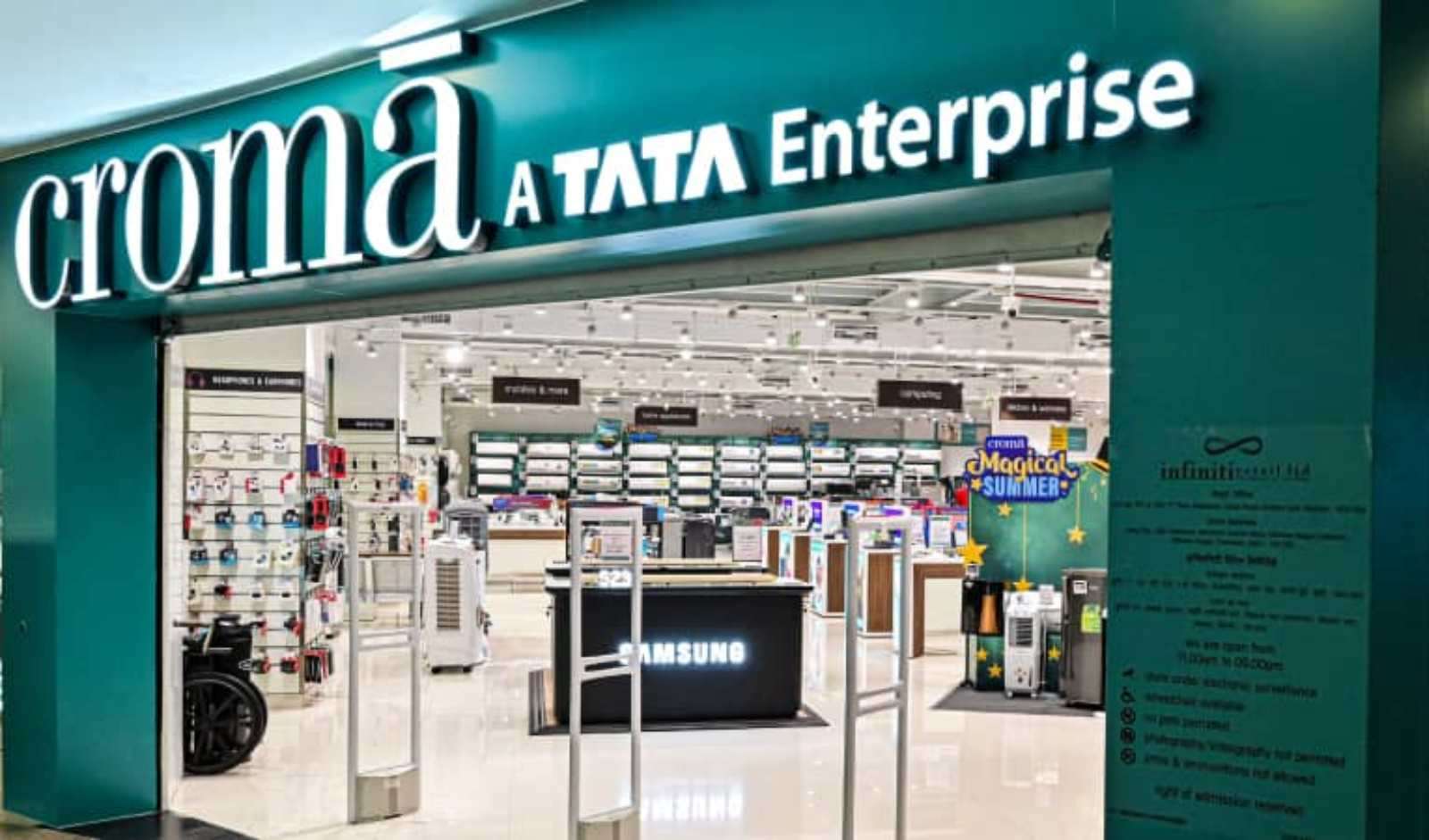
Croma has partnered with global smart home appliance brand Dreame Technology to strengthen its premium home automation and smart appliance offerings across India. Through this collaboration, Croma is bringing Dreame’s range of intelligent cleaning and grooming solutions to its retail network, enabling customers to experience and purchase the products through physical stores.
As part of the partnership, Croma has introduced dedicated “Dreame Zones” across select stores in more than 20 cities, including metro, tier I, and tier II markets. These experiential zones allow customers to interact with Dreame’s product portfolio before making a purchase, supporting Croma’s strategy of offering hands-on demonstrations for technology-driven products.
Through the collaboration, Croma is retailing Dreame’s key product categories, including robotic vacuum cleaners, cordless stick vacuums, wet-and-dry vacuum cleaners, and grooming devices. The instore setup enables shoppers to understand product features, evaluate performance, and compare specifications in a real-world environment, helping them make more informed buying decisions.
The partnership aligns with Croma’s focus on expanding its smart home ecosystem and catering to rising consumer demand for connected, technology-enabled home solutions. As Indian consumers increasingly adopt smart appliances that improve convenience and efficiency, Croma is leveraging Dreame’s innovation-led portfolio to strengthen its position in the premium home appliance segment.
By integrating Dreame into its retail network, Croma is also enhancing the overall customer experience. The retailer is using physical touchpoints to bridge the gap between online product discovery and offline purchase decisions, particularly in categories where consumers prefer to see and test products before investing.
In addition to showcasing Dreame products, Croma is supporting the brand’s market expansion by providing nationwide retail visibility and access to a broad consumer base. The collaboration enables Croma to diversify its assortment with globally recognized smart home solutions while reinforcing its reputation as a destination for the latest consumer technology products.
The partnership also benefits customers through launch-period offers, financing options, and access to Dreame’s after-sales support infrastructure, including installation assistance, customer service, and warranty coverage.
As demand for smart home appliances continues to grow in India, Croma is using its partnership with Dreame Technology to expand its premium product portfolio, strengthen its experiential retail strategy, and provide consumers with greater access to intelligent home cleaning and grooming innovations.
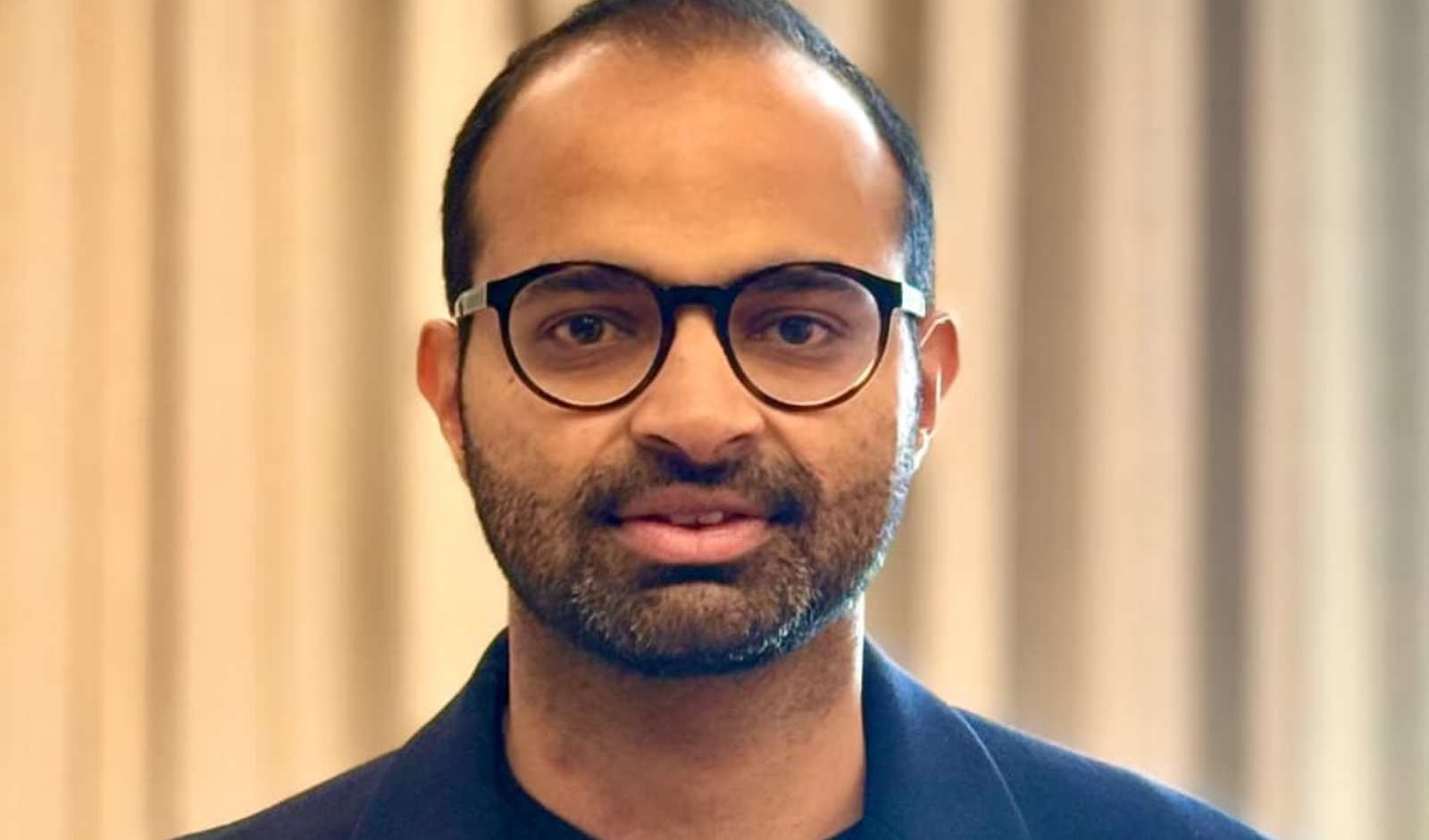 boAt has elevated Sammyak Jain to lead its international business as the company prepares for overseas expansion. Jain will drive market entry, partnerships, and strategy across key regions.
-
Quick commerce now accounts for around 70% of India’s online grocery GMV, despite online grocery being only about 2% of the country’s total grocery market.
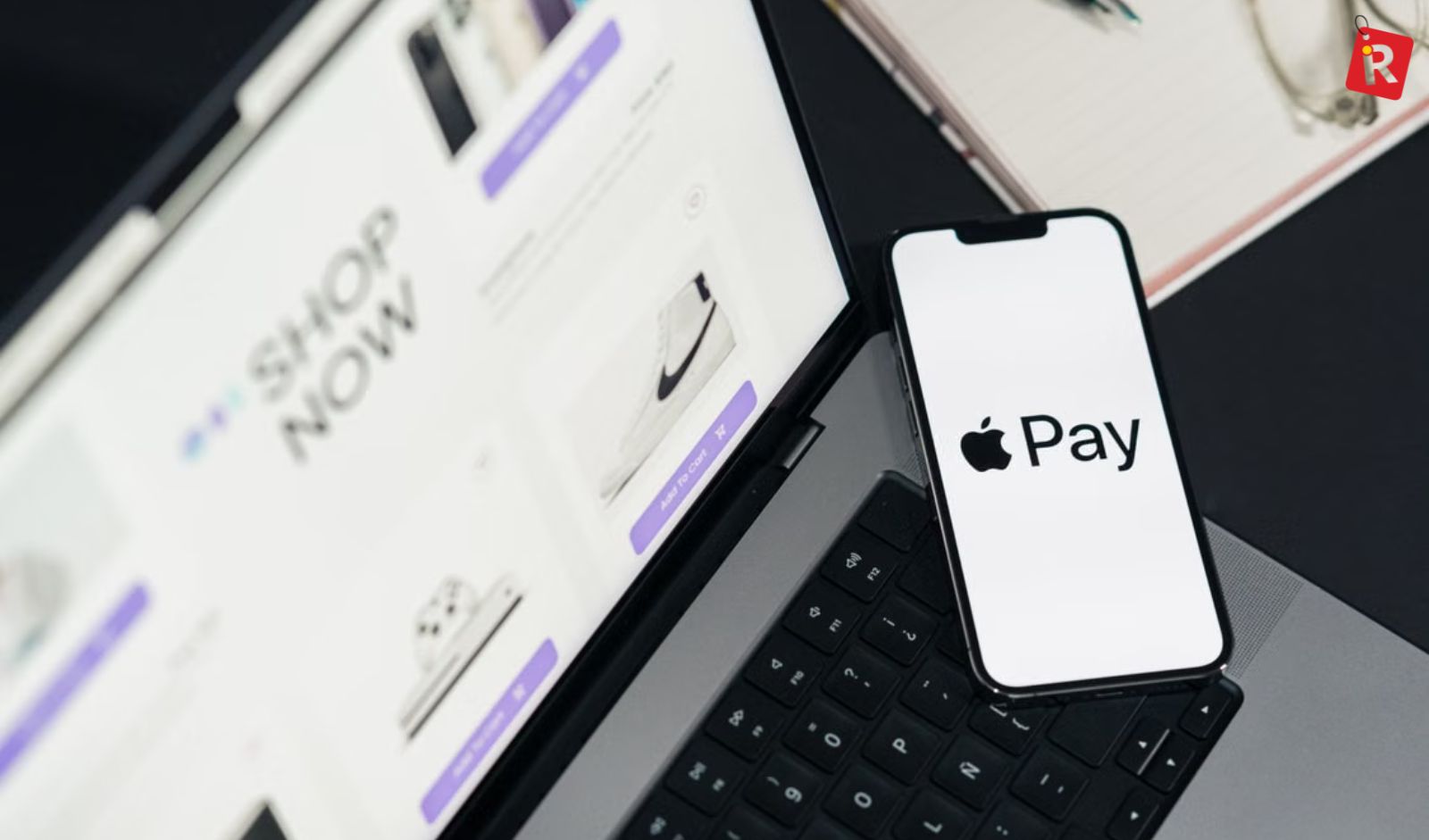 Apple has collaborated with Axis Bank to bring the service to a country dominated by UPI. The service is initially available for Axis Bank-issued Visa and Mastercard credit cards.
-
Discover 12 micro SaaS ideas you can build with AI and no-code tools, from booking systems and WhatsApp assistants to AI-powered business solutions.






Copyright © 2009 - 2026 Franchiseindia.com Ltd