





 6249
/ 20 MIN READ
6249
/ 20 MIN READ

 Follow Us
India's entrepreneurial landscape has never been more accessible. E-commerce now accounts for nearly 21% of FMCG sales in India's top metros, quick commerce has changed how fast products reach customers, and AI tools have cut the cost of starting a service business dramatically. Add to this a maturing franchise market and a generation of consumers willing to pay for curated, branded experiences, and 2026 offers genuine room for first-time entrepreneurs, salaried professionals exploring a side venture, and small business owners looking to expand. The business ideas below span almost every investment level, from under ₹50,000 to over ₹50 lakh.
Low-Investment Business Ideas
These suit entrepreneurs who want to start small, test demand, and scale only once the model works.
1. Tiffin and cloud kitchen services
A home-based or shared-kitchen food business remains one of the most dependable low-investment business ideas in India, because demand for affordable, hygienic daily meals is steady in every city with a working population. You don't need a full restaurant setup to start; a licensed home kitchen, two or three cooks, and a tie-up with a food delivery app is often enough to begin. Costs include basic kitchen equipment, packaging, an FSSAI licence and initial marketing in local groups or apps. Margins tend to be healthier than a dine-in restaurant since there's no seating area or wait staff to manage.
Investment range: ₹50,000 – ₹5 lakh
2. Tutoring and skill-based coaching
Academic tutoring, competitive-exam coaching and niche skill classes such as coding, music or spoken English need almost no infrastructure beyond a room and a whiteboard, or a laptop for online batches. This makes it one of the most accessible business ideas for anyone with subject expertise and some patience for teaching. Many tutors start with a handful of students from their own network and grow through word-of-mouth and local referrals before investing in a proper centre or an online course platform. It also scales well, since recorded content or group batches can multiply your income without multiplying your hours proportionally.
Investment range: Under ₹1 lakh
3. Online reselling
Reselling through platforms like Meesho, Amazon or Instagram requires no inventory investment upfront in many models, making it one of the most accessible small business ideas for beginners, especially for those starting from home with a smartphone and some time. You list products sourced from wholesalers or manufacturers, take orders, and the supplier or platform often handles fulfilment. Margins per item are usually thin, so volume and consistency matter more than any single sale. Building a loyal customer base on social media, and specialising in one category like ethnic wear or home décor, tends to work better than selling everything to everyone.
Investment range: ₹10,000 – ₹1 lakh
4. Mobile repair and accessories
A small kiosk or shop-in-shop offering phone repairs, screen guards and accessories taps into consistent footfall in almost any market, residential or commercial, because smartphone usage keeps rising while repair costs stay high relative to buying new. Starting this business needs basic repair tools, a small stock of commonly needed parts and accessories, and either a repair skill of your own or a trained technician. It works especially well paired with a mobile recharge, accessories or SIM-selling counter, which brings in daily walk-in customers and keeps cash flow steadier than repair income alone.
Investment range: ₹1 lakh – ₹3 lakh
Read also: Laurus Institute Expands Logistics Training With a FOFO Franchise Model
Toothsi Clear Aligners Expand Dental Care Franchise in India With FICO Model
Online and Digital Business Ideas
India's digital economy makes location almost irrelevant for these ventures, which is why they dominate searches for online business ideas in India.
5. Content creation and influencer marketing
Creators who build a focused, niche audience, whether in finance, parenting, fitness or regional cooking, can monetise through brand partnerships, affiliate marketing and their own digital products like courses or templates. Affiliate marketing in particular remains one of the most promising and profitable business ideas as India's creator economy grows and brands shift ad budgets toward influencer-led content. The entry cost is genuinely low: a smartphone camera and basic editing app are enough to start, though consistency and a clear content niche matter far more than equipment. Growth is typically slow for the first six to twelve months before it compounds.
Investment range: Under ₹50,000
6. Social media and SEO agency
Small and mid-sized businesses across India are actively looking for help with search engine optimisation, social media management, paid advertising and content strategy, making a lean digital agency a realistic online business idea for anyone with marketing skills and a laptop. You don't need an office or a large team to start; many successful agencies begin as a one-person operation serving two or three local clients before hiring. The real investment here is time spent building a portfolio and case studies, since clients buy results more than promises. Specialising in one industry, like restaurants or clinics, often speeds up client acquisition.
Investment range: ₹50,000 – ₹2 lakh
7. Dropshipping and subscription boxes
Dropshipping lets you sell products online without holding inventory or managing shipping yourself, since the supplier ships directly to the customer, while a subscription box built around a curated theme, snacks, skincare, books or regional foods, delivers predictable, recurring revenue instead of one-off sales. Both models need a functional, trustworthy-looking website to scale beyond social media orders, along with reliable supplier or curation partnerships. Subscription boxes in particular reward strong storytelling and unboxing experience, since repeat customers are won on presentation and consistency as much as on the product itself.
Investment range: ₹1 lakh – ₹5 lakh
8. Freelance professional services
Freelancing in design, writing, accounting, development or consulting is among the most accessible online business ideas from home, and India is already one of the top freelance supplier countries globally, with platforms like Upwork and direct client outreach both viable routes in. Unlike many other ideas on this list, freelancing monetises a skill you likely already have, so the real investment is time spent building a portfolio, setting rates and finding the first few clients. It also offers a natural bridge toward a larger agency or productised service once you have consistent income and referrals.
Investment range: Under ₹50,000
Trending and Emerging Business Ideas
These categories are seeing genuine, sustained growth in search interest, marketplace listings and repeat orders, not just hype.
9. D2C beauty and personal care brands
D2C beauty remains one of the most trending business ideas in India right now, driven by social media discovery, influencer-led marketing and a growing appetite for homegrown, ingredient-led brands over legacy FMCG names. Starting one typically means partnering with a contract manufacturer for formulation, investing in packaging and brand identity, and running most early sales through Instagram and your own website before expanding to marketplaces. The category rewards a clear positioning, clean-label skincare, Ayurvedic ingredients, or a specific skin concern, rather than trying to be a general beauty brand. Margins can be strong, but customer acquisition cost is the real challenge to plan for.
Investment range: ₹5 lakh – ₹25 lakh
10. Pet care products and services
India's pet care market reached roughly $3.6 billion in 2024 and is expected to double by 2028, which makes pet food, grooming, accessories and veterinary-adjacent services a genuinely trending business idea rather than a passing one. Urban pet ownership is rising fastest among younger, double-income households willing to spend on premium and specialised products. Entry points range from a home-based grooming service or boutique pet store to a D2C pet food brand, each with very different capital needs. Local, hyper-targeted marketing, think housing society tie-ups and vet referrals, tends to work better here than broad advertising.
Investment range: ₹2 lakh – ₹15 lakh
11. Regional packaged snacks and food
Packaged regional snacks, pickles and festive foods are finding national audiences through e-commerce, turning a local family recipe or a city's specialty into a scalable FMCG brand with customers far beyond its home state. This works because platforms like Amazon, Flipkart and quick commerce apps have made shelf space nearly irrelevant, and consumers are actively searching for authentic, regional products they can't find locally. Getting started involves food safety licensing, consistent recipe standardisation for production at scale, and investment in shelf-stable packaging. Brand story and authenticity do a lot of the marketing work in this category.
Investment range: ₹3 lakh – ₹20 lakh
12. AI-enabled service agency
Offering AI-powered services to small businesses, content automation, chatbot setup, workflow automation or AI-assisted design, is a newer, low-logistics business idea with minimal physical overhead and strong demand as businesses look to cut costs without cutting output. Along with content creation, this is one of the few ideas on this list that needs no inventory, no delivery logistics and no physical location at all. The entry cost is mainly your own time learning the tools and building a few demo projects or case studies to show prospective clients. Early movers in a specific industry niche tend to have an advantage here.
Investment range: Under ₹1 lakh
Explore more: Top 10 Coffee Franchises in India to Explore in 2026
Mandira by Manepally Expands Premium Silver Jewellery With FOFO and FOCO Models
Franchise and Offline Business Ideas
For entrepreneurs who want a tested model, built-in brand recall and operational support, franchising remains one of the more reliable profitable business ideas.
13. Quick-service restaurant and café franchises
QSR and café franchises offer a proven menu, established supply chain and existing brand pull, which significantly lowers the execution risk compared to building a food brand from scratch on your own. The franchisor typically handles recipe standardisation, staff training, store design and marketing support, so your job is largely picking the right location and running daily operations well. Formats range from small kiosks needing 100–300 sq ft to full-sized cafés and QSR outlets needing 800 sq ft or more, with investment scaling accordingly. Royalty fees usually run 4–8% of revenue, so factor that into your margin expectations before signing.
Investment range: ₹15 lakh – ₹50 lakh
14. Preschool and education franchises
Preschool franchises need comparatively little space and capital, and tap into consistent, recession-resistant local demand, since parents keep spending on early childhood education even when other household budgets tighten. Most brands provide the curriculum, teacher training, branding and marketing material, so founders without an education background can still run one successfully with the right staff. Space requirements are typically modest, often 200–300 sq ft for a compact format, making this one of the lower-barrier franchise categories to enter. Location near residential societies and a credible local reputation matter more here than aggressive advertising.
Investment range: ₹5 lakh – ₹15 lakh
15. Retail and dealership opportunities
Dealerships in categories like building materials, FMCG distribution or fashion retail suit entrepreneurs who already understand a local market and want a volume-driven, steady-turnover business rather than a brand-building exercise from scratch. These typically involve higher working capital requirements since you're holding and moving inventory, but they also benefit from consistent repeat demand, construction materials and daily-use FMCG products get bought again and again, unlike one-time purchases. Most dealership agreements include schemes, incentives and sometimes insurance or support benefits from the parent company. This category rewards existing market relationships and credit management skills more than marketing creativity.
Investment range: ₹10 lakh – ₹50 lakh+
Read more: House of Aadyaa Expands Silver Jewellery Retail With a FOFO Franchise Model
Abate Eye Hospital Expands Eye Care Hospital Franchise in India With FOCO Model
How to Pick the Right Business Idea for You
Before you commit money to any of these, run through four checks: your budget and how much of it you can afford to lose, the skills you already have versus what you'd need to hire for, how much time you can give it alongside your current income, and how saturated the idea already is in your specific city or neighbourhood. A low-investment idea that matches your existing skills will almost always outperform a trending idea you have to learn from scratch.
FREQUENTLY ASKED QUESTIONS
There's no single "most profitable" idea; D2C beauty, pet care, regional packaged food and franchise-led QSRs are currently showing strong, sustained growth in India.
Tutoring, online reselling, freelancing and content creation can all be started with under ₹1 lakh, often less.
Online ideas typically need less capital and no physical location, but offline and franchise models offer more structure, support and brand recognition for first-time entrepreneurs.
It varies widely by category and format, roughly ₹5 lakh for a compact preschool franchise up to ₹50 lakh or more for a full-format café, retail or dealership franchise.
Home-based food businesses, tutoring, D2C beauty brands and preschool franchises are among the categories seeing strong participation from women entrepreneurs in India.
For Further Franchise Info Contact

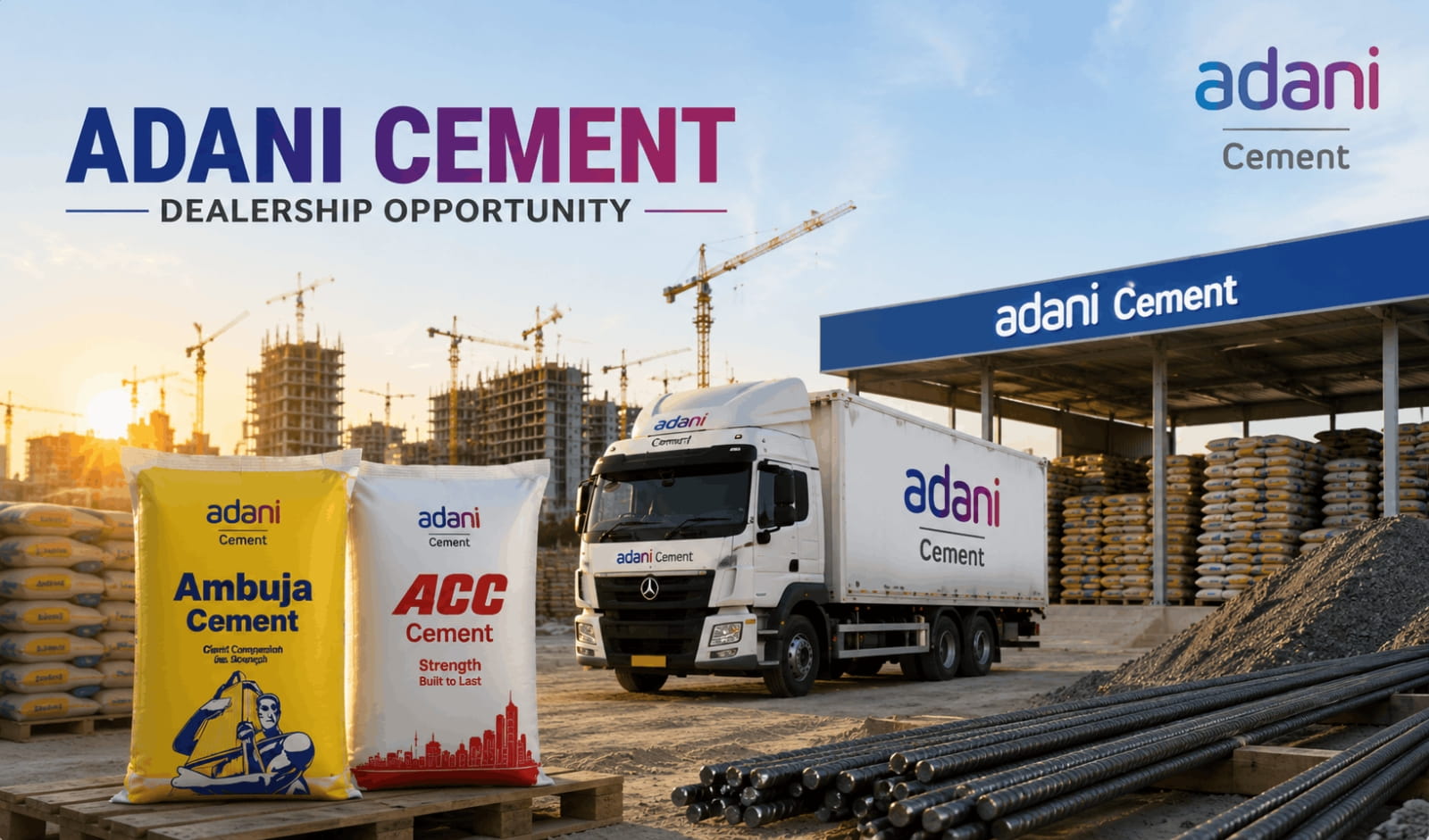
India's infrastructure story continues to gather momentum. Rapid urbanization, residential construction, industrial expansion, highways, metro projects, and government-led development initiatives are collectively creating sustained demand for construction materials. Against this backdrop, Adani Cement is expanding its dealership network, positioning itself as an attractive opportunity for entrepreneurs seeking to build a long-term business in the building materials sector.
The company's presentation highlighted the scale of the Adani Group, founded in 1988, with operations spanning cement, ports, airports, logistics, renewable energy, transmission, city gas distribution, roads, media, and other infrastructure businesses. It also emphasized the group's planned US$100 billion investment by 2030 toward infrastructure and clean energy, reflecting its long-term growth ambitions.
From a business perspective, the dealership model is designed around India's largest cement demand segment—individual home builders, contractors, retailers, and local construction projects. Company executives explained that cement remains an essential building material with consistent demand and no direct substitute in conventional construction, making it a resilient category within the broader building materials industry.
One of the key differentiators is the relatively low entry barrier. The company stated that entrepreneurs can typically begin operations with an investment of around ₹5-7 lakh, including refundable security deposits and working capital requirements. Rather than maintaining heavy inventories, dealers receive logistics and supply support through the company's manufacturing plants and regional distribution network, allowing businesses to focus on customer acquisition and market expansion.
The presentation also outlined three growth stages for partners—starting as a pure retail dealer, progressing into a hybrid dealership, and eventually expanding into wholesale operations as business volumes increase. Instead of encouraging aggressive expansion from day one, the company recommends building market understanding over the first few months before scaling operations.
Another notable takeaway was the emphasis on cash flow, inventory rotation, and customer relationships rather than expensive infrastructure. The company also highlighted ongoing dealer support through sales teams, technical experts, engineer engagement, and regional assistance, enabling partners to grow alongside India's expanding construction economy. For entrepreneurs looking to enter a sector backed by long-term infrastructure demand, the Adani Cement dealership model presents a structured and scalable business proposition.
For Further Franchise Info Contact





Copyright © 2009 - 2026 Franchise Tv.