





 396
/ 14 MIN READ
396
/ 14 MIN READ
 Follow Us
For a franchise business, the brand is more than a name or logo. It represents the identity, reputation and operating system that franchisees are expected to replicate across locations. This makes intellectual property an important part of franchise strategy, particularly as businesses move from a single outlet to a wider network.
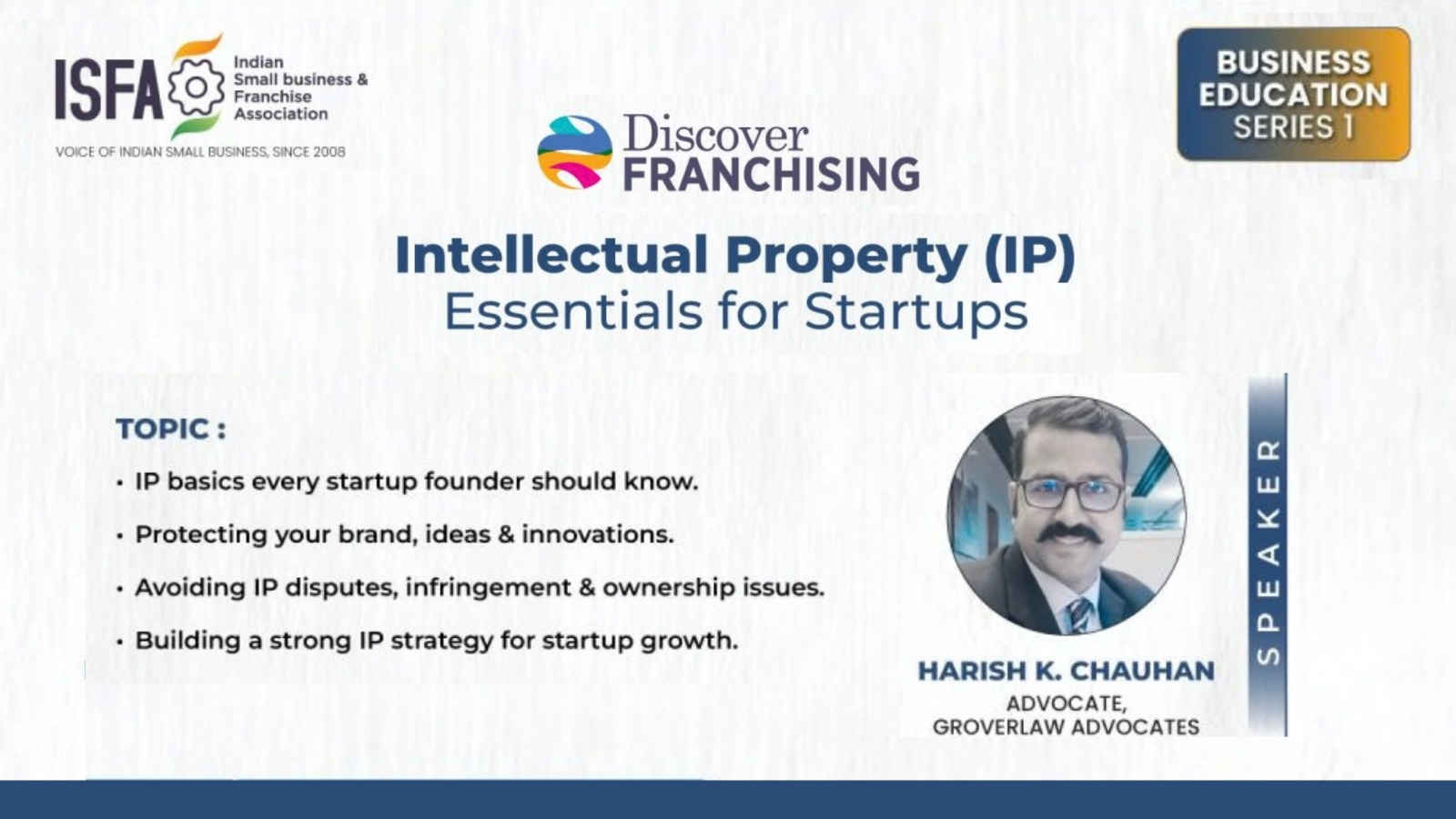
An ISFA Business Education Series session led by IP lawyer Harish Kumar Johan of Grover Law explored how startups and MSMEs can identify, protect and manage intellectual property before scaling their businesses. The session covered trademarks, patents, industrial designs, copyright, domain names, trade secrets and other forms of IP, along with practical approaches to protection and enforcement.
What IP Means for a Franchise Brand
Intellectual property can include trademarks, patents, industrial designs, copyright, domain names, trade secrets and other protected assets. The webinar highlighted that businesses need to identify which forms of IP are relevant to their particular operations.
For franchise businesses, this could include the brand name and logo, marketing material, product designs, software, operating processes, confidential information and proprietary know-how.
The speaker explained that even a name created for a product or business can become an important intellectual asset. Similarly, a unique product design, artwork, music, software or a process associated with a business may involve different forms of IP protection.
Trademarks were given particular attention during the session. They can include names, logos, slogans and, where applicable, colours or sounds that distinguish one business's goods or services from another. The speaker explained that trademark registration can provide exclusive rights and legal remedies against misuse while also contributing to credibility and brand value.
Patents, meanwhile, can be relevant to qualifying inventions and processes, while industrial designs focus on the visual appearance of products. Copyright can apply to areas such as literary and artistic works, music and software, depending on the applicable legal requirements.
WIPO notes that franchising commonly involves a package of IP rights that can include trademarks, trade names, patents, industrial designs, copyright, know-how and trade secrets.
Protect the Brand Before Expanding
As a business prepares to franchise, protecting its brand becomes increasingly important. The webinar highlighted trademark protection as a way to establish exclusive rights and provide remedies against misuse.
However, the speaker stressed that businesses should not wait until after expansion to think about protection.
He recommended conducting appropriate clearance searches before adopting a business or product name. During the Q&A, he explained that trademark searches can help businesses determine whether a similar name already exists, while design searches can be relevant when a company has developed a product design.
This can help identify potential conflicts before substantial investment goes into branding, marketing, packaging and expansion.
The discussion also highlighted a practical issue with domain names. Even when a domain appears to be available, businesses should consider trademark clearance before adopting it because the domain itself does not necessarily establish that the underlying name is free from potential trademark conflicts.
Why Early IP Protection Matters
The webinar emphasised that timing matters when protecting intellectual property.
The speaker described early protection as providing a potential first-mover advantage and warned that businesses can face complications when they invest heavily in an identity or product only to discover that similar intellectual property already exists.
For startups and franchise businesses, this is particularly relevant because a business may invest significant resources in creating a recognisable brand before expanding through franchise partners.
The session also highlighted the importance of proper documentation with associates and distributors so that intellectual property is not misused or its ownership becomes unclear.
IP Can Support Franchise Expansion
Intellectual property can also become a commercial asset. Depending on the business model, IP may be licensed, transferred or incorporated into expansion arrangements.
The speaker explained that IP can exist as a separate intangible asset with commercial value and may be considered independently when a business expands or is sold. He also discussed how protected intellectual property can support licensing and franchising models.
In a franchise relationship, the franchisee receives defined rights to use the franchisor's intellectual property while operating within the established business system. WIPO describes franchising as a model in which the franchised system includes a package of IP rights and relevant know-how, with the franchisee using those rights under the franchisor's supervision, control and assistance.
This makes IP particularly important for franchise brands because the value being replicated is not limited to the physical outlet. It can include the brand, systems, creative material, designs, know-how and other intellectual assets that distinguish the business.
IP Can Strengthen Business Value
The webinar also discussed the broader business value of intellectual property.
According to the speaker, protected IP can contribute to brand value, credibility, consumer confidence and investor confidence. He also highlighted competitive advantage, monetisation, separate business identity and expansion as reasons why startups should consider IP strategically.
For a franchise business, these considerations can become increasingly important as the brand moves into new cities or markets and more franchise partners begin operating under the same identity.
Avoiding IP Disputes
The session also focused on preventing disputes rather than dealing with them only after they arise.
The speaker pointed to clearance searches, proper documentation and awareness of third-party intellectual property as practical preventive measures. He also discussed the importance of understanding whether a business is unintentionally using another party's trademark, design or other protected asset.
Once IP has been protected, enforcement can depend on the circumstances. The webinar discussed possible approaches including notices, opposition proceedings and litigation, with the appropriate approach depending on the nature and extent of the misuse.
Building an IP Strategy
For franchise brands, the starting point is an IP audit. Businesses should identify their intellectual assets, establish ownership, conduct appropriate searches, document relationships with employees, associates and partners, protect relevant assets and prepare mechanisms for dealing with misuse.
The speaker also discussed prioritising IP enforcement based on the importance of the asset, the nature of the misuse and the resources available to the business. For businesses planning international expansion, he touched on mechanisms such as the Madrid Protocol for seeking trademark protection across multiple jurisdictions.
The webinar concluded with a simple message for startups and growing businesses — identify, protect, build a strategy and enforce when necessary.
For a franchise brand, getting this foundation right can help create greater clarity around what franchisees are permitted to use and protect the assets that support the business model as it expands.
The final recommendation from the session was equally practical: audit your IP. Understanding what a business has already created, what belongs to it and what needs protection can help founders make more informed decisions before taking the next step in their growth journey.
For Further Franchise Info Contact






Copyright © 2009 - 2026 Franchise Tv.