






 Follow Us
Why Lukson Is a Standout Lab-Grown Diamond Jewelry Franchise
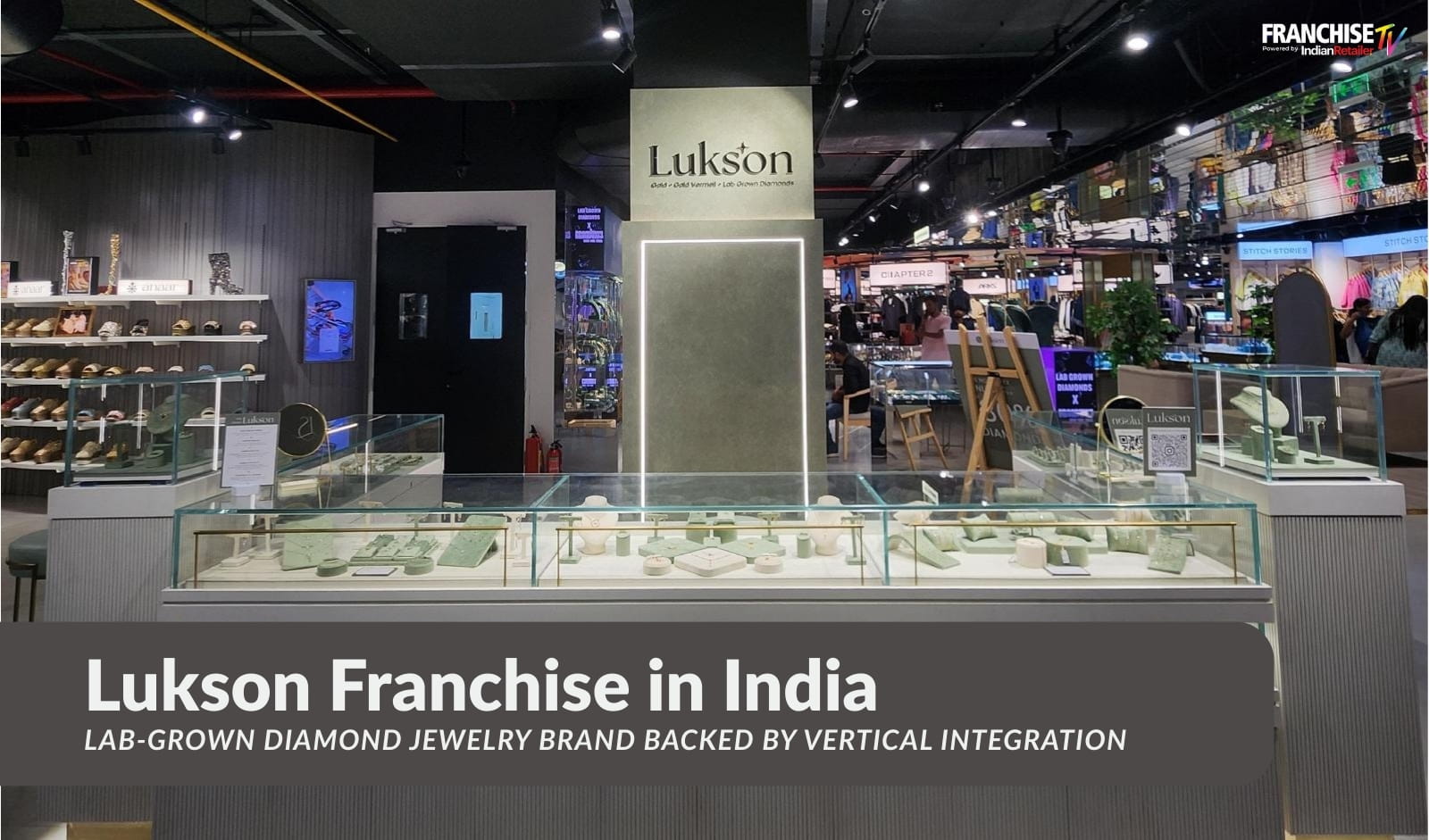
Lukson is a vertically integrated lab-grown diamond jewelry brand built by the legacy-driven JK Star Group with 34-plus years in diamond manufacturing and trading. Unlike typical jewelry retailers, Lukson grows its own diamonds, manufactures in-house, designs internally, and retails through an omnichannel model—creating a rare cost and quality advantage for franchise partners.
This control across the value chain allows Lukson to offer competitive pricing 30,000–₹32,000 per carat) while still passing 35 percent–45 percent gross margins to franchisees—numbers rarely seen in the jewelry franchise space.
Watch here the complete video for more detailed insights: Click here
Market Demand for Lab-Grown Diamond Jewelry in India
India’s lab-grown diamond jewelry market is projected to grow from ~$300 million to over $1.2 billion in the next 7–8 years. The shift is driven by millennials and Gen Z buyers who prefer affordable luxury, sustainability, and modern designs over traditional heavy jewelry.
Lukson targets this exact audience with daily-wear diamond jewelry starting from ₹3,999, making diamonds accessible for gifting, fashion wear, and aspirational buyers.
Product Positioning: Everyday Luxury for Gen Z & Millennials
Lukson does not compete in bridal jewelry. Instead, it focuses on:
- Daily wear diamond rings, pendants, earrings
- Engagement rings and couple bands
- 14K & 18K gold jewelry
- 18K gold vermeil (silver + thick gold layer) for affordable luxury
This pricing breadth opens both gifting and self-purchase segments, increasing ticket frequency and walk-ins.
Read more: 5àsec Franchise Opportunity in India: A Global Textile Care Brand Enters a High-Growth Market
Moore Market Franchise: Where Books, Café Culture and Profits Meet
Top 20 Franchise Business Opportunities in India With Low Investment
Franchise Model, Investment & Returns
Lukson follows a FOFO (Franchise-Owned Franchise-Operated) model.
- Area: ~600 sq. ft. (malls/high streets)
- Total Investment: ₹2.35–₹2.5 Cr (₹1.9 Cr inventory)
- Franchise Fee: ₹7.5 Lakh
- Gross Margins: 35% (gold), 45% (vermeil)
- Payback: ~51 months
- IRR: ~31%
With conservative projections at just 0.6 inventory turns, existing stores are already performing at 1.2 turns, indicating strong upside.
Retail Expansion & Brand Push
Lukson operates stores in Pune and Hyderabad and is expanding across Delhi NCR, Mumbai, Ahmedabad, and more. The brand has partnered with Bollywood actor Vaani Kapoor to build trust and visibility among young consumers.
FAQs About Lukson Franchise in India
Q1. How is Lukson different from other lab-grown diamond brands?
Lukson grows, manufactures, designs, and retails its own diamonds—ensuring better pricing, quality control, and margins.
Q2. Who is the target customer?
Urban millennials, Gen Z, working professionals, and gifting buyers aged 25–45.
Q3. What locations work best?
Ground/first floor in premium malls and key jewelry high streets in metro and Tier I cities.
Q4. Is buyback a risk for franchisees?
No. Unsold SKUs are replaced annually (15–20 percent), and buybacks are absorbed within this cycle.
Q5. What is the average selling price?
₹30,000–₹32,000 per carat—lower than most competitors, improving conversions.
For Further Franchise Info Contact


India’s $85 billion jewelry industry is shifting rapidly. Driven by rising disposable incomes, today's buyers want contemporary pieces that reflect their personal style, fit their daily lives, and don't feel out of reach. This evolution took center stage at IReC x D2C 2026 – The Big Jewelry Sparkle, where industry leaders discussed how innovation, lab-grown diamonds, and franchise retail are opening fresh doors for emerging brands to scale.
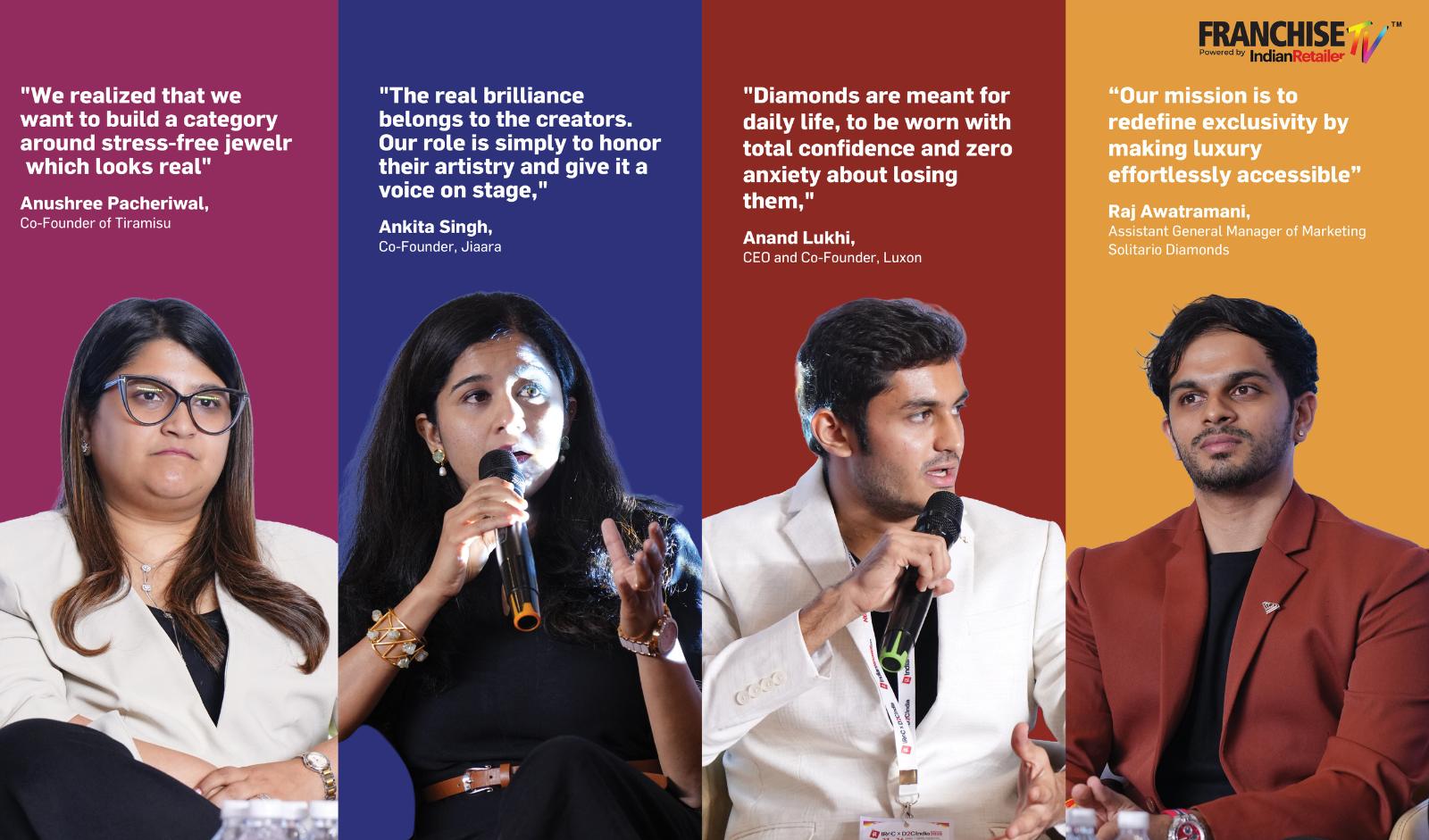
Striking a chord on this new mindset, Anushree Pacheriwal, Co-Founder of Tiramisu noted, "We realized that we want to build a category around stress-free jewelry which looks real." Ultimately, brands are moving fast to turn jewelry into an everyday expression of identity.
Diamonds Beyond Special Occasions
One of the most significant shifts in the jewelry industry is the changing role of diamonds in consumers' lives. Traditionally, diamond jewelry was viewed as a purchase reserved for weddings, anniversaries, and milestone celebrations. Today, brands are working to make diamonds a more frequent and accessible purchase.
"Diamonds are meant for daily life, to be worn with total confidence and zero anxiety about losing them," said Anand Lukhi, CEO and Co-Founder, Luxon.
This shift toward everyday luxury is helping expand the customer base for jewelry brands. Consumers, particularly younger buyers, are increasingly seeking products that fit into their daily lifestyles rather than remaining locked away for special occasions. For retailers, this means more frequent purchases and stronger customer engagement throughout the year.
As brands introduce products at more accessible price points, they are also creating a scalable retail model that can be replicated across multiple markets through franchise partnerships.
Read also: ASV Polkis Expands Through FOCO Model to Capture India’s Luxury Jewellery Opportunity
Google’s Chromebook Bets on Franchising to Scale Affordable Computing Across India
Lab Grown Diamonds Expand the Market
The growing popularity of lab-grown diamonds is further accelerating this transformation. By offering consumers a more affordable alternative, the category is helping brands attract customers who may not have previously considered purchasing diamond jewelry.
"Our mission is to redefine exclusivity by making luxury effortlessly accessible," said Raj Awatramani, Solitario Diamonds.
The category is not only creating awareness but also widening the overall consumer base. Industry players believe that lab-grown diamonds are introducing a new generation of buyers to the jewelry market. "Lab-grown technology has changed the game for diamonds," added Raj.
For franchise-led brands, this development is particularly significant. Affordable luxury products typically have broader market appeal, allowing retailers to expand into newer cities where traditional diamond jewelry may have remained a niche category. As awareness continues to grow, lab-grown diamonds are expected to play a key role in the expansion strategies of organized jewelry retailers.
Trust Becomes a Retail Differentiator
While product innovation is driving demand, trust remains one of the biggest factors influencing consumer decisions. Jewelry is a high-involvement purchase, and customers increasingly want transparency about what they are buying. "Radical transparency is something very important," said Ankita Singh, Co-founder, GIARA.
Modern consumers are no longer satisfied with simply purchasing a product. They want to understand the craftsmanship, sourcing, and story behind every piece. This has prompted many emerging brands to invest heavily in customer education and storytelling. "We tell people how their jewelry is made," added Ankita.
For franchise operators, this emphasis on transparency can be a powerful advantage. A strong brand story helps build credibility and trust, making it easier for new stores to establish relationships with customers in unfamiliar markets.
Why Product Still Drives Growth
As brands scale across different retail formats, one lesson remains consistent: the product itself ultimately determines success. Insights from airport retail offered an interesting perspective on consumer behavior. Unlike traditional shopping environments, airports often force consumers to make quick purchasing decisions.
"The most important thing that the airport taught us is that there is a lot of emotional buying while traveling," said Anushree Pacheriwal, Co-founder, Tiramisu.
In such settings, there is little time for extensive comparison or research. Customers are drawn to products that immediately resonate with them.
"Product is the king," added Pacheriwal. This principle applies equally to franchise expansion. Regardless of location, store design, or marketing strategy, sustainable growth depends on offering products that customers genuinely want to buy.
The Value of Craftsmanship in a Modern Market
While technology and innovation reshape the jewelry landscape, craftsmanship remains its beating heart. Today, forward-thinking brands are deeply investing in artisan communities, ensuring heritage techniques not only survive but drive modern retail.
"The real brilliance belongs to the creators. Our role is simply to honor their artistry and give it a voice on stage," said Ankita. Handcrafted jewelry is no longer just about preserving tradition; it has become a massive differentiator for brands trying to cut through the noise. By focusing on artisan-led storytelling, franchise partners can build actual emotional connections with local shoppers.
But the real challenge is scaling that authenticity. As Ankita, Co-founder of GIARA, puts it: "We want to make it global. We want to set up operational efficiencies here to ensure that there's a traditional art of jewelry making, but how do we set up a modern international brand which is commercially successful."
Ultimately, the goal for modern brands is finding that sweet spot balancing heritage and raw storytelling with a scalable business model that can compete on a global stage.
Read about business opportunities: 6 Consumer Brands Scaling Aggressively Across India
Top 7 Fast-Growing Street Food Franchise Brands in India
Franchising Set to Power the Next Growth Phase
The main takeaway is that the industry is changing fast. Winning now requires accessible luxury, great storytelling, and a solid mix of online and in-store shopping. For franchise investors, this is a huge win for organized brands that offer way better support and consistency than traditional shops. Ultimately, it’s not just about opening more stores; it’s about fair pricing, trust, and making jewelry that people actually want to wear every day.
At the end of the day, success comes down to what you are selling. As Anand Lukhi, CEO and Co-founder of Luxon, put it: "Product is the hero."
For Further Franchise Info Contact




Copyright © 2009 - 2026 Franchise Tv.