






Founded in 2015, AMARIS is a fine jewelry brand that provides individual, design-led and relevant jewelry pieces for modern women. Over the years, the brand has evolved from a jewelry label into a complete design house.
Talking about the brand, Prerna Rajpal, Founder & CEO, AMARIS, says, ‘‘Jewelry was always an incredibly personal space for me. I saw an opportunity to bring together exceptional Indian craftsmanship with a more contemporary, global design language.’’ She adds, ‘‘With an in-house atelier, we have a strong bespoke practice and a portfolio that moves from everyday pieces to statement and high jewelry,’’ says Prena.
Brand’s Footprint
AMARIS has five retail locations, with a recent store in Ludhiana. The brand has a growing physical presence across some of India’s most important luxury markets.
Commenting on the brand retail footprint, Prena says, ‘‘For us, footprint is not just about the number of stores. Our online business has become an equally important part of how clients discover and engage with AMARIS. We work with clients across India and internationally through our website, video consultations, digital styling and global shipping.
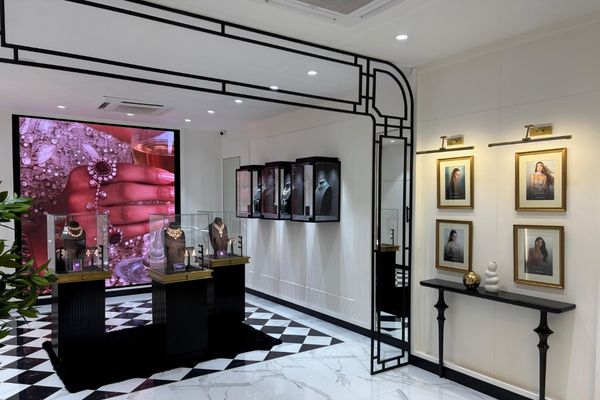
New Store Opening in Ludhiana, Punjab
Further discussing the brand’s new store in Ludhiana, Prena says ‘‘Ludhiana is particularly exciting because it gives us the opportunity to build a much deeper relationship with Punjab, a market that has always had a strong appreciation for fine jewelry, craftsmanship and celebration. The customer here understands luxury, but is also increasingly looking for jewelry that feels different and more personal.’’
She further adds that there is tremendous purchasing power in the region, but more importantly, there is an evolved customer who travels, follows global fashion and increasingly wants jewelry that expresses her personality rather than simply conforming to convention.
Expansion Strategy
AMARIS brand expansion strategy is selective as the brand wants to tap the high-end luxury consumer market. As a result, the brand is highly conscious of its location selection and wants to place itself in the premium shopping destinations.
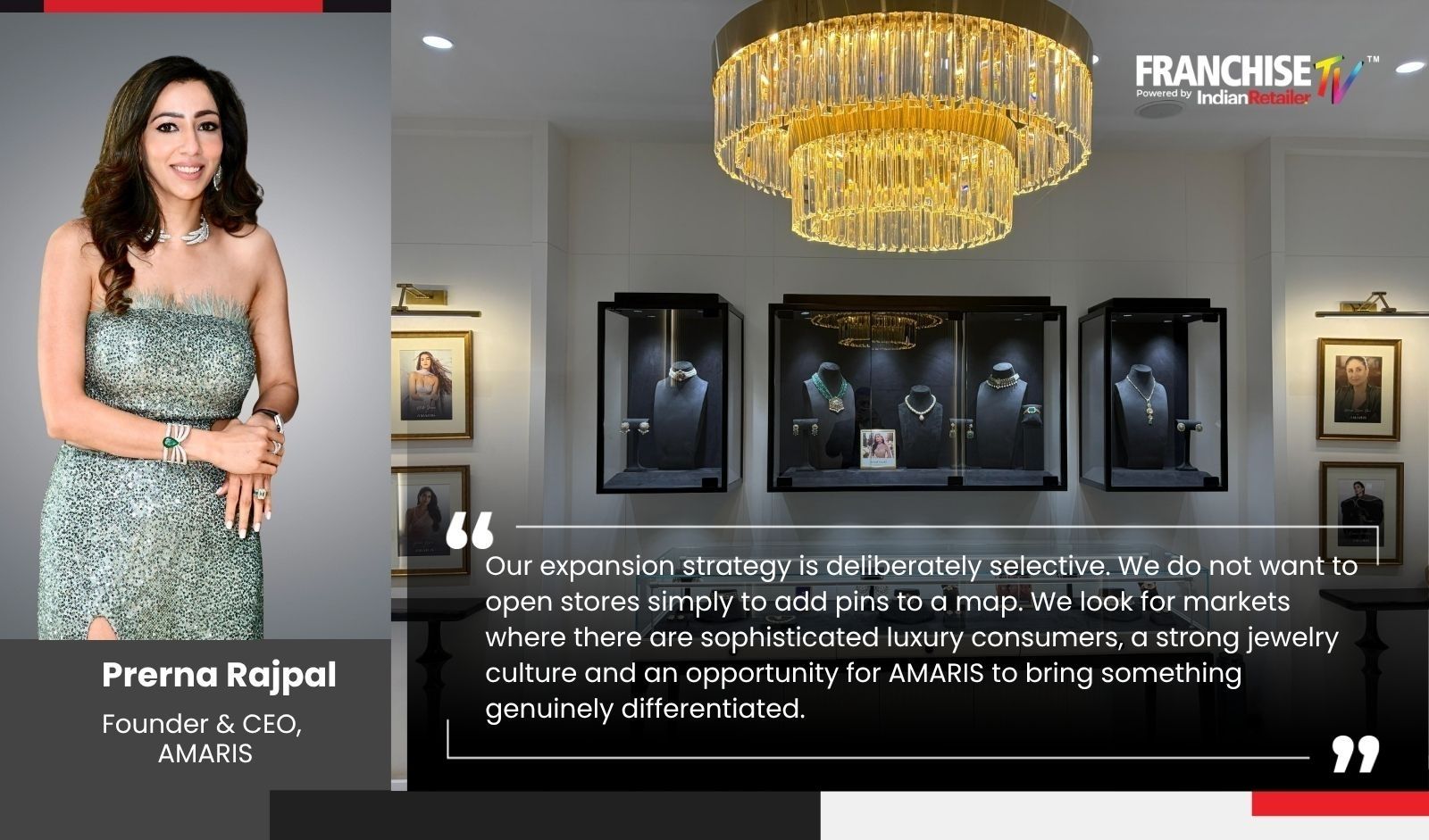
Prena shares, ‘‘Our expansion strategy is deliberately selective. We do not want to open stores simply to add pins to a map. We look for markets where there are sophisticated luxury consumers, a strong jewelry culture and an opportunity for AMARIS to bring something genuinely differentiated.’’
Omni Channel Mode
Talking about the brand’s omnichannel mode, Prena says, ‘‘Omni Channel is fundamental to AMARIS growth. A client may discover us on Instagram, explore a jewel on our website, speak to a stylist over video, visit a store to try it on and then continue that relationship digitally. We don't see online and offline as separate businesses. They are different moments within the same AMARIS experience.’’
She further shares that the technology gives AMARIS its reach, while the stores provide the emotion, trust and tactile experience that fine jewelry requires. Together, they allow the brand to serve the client diligently.
Design Versatility
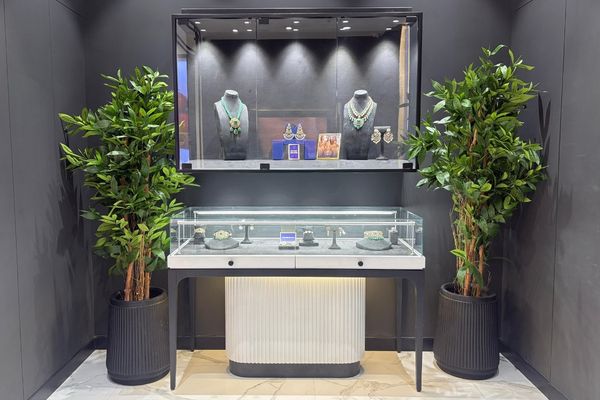
Design versatility is a key differentiator for AMARIS, as consumers increasingly seek jewellery that moves seamlessly between everyday, work, festive and occasion dressing.
Talking about the brand’s design versatility, Prena says, ‘‘At AMARIS, we think a lot about versatility, movement and unexpected construction. A piece may transform from a choker into a bracelet, a traditional technique may appear in a completely contemporary silhouette, or an extraordinary gemstone may be styled in a way that feels effortless rather than ceremonial.’’
Celebrity Endorsements
Celebrity visibility and endorsement has played an important role in introducing AMARIS to a much wider audience. The brand has over 200 celebrity moments.
Discussing AMARIS celebrities involved endorsements and campaigns, Prena shares, ‘‘For luxury jewelry brands, celebrity endorsements and influence marketing for wider reach cannot be the sole objective of the brand. Fine jewelry purchase ultimately depends on trust. Influencer and celebrity marketing can create aspiration and discovery, but craftsmanship, product quality, transparency and client experience still have to close the gap.’’
Prena emphasized that AMARIS is a design-first brand, and people will initially discover the brand because they have seen a particular jewel on someone they admire, but they stick to it because they gradually discover the craftsmanship, the breadth of the collection and the service behind it.
She says, ‘‘The transition, from visibility to desire to trust, is where celebrity association becomes truly valuable.’’
Fine Jewelry Market in India
According to a market report, India's fine jewelry market is valued at USD 87.19 billion in 2026, and is projected to reach USD 124 billion by 2032 at a 6.05% CAGR.
Prena highlights that the evolving trends of self-purchase, everyday wear and design experimentation are emerging as key drivers of this segment. She places the younger generation at the forefront of this shift, reshaping the industry by challenging the traditional notion that jewellery is reserved for special occasions or kept locked away. She emphasized that today’s consumers increasingly view jewellery as an everyday extension of their wardrobe—something to be worn, styled and experimented with regularly.
Talking about the fine jewelry market, Prena shares, ‘‘It is an extremely interesting time for the fine jewelry segment in India as the definition of luxury is changing. Jewelry will have an emotional and celebratory significance in India, but the reasons people buy it is much broader. Women are increasingly purchasing jewelry for themselves and moving beyond weddings and occasions into everyday wardrobes. Younger customers are much more aware of design, provenance, quality and international trends, and are willing to experiment.’’
She adds that the consumers are also gravitating towards organised brands because certification, transparency, service, buyback and trust have become increasingly important.
Moving Beyond Metros
Discussing the segment’s (Fine Jewelry) geographical market potential, Prena says, ‘‘A major opportunity for the segment is coming from cities beyond the traditional metros. Luxury consumption today is far more geographically distributed than it was a decade ago. The customer in Ludhiana, Hyderabad or another emerging luxury market has access to exactly the same global references as someone in Delhi, London or New York. For AMARIS, this creates an enormous opportunity for the brand to grow.’’
Designs and Product Innovations
Talking about the designs and the product innovation in the jewelry sector, Prena says, ‘‘Design is no longer an added advantage in the jewelry sector; it has becoming one of the biggest differentiators.’’ She recalls, ‘‘There was a time when jewelry purchasing was driven predominantly by the intrinsic value of the materials. Today, the customer still cares deeply about diamonds, gemstones, gold and craftsmanship, but also asks about the jewelry’s differentiation and personalization’’
She adds that innovation does not always need to be technological. Sometimes the greatest innovation is simply ‘rethinking how a woman can wear fine jewelry.’ The future belongs to jewelry that has both ‘intrinsic value and design value’.
Evolving Promotional Strategies in the Jewelry Sector
Talking about the marketing and brand promotion in the jewelry sector, Prena says, ‘‘Jewelry marketing has become much more dynamic. Traditionally, brands relied heavily on one large campaign or one brand ambassador to promote the brand. Today, the brand's relevance is being created through an entire ecosystem: celebrities, stylists, creators, clients, social media and cultural moments.’’
She further shares that consumers today are quick to recognise something is overly promoted. So, authenticity matters far more than deceptive advertisements. Seeing a stylist choose a jewel for a red carpet, a creator style it in her own way or a real client wearing a jewelry peice repeatedly can sometimes be more persuasive than a conventional advertisement. The most effective luxury marketing today combines cultural relevance with credibility.
New Collection in the Pipeline
Talking about the brand’s new collection Prena highlights that the brand is working on new festive and bridal collections that bring together diamonds, coloured gemstones and contemporary statement pieces, alongside its limited drops. There will also be a strong focus on private styling and personalized curation as the clients do not want to simply browse hundreds of pieces, they want us to understand their wardrobe, occasion and personality and select what is right for them.
Future Plans
Sharing about AMARIS future plans, Prena says, ‘‘The next chapter of the brand is about intentional scale. We want to deepen our presence in high-potential Indian markets, continue to grow our digital and international clientele and invest significantly in product, technology and personalised clienteling.’’
She concludes by saying that AMARIS will continue to build its categories where it sees tremendous potential. From contemporary fine jewelry and solitaires to bridal and high jewelry, the brand ensures that the design remains at the centre of everything they do.
For Further Franchise Info Contact





Copyright © 2009 - 2026 Franchise Tv.