






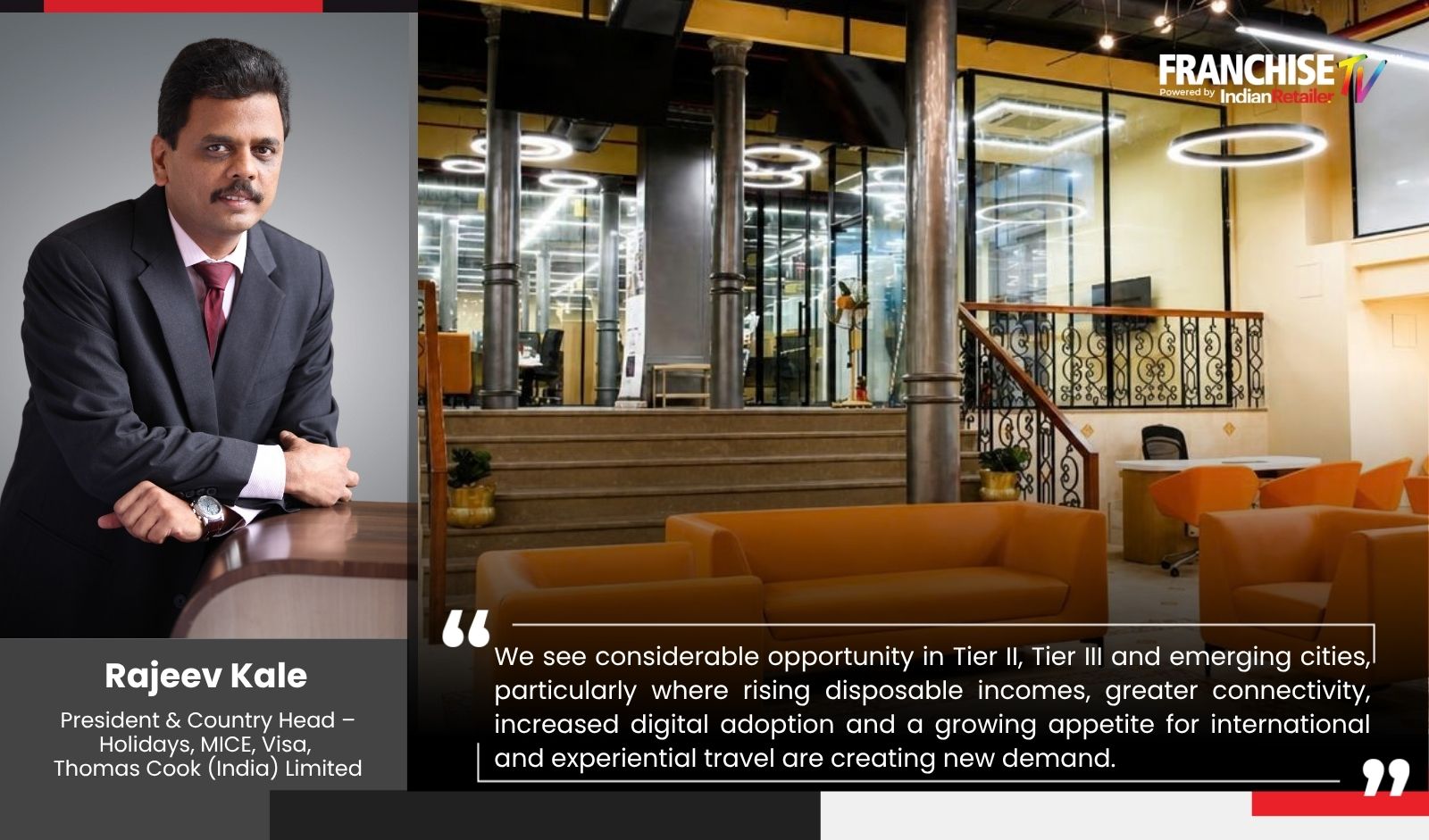
Set up in 1881, Thomas Cook (India) Limited (TCIL) is a leading omnichannel travel company in the country, offering a broad spectrum of travel and travel-related services spanning Foreign Exchange, Corporate Travel, MICE, Leisure Travel, Value Added Services and Visa Services.
Over the years, the company has evolved from a traditional travel services provider into a diversified, technology-enabled travel enterprise, with a strong presence across both B2C and B2B segments.
‘‘A significant milestone in this journey has been the development of our integrated omnichannel model, combining our extensive physical distribution network and partner ecosystem with digital platforms and technology-led solutions,’’ says Rajeev Kale, President & Country Head – Holidays, MICE, Visa, Thomas Cook (India) Limited.
This enables the brand to serve customers across the travel lifecycle; from inspiration and planning to booking, payments, foreign exchange and other value-added services.
Brand’s Portfolio
TCIL portfolio includes leading brands such as Thomas Cook and South Asian Travels & Tours, alongside a wide range of specialised travel businesses including Travel Corporation (India), Sita World Travel, Asian Trails, Allied TPro, Australian Tours Management, Desert Adventures, Travel Circle International Limited, Sterling Holiday Resorts, Distant Frontiers, TC Tours, Digiphoto Entertainment Imaging (DEI), Go Vacation and Private Safaris East & South Africa.
Market Footprint & Expansion Strategy
Today, Thomas Cook Group spans 28 countries across five continents, making it one of the largest travel service provider networks headquartered in the Asia-Pacific region.
In India, the brand’s footprint is built around a combination of owned retail outlets, franchise and partner networks, airport counters, digital platforms and assisted channels. As of Q1 FY27, the Thomas Cook (India) had over 300 TC (Thomas Cook) and SOTC (South Asian Travels & Tours) owned operations, more than 170 PSA/GSA (Preferred Sales Agent/ Preferred Sales Agent) touchpoints and 16 airport counters, giving the brand significant presence across metros, mini-metros and Tier 1 and Tier 2 markets.
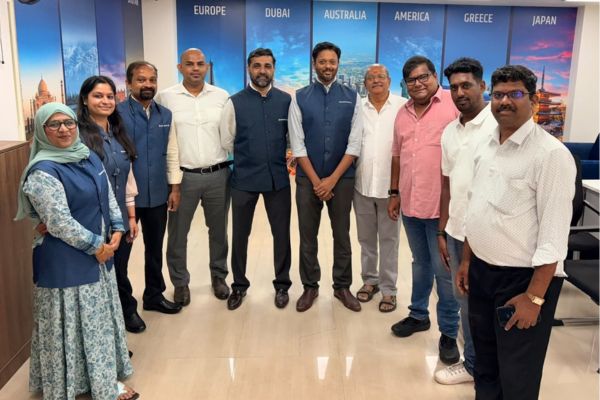
Talking about the expansion strategy, Rajeev says, ‘‘Our expansion strategy is not simply about adding outlets; it is about increasing accessibility to travel expertise in markets where travel aspirations are growing. We see considerable opportunity in Tier II, Tier III and emerging cities, particularly where rising disposable incomes, greater connectivity, increased digital adoption and a growing appetite for international and experiential travel are creating new demand….We are also looking at markets where there is growing interest in outbound travel, shorter international holidays, experiential travel, spiritual tourism.’’
Rajev further shares that TCIL scale is complemented by deep destination expertise, a diverse product portfolio and a strong distribution ecosystem across markets. As the travel landscape continues to transform, the focus has been on combining the trust and human expertise associated with our brands with technology, data and AI.
Going forward, the brand will continue to deepen its presence across high-potential markets while strengthening its reach through franchisees, digital channels and other asset-light models. This positions the brand to address the changing needs of Indian travellers while also strengthening its presence across leisure, corporate travel, MICE and other high-growth segments.
Franchising in TCIL
Travel remains a highly trust-led category, particularly when customers are planning complex international holidays, family travel, group travel or high-value experiences. A local partner can bring strong community relationships and an understanding of customer preferences, while the brand brings destination expertise, technology, product access, training, processes and service standards.
Discussing the franchising ecosystem, Rajeev says, ‘‘For us, franchising is an important part of building a scalable distribution ecosystem. It allows us to expand our physical presence with greater flexibility, while ensuring that customers in emerging markets have access to a recognized travel brand and a wider portfolio of products. It enables us to combine the strength of an established travel brand with the local market knowledge and entrepreneurial capabilities of our partners.’’
The model also creates opportunities for local entrepreneurs to participate in the growth of India's travel economy while the broader partner ecosystem, including franchisees, preferred sales agents and travel business associates, enables the brand to extend its reach beyond conventional retail formats.
Leveraging Technology and AI
From discovery and itinerary planning to sales, service and quality management, technology is becoming an increasingly important enabler in the travel service sector.
Sharing how TCIL leverages technology and AI for travel planning, booking, and customer service, Rajeev says, ‘‘At TCIL, we are using AI and automation not only to enhance customer experience, but also to improve the speed, consistency and effectiveness of our internal processes. A key example is TACY, which has evolved from a Generative AI chatbot into an agentic AI travel assistant supporting personalized itinerary planning, lead qualification and CRM integration. During FY 2025-26, TACY handled 185,000+ customer conversations, becoming an important part of the leisure holiday sales process.’’
The company has also introduced Raahi, an AI-powered domestic holiday automation platform that enables faster itinerary creation and quotation generation, improving responsiveness while reducing manual effort. Our continued adoption of agentic AI is further strengthening intelligent itinerary planning and encouraging greater adoption of digital self-booking.
AI is also being applied to support customer-facing teams. AI Agent Assist provides real-time recommendations and pricing guidance to customer advisors, helping improve response quality and deliver more consistent customer interactions. At the same time, our AI Quality Control Bot monitors 100% of customer conversations with approximately 95% accuracy, enabling continuous quality checks rather than relying solely on sample-based reviews.
‘‘The larger opportunity is to use technology to make travel more personalized, responsive and seamless, while retaining the human expertise and reassurance remain important in a high-involvement purchase such as travel. We see AI as an enabler that can augment our people, improve productivity and allow our teams to focus more on understanding customer needs and creating the right travel experience,’’ says Rajeev.
Omni Channel Strategy
Digital adoption is already an important part of TCIL business, while the company’s extensive retail and partner network continues to provide high-touch advisory for customers who want more assistance.
Discussing TCIL Omni channel strategy, Rajeev says, ‘‘Our Omni channel strategy is based on a simple principle: the customer should be able to engage with us in the way that is most convenient for them, without losing continuity of service. We therefore look at our physical outlets, websites, apps, call centres, partner networks, social and assisted channels as interconnected parts of one ecosystem rather than standalone channels.’’
He further describes his 'Clicks & Bricks' approach that brings together the convenience and efficiency of digital platforms with the trust, reassurance and expertise offered through its retail network.
‘‘Through this approach, customers can discover our products online, but book at a retail store near them. Alternatively, one can walk into our store first, book offline, but will be serviced online via our Customer Service App,’’ says Rajeev.
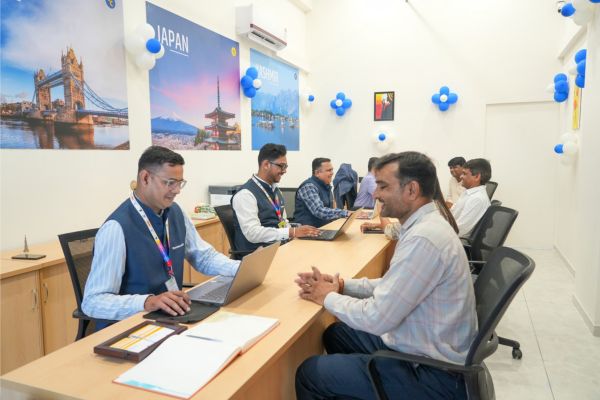
He adds, ‘‘Going forward, our focus will be on strengthening this phygital integration further: enabling customers to begin their journey online, move to an advisor when they need expertise, complete transactions digitally where convenient, and access support throughout their travel journey.’’
Travel Service Industry in India
According to Technavio, the Indian travel services market size is growing at a compound rate of 16% from 2025 to 2030. The market is benefiting from a combination of structural factors: rising disposable incomes, greater connectivity, increasing passport penetration, digital adoption and a growing willingness to spend on experiences.
‘‘The Indian traveller today is more aspirational, well-researched and discerning, with a clear focus on personalization, value and the overall quality of the travel experience….We are seeing several important trends. International travel is broadening beyond traditional destinations, with strong interest in short-haul and eastbound markets, while long-haul travel continues to remain relevant for milestone and experiential journeys. Shorter, more frequent holidays are also becoming an important part of the travel calendar, reflecting a shift towards travel being an integral part of lifestyle rather than an occasional purchase. There is also a growing willingness to consider premium options, particularly when they offer greater comfort, convenience, exclusivity or a more meaningful experience,’’ says Rajeev.
Another significant trend is the rise of experiential and interest-led travel, including food, culture, adventure, cruises, wellness, spiritual journeys and special-interest holidays. Travellers are increasingly looking beyond sightseeing to experiences that offer deeper engagement with a destination. At the same time, the well-researched traveller is comparing options more closely and showing greater interest in customised travel, premium stays, unique experiences and curated itineraries, rather than one-size-fits-all packages.
The industry is simultaneously becoming more technology-led. Customers increasingly expect a seamless journey across digital and physical channels, while travel companies are using data, AI and automation to improve personalization, productivity and service delivery. The opportunity ahead is to combine this technology with the human expertise and reassurance that remain central to travel, particularly as travellers become more informed, discerning and confident in seeking experiences that align closely with their individual interests and aspirations.
Role of Franchising in this Sector
The travel franchising ecosystem in India is becoming increasingly relevant as travel penetration expands beyond the major metros. Customers may discover a destination digitally, but many still value expert advice and reassurance when making travel decisions, particularly for international, family, group and customised holidays. This creates an important role for a strong physical and assisted distribution network.
‘‘For a business to be franchise-ready, I believe there are a few fundamentals. First is a clearly differentiated and trusted brand proposition. Second is the ability to provide franchise partners with a robust product portfolio and competitive commercial proposition. Third is technology; partners today need access to systems that make enquiry management, pricing, itinerary creation, booking and servicing efficient.’’
Rajeev further shares that training, standardized processes and ongoing business support are equally important . A franchise network can scale only when the customer experience remains consistent across locations. Finally, the franchisor must have the ability to continuously innovate and bring new products, destinations and travel solutions to the network.
‘‘We need to make sure that there is enough business potential in the catchment we are looking to enter, such that the Franchisee is also able to get good returns on his investments,’’ says Rajeev.
Future Plans
Talking about TCIL future plans, Rajeev says, ‘‘Over the next five to ten years, our focus will be on building a larger, more accessible and technology-enabled travel ecosystem while retaining the trust and expertise that have been central to our brand for generations.’’
He emphasizes on the opportunities across three broad areas. First, expanding the company’s reach, particularly across Tier II, Tier III and emerging markets through a combination of retail and digital channels. Second, strengthening its product proposition across outbound, domestic, experiential, spiritual, cruise, MICE and other high-potential travel segments. Third, accelerating technology and AI across planning, selling, servicing and customer engagement.
Further discussing the opportunities, Rajeev says, ‘‘We see significant potential in building deeper customer relationships across our broader ecosystem. A customer travelling internationally may require a holiday package, visa assistance, foreign exchange and other travel services; our ability to bring these capabilities together and provide a strong platform for creating greater value across the travel journey. Our ambition is to make quality travel expertise more accessible to a wider section of Indian travellers combining the scale of technology with the reassurance of human expertise, and continuing to build a travel business that is relevant to the next generation of Indian travellers.’’
‘‘Our ultimate goal is to be one of the highest-rated holiday brands with an NPS that rivals some of the best known hospitality brands in the country,’’ signs off Rajeev.
For Further Franchise Info Contact





Copyright © 2009 - 2026 Franchise Tv.