





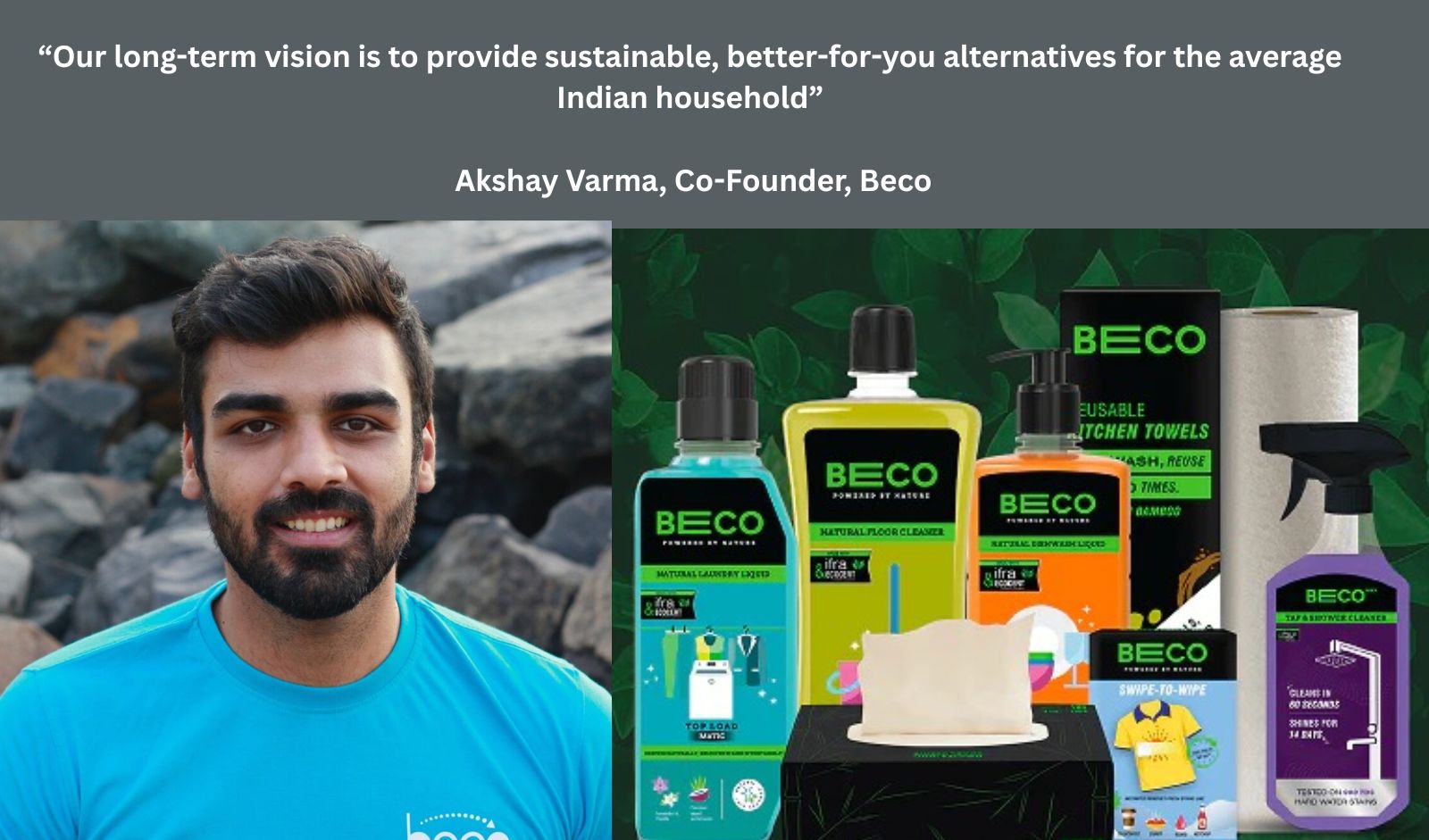
India's home care market has traditionally been dominated by established FMCG companies, but changing consumer preferences and growing interest in sustainable alternatives are creating opportunities for new-age brands. Beco began as an effort to address the growing problem of plastic waste and later evolved into a broader home care business. The brand entered the market in 2019 with bamboo-based tissues, followed by garbage bags in 2020 and home cleaning products in 2023, including laundry detergent, floor cleaners and dishwash liquids.
"Two things happened in 2018. One, during our beach cleanups, we found a plastic wrapper that belonged to a chocolate that had been discontinued in the 2000s. It looked almost new. That made us realise how long the plastic we use today can last. The second was the plastic ban in Maharashtra, which created demand for alternatives. However, the available options were either not user-friendly or two to three times more expensive," said Akshay Varma, Co-Founder, Beco.
Despite its large market size, the home care category remained dominated by established players, with relatively limited innovation compared with segments such as personal care and snacking. This gap led to the birth of Beco.
Building an Omnichannel Retail Presence
Beco has expanded its distribution across e-commerce, quick commerce, general trade and modern trade. The brand is currently present in approximately 5,000 general trade stores across nine key markets: Mumbai, Delhi, Pune, Hyderabad, Chennai, Bengaluru, Chandigarh, Lucknow and Kochi.
Its modern trade presence includes approximately 150 D-Mart stores and over 250 Reliance Retail stores. While the brand initially entered D-Mart with four SKUs across 10 stores, it has since expanded its reach and is working towards increasing its assortment. Its Reliance Retail presence currently focuses on the tissue category, with plans to introduce its cleaning products as well.
Beco has also entered army canteen stores with four SKUs. On the digital front, it is available across major e-commerce and quick-commerce platforms, including Amazon, Flipkart, Blinkit, Zepto, Swiggy Instamart, Flipkart Minutes, BigBasket and JioMart. Currently, online channels contribute approximately 80% of the brand's sales, while offline retail accounts for the remaining 20%. However, expanding its physical distribution network is emerging as a major business priority.
"Over the next two to three years, we will continue expanding our categories and growing our online channels. Offline will be a major push, focusing on modern trade and key outlets. We have a target to reach over 25,000 general trade stores and expand across modern trade outlets catering to the mass-premium segment," Varma shared.
Beco is also looking to increase its presence in Tier-II cities and rural markets and make sustainable household products accessible through the retail touchpoints where consumers regularly purchase their everyday essentials.
Large share revenue from quick commerce
While offline expansion remains a priority, quick commerce has emerged as one of Beco's strongest growth channels. The platform-led business now contributes approximately 45% of the company's overall revenue, compared with 30% in the previous year.
Beco currently holds the number two position in categories such as dishwash and floor cleaners across several quick-commerce platforms, according to Varma. The brand is listed across approximately 90% of dark stores and is working on improving product availability, fill rates and visibility to strengthen its position.
"Quick commerce is growing phenomenally. It contributes roughly 45% of our overall revenue, compared with 30% last year. We are growing across channels and gaining in several categories," he said.
The channel's growing importance is also reflected in the brand's approach to product accessibility. Unlike discretionary purchases, household cleaning products are regular-use essentials, and consumers generally expect them to be available when needed.
Varma believes that sustainability alone cannot drive adoption in this category. Product performance, competitive pricing and availability remain equally important.
"In a category like home care, efficacy is very important. People are not going to compromise on cleaning performance for sustainability. That is the table stake. The second is price. Consumers are not willing to pay even a 10% premium in home care, especially when comparing products with mass-premium offerings such as Surf Excel Matic or Vim Liquid. The third is accessibility. You have to be available where the consumer is buying," he explained.
Product Performance and Pricing Drive Category Competition
Beco competes with established FMCG companies in traditional cleaning categories such as laundry detergents, floor cleaners and dishwash liquids. In newer segments, including limescale removers and kitchen degreasers, it faces competition from emerging home care brands. The company is positioning itself through product innovation, targeted communication and consumer education around the benefits of its formulations.
In the tissue segment, the brand operates in a relatively fragmented market, competing with established players such as Origami and Paseo. Varma said Beco has built a strong retail position in the category despite entering it later than several competitors.
"With the cleaning category, we focus a lot on the right communication and storytelling around the products, what they contain, what traditional products have and what we don't have, and why our products are better. Our brand equity and communication across social media, along with influencer marketing and other activities, have helped us build our position," he said.
Laundry liquid is currently BECO's largest-selling category, contributing approximately 33-34% of its total sales. At the individual product level, its reusable bamboo kitchen towel is the highest-selling SKU, contributing approximately Rs 7 crore in revenue. The product is positioned as an alternative to both microfiber cloths and conventional paper towels.
Sourcing and Manufacturing: Building Greater Control
As Beco initially outsourced its entire production but gradually increased control over manufacturing and product development. Its research and development and formulations are managed in-house, while manufacturing follows a combination of owned facilities and third-party partnerships.
Around 80% of its tissue paper production takes place at its own manufacturing facility in Maharashtra, with the remaining 20% outsourced to third-party manufacturers. For home cleaners, Beco works with third-party manufacturers through technology-transfer arrangements. The company develops formulations and sources specific proprietary ingredients, which are supplied to manufacturing partners for incorporation into the final products. Its home cleaning products are manufactured across three regions in India: North, South and West.
The brand also works with more than 10 global manufacturers of natural and synthetic ingredients to introduce newer formulations into the Indian home care market.
On the sourcing front, approximately 80% of its bamboo requirement is currently sourced from central India, while the remaining 20% is imported from China and Thailand. This marks a shift from its initial sourcing model, when almost all its bamboo was imported. For surfactants, approximately 70% is sourced domestically, while 30% comes from Malaysia and Indonesia.
Varma said ingredient innovation also plays a role in managing costs and improving product formulations. One example is the use of methyl ester ethoxylate (MEE), a palm oil-based surfactant, as an alternative to petroleum-based surfactants commonly used in detergents and dishwash liquids.
"We are working with more than 10 global manufacturers of ingredients. They develop both natural and synthetic ingredients, and we are among the early players in India to incorporate some of these into our formulations. For instance, we use a palm-based alternative to a petroleum-based surfactant. This helps us maintain cost efficiency and gives us the flexibility to switch formulations when commodity prices fluctuate, ensuring that the cost impact on consumers remains minimal," Varma said.
Targeting Rs 2,000 Crore Revenue and a Larger Market Share
Beco's next phase of growth will focus on strengthening its position in key categories, expanding offline distribution and increasing household penetration. Over the next three years, the company aims to establish itself as the number two player in its major categories, including dishwash, floor cleaning and laundry care, while targeting a market share of 15-20% in these segments.
Additionally, the brand is targeting Rs 2,000 crore turnover over the next three to four years. The founders also aspire to take the company public within the next three years. For the brand, the long-term opportunity lies in making sustainable alternatives a regular part of Indian household consumption rather than limiting them to a niche segment of environmentally conscious consumers.
"Our long-term vision is to provide sustainable, better-for-you alternatives for the average Indian household. We want to become one of the largest players in these categories and create a significant presence across consumer households," Varma said.


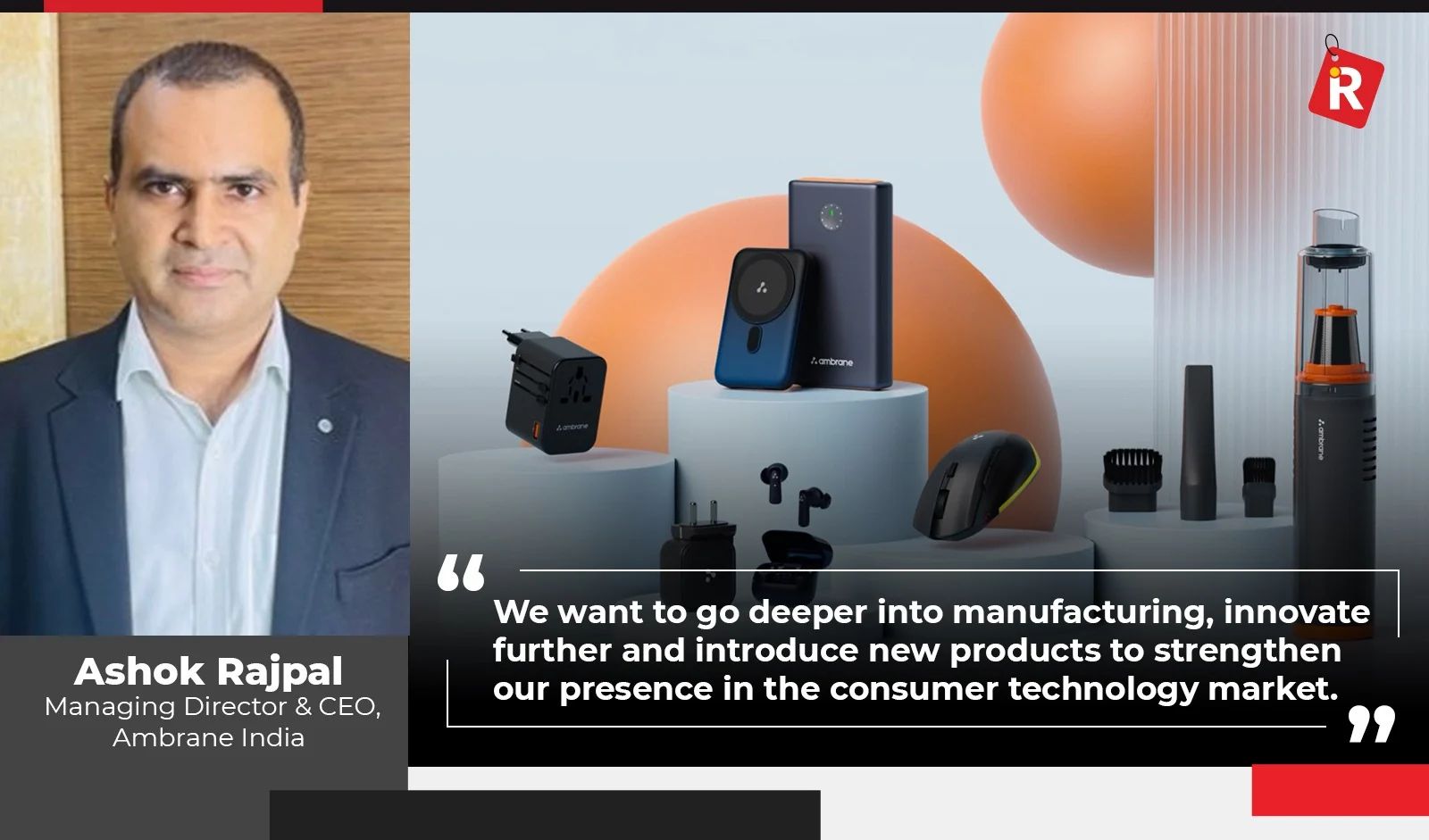
With everything now connected, it is becoming part of our daily life to have good power sources. We now live in a world filled with electronic devices, including smartphones, laptops, wireless headphones and smartwatches. As we become increasingly reliant on these, we now see a change in how we buy our accessories. Speed of charging, compatibility, quality, and reliability have become key factors.
This change has resulted in the growth of the electronics sector in India. The total Indian electronics market is projected to reach USD 125 billion in 2026 according to Ken Research and is anticipated to reach USD 300 billion by 2031. This growth is allowing local electronics brands to innovate, manufacture, and provide their products to consumers.
One such company is Ambrane India, which entered the market in 2012 with its focus on power banks and mobile accessories. Founded by Ashok Rajpal in Delhi, the company has slowly grown its product portfolio to include charging products, audio, wearables, and small household products.
"We started Ambrane India in 2012 with the idea of bringing more innovative products into the Indian market," said Ashok Rajpal, Managing Director and CEO of Ambrane India.
Also read: How India’s Beverage Shelf Is Evolving
From a Small Shop to a Manufacturing Business
The start of Ambrane was with products like power banks and other IT accessories. Before starting their brand, they spent 4-6 months getting to know the market, finding out what consumers want and which products would fulfill their expectations.
"We started with a small shop in Nehru Place to understand the market. We wanted to know what kind of products customers were looking for and what their expectations were," Rajpal said.
The company subsequently established its manufacturing operations, focusing on product quality and component sourcing. According to Rajpal, Ambrane was among the early brands to use lithium-ion cells sourced from South Korea, including those supplied by Samsung and LG.
Its manufacturing journey started with a facility measuring approximately 5,000 square feet and a workforce of around 50 people. Currently, the Delhi-based company has manufacturing units covering over 80,000 sq ft and employs more than 1,000 people.
Its portfolio has also expanded to more than 200 SKUs, covering charging cables, chargers, power banks, audio products, wearables, and small home appliances. The company has additionally introduced AA and AAA lithium-ion cells as an alternative to traditional cells.
Also read: From Organic Hampers to Personalised Gifts
Changing Consumer Demand
Consumer expectations in the mobile accessories market have changed considerably over the past few years. Earlier, customers could purchase a basic charger for Rs 200-300. Today, they increasingly look for chargers that match their devices and support higher charging requirements.
Rajpal explained, "The Indian consumer today has become smarter. People understand new technologies and know what products they need. They are looking for chargers and power banks that can support multiple devices, including laptops and other gadgets."
He identified charging products, particularly power banks, chargers and cables, as the company's strongest growth categories.
However, Ambrane is also expanding into smart home appliances, including vacuum cleaners, blowers, leaf blowers and car washers. The company is exploring further opportunities in products such as purifiers and other household gadgets.
Rajpal said the company's growth has come from maintaining focus on its existing categories while developing new products. According to him, established and newer categories are currently contributing equally to business growth.
Also read: Diwali Brings Growth in Furniture and Home Decor Sales
Online Discovery and Offline Expansion
For electronics accessories, online platforms have played an important role in introducing new products to consumers. Ambrane initially experienced this with power banks, as retailers often found it tough to explain unfamiliar products and their benefits to customers.
Rajpal said, "When a new product enters the market, online becomes a favourable platform because brands can educate customers through videos, product specifications and detailed listings."
He added that once products become established, offline retail becomes an important sales channel. Products that initially generated 80-90 percent of business through online channels can gradually move towards a 50:50 contribution between online and offline sales.
Ambrane currently reaches customers through e-commerce, modern retail, general trade, and B2B channels. Its products are available through major retail chains such as Reliance, Vijay Sales, and Croma. The company also claims to work with approximately 200 distributors and more than 20 modern retail chains.
Also read: India’s Alco-Bev Market Sees Festive Push as Premium Spirits Gain Ground
Local Manufacturing and Distribution Expansion
Domestic manufacturing remains an important part of Ambrane's business strategy. Having a local presence means greater control over quality, supply chains, and manufacturing, as well as faster incorporation of customer feedback.
This can be seen from the overall manufacturing goals set by India. It aims to build an electronics industry worth USD 500 billion in the country by 2030, with exports worth USD 240 billion. This would also provide greater value addition within the country of over 35 percent (NITI Aayog report on Global Value Chains).
According to the KPMG report, 2026, furthermore, the Electronics Manufacturing Services (EMS) sector is also projected to triple by FY2030 to USD 150 billion.
Ambrane has recorded more than 40 percent year-on-year growth over the past three years. The company is targeting at least 50 percent growth in the coming year and plans to increase its distributor network from around 200 to more than 500 within the next three years.
Rajpal also believes that Tier II and Tier III markets are becoming increasingly important. He said consumer awareness, purchasing preferences, and demand for gadgets are becoming similar across different city categories.
Also read: Diwali Demand Puts India’s Home Appliance Market on a Premium Growth Path
Ambrane's Next Growth Phase
Ambrane is also exploring international opportunities through partners in the Middle East, Europe, and US. The company has established a subsidiary in the US and has connected with Amazon in the Middle East, although its expansion plans there are awaiting more stable market conditions.
On the operational front, the company introduced SAP at its manufacturing facility in early 2019. It is ISO-certified and claims to hold more than 500 product certifications, including BIS certifications. It is also exploring AI-driven technology to improve operational efficiency.
In the future, Ambrane plans to increase manufacturing facilities around Jewar Airport. The proposed facility will cover more than 500,000 square feet, around six times its existing 80,000-square-foot setup.
Rajpal said, "We want to go deeper into manufacturing. With a larger setup, we will be able to innovate further, introduce new gadgets and add more categories to our portfolio."
With annual revenue currently at approximately Rs 400 crore and year-on-year growth of around 50 percent, the company is targeting revenue of Rs 1,500 crore by 2030. It expects to maintain annual growth of 50-60 percent as it expands its product portfolio, manufacturing capacity and distribution network.
For Ambrane, the next phase will be looking at trying to find a balance between the more traditional charging market and new consumer tech markets, while increasing its manufacturing base in India.
Also read: How India’s Edible Oil Market Is Evolving
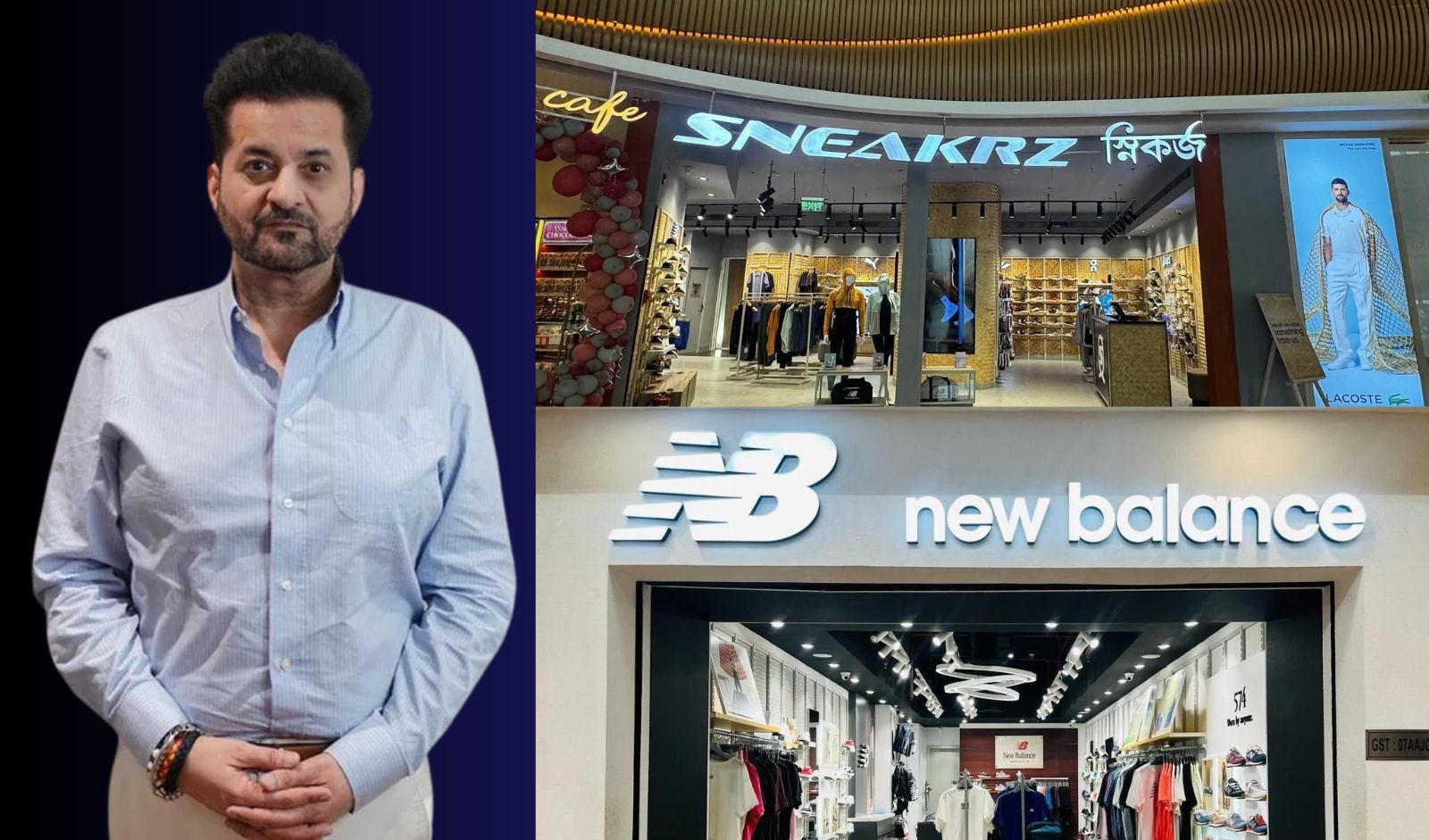
Brandman Retail is stepping up its expansion in India’s premium sportswear, footwear and lifestyle market, targeting 50 stores across its retail formats by March 2027, as it looks to capitalise on rising consumer interest in international sports and lifestyle brands.
The company reported revenue of ₹162.41 crore in FY26, up from ₹135.22 crore in FY25, marking a growth of around 20% year on year. The performance was supported by the strengthening of its brand portfolio and expansion through exclusive brand outlets and its Sneakrz retail format.
For FY27, Brandman Retail is prioritising retail network expansion, deeper brand partnerships and e-commerce growth. While the company has not yet finalised a specific revenue target for the year, it plans to enter new markets while continuing to strengthen its presence across existing locations.
The company currently operates a portfolio spanning performance footwear, sportswear, outdoor and lifestyle categories, with brands including New Balance, ANTA, Saucony, Timberland, Rockport and Wilson.
“High-growth categories such as performance footwear, sportswear, outdoor and lifestyle fashion make up the larger part of our portfolio. The growing interest in fitness and sports in India is creating opportunities across our brand portfolio,” said Arun Malhotra, Founder & Managing Director, Brandman Retail.
Tier-2 and Tier-3 cities in focus
Beyond metropolitan markets, Brandman Retail sees significant potential in Tier-2 and Tier-3 cities, where consumer interest in international sportswear and lifestyle brands is increasing.
The company plans to evaluate individual markets based on their potential and deploy retail formats suited to local demand. Alongside physical stores, digital platforms and e-commerce will play a key role in expanding the company’s reach while maintaining brand positioning and customer experience.
“Physical outlets and digital platforms can both be used to increase our reach, and we will make sure the brand experience and positioning are maintained effectively,” Malhotra said.
Global brand portfolio to drive growth
Brandman Retail is also evaluating opportunities to add more international brands and complementary product categories to its portfolio. While footwear and fashion remain its core focus, the company is looking for global partnerships that can deliver long-term relevance in the Indian market.
“We continue to evaluate opportunities to expand our portfolio through partnerships with global brands that hold tremendous potential for the Indian market in the long run,” Malhotra said.
Its existing partnerships with New Balance, ANTA, Wilson and Saucony remain central to the strategy, while the company is also building Rockport’s presence in India through licensing and brand development.
The company is also exploring collaborations with athletes and sports communities as well as e-commerce platforms to expand consumer engagement and visibility.
“Our focus remains on strengthening existing partnerships with New Balance, ANTA, Wilson and Saucony, among other brands, while exploring collaborations with athletes, sports communities and e-commerce platforms,” Malhotra said.
Omnichannel and technology investments
The company's expansion strategy also includes strengthening its omnichannel capabilities. Investments are being directed towards new stores, retail infrastructure, inventory management, e-commerce and technology, with the objective of connecting physical and digital channels more effectively.
Brandman Retail said the overall investment quantum and allocation across these areas are currently being finalised for disclosure.
The company is also looking at India-led sourcing and manufacturing as a potential long-term opportunity. It believes the evolution of India's manufacturing ecosystem and the Make in India initiative could help global sports and lifestyle brands develop more efficient supply chains, improve cost management and bring products to market faster.
“India-led sourcing and manufacturing is attracting growing interest, and the Make in India initiative provides a positive opportunity to strengthen the local operating environment for global sports and lifestyle brands,” Malhotra said.
Building a long-term sports and lifestyle platform
Over the next three to five years, Brandman Retail aims to combine retail expansion with a stronger international brand portfolio and more efficient omnichannel operations.
While established metropolitan markets will remain important, emerging cities are expected to become an increasingly significant part of the company's growth strategy. Technology and data will also be used to improve productivity, inventory management and customer experience.
“Over the next three to five years, we want to grow our retail presence and strengthen our international brand portfolio, while making our omnichannel efforts more efficient,” Malhotra said.
The broader ambition is to position Brandman Retail as a long-term partner for global sports and lifestyle brands entering and expanding in India, while maintaining disciplined expansion, healthy profitability and sustainable value creation.
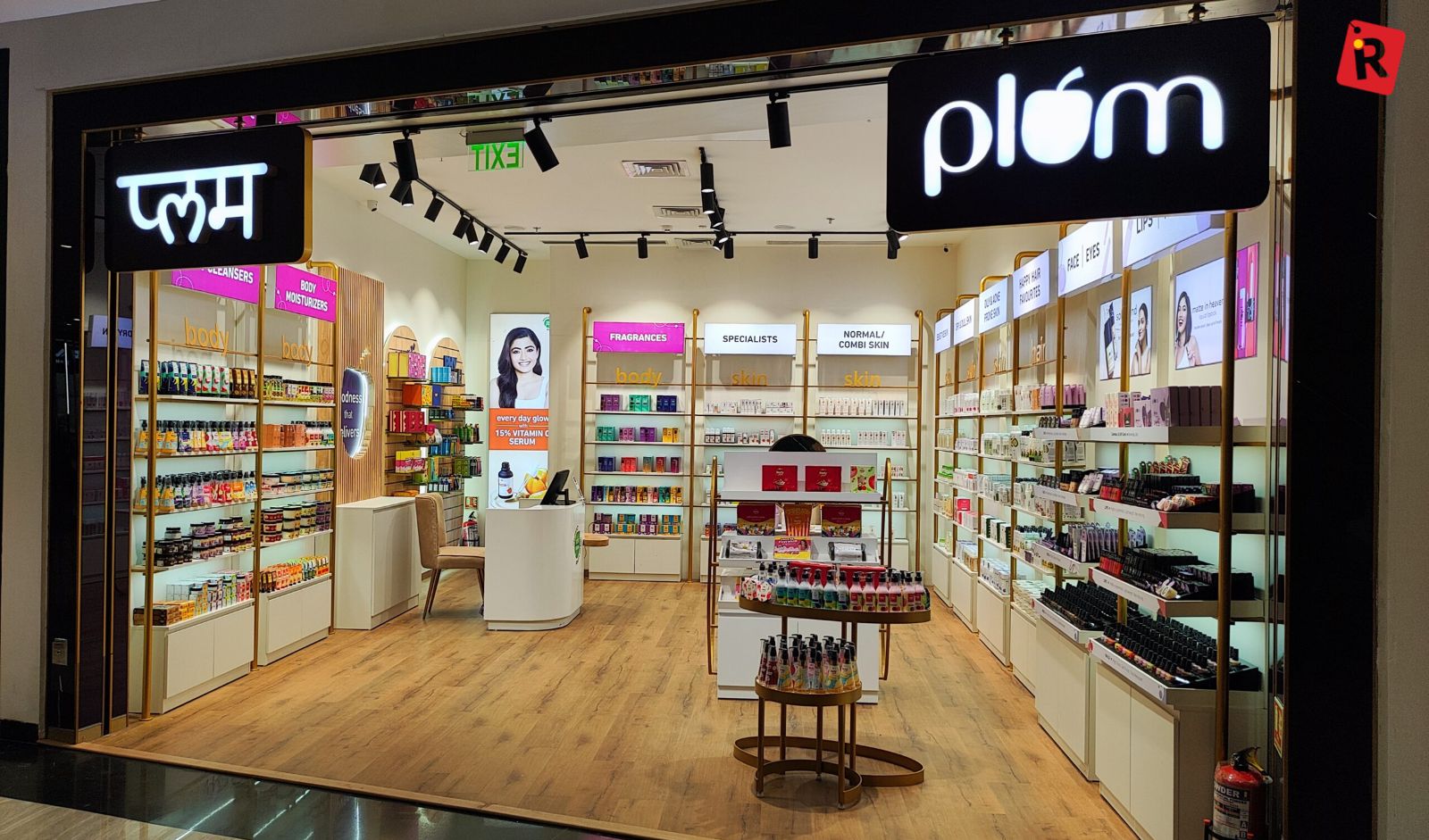
As India’s beauty market becomes increasingly omnichannel, brands are discovering that building an offline footprint is not simply about opening more stores. The challenge lies in identifying the right markets, managing store-level economics, ensuring product availability and creating an in-store experience that adds value to consumers who are already discovering products online.
For beauty and personal care brand Plum, the shift in consumer behaviour has made offline retail an increasingly important part of its growth strategy. While consumers may discover products digitally, many still turn to physical stores to access products, test them and seek guidance before making a purchase.
“ You can see the change in what people ask for at a beauty counter. A shopper might walk in asking for a particular niacinamide serum because she’s already read about it online. That changes what her local retailer chooses to stock. For Plum, it made sense to follow that demand into the stores she already shops at,” said Shankar Prasad, CEO and Founder, Plum.
Balancing online scale with offline reach
Despite its growing physical presence, Plum remains predominantly an online business. The company currently generates around 70% of its sales online, while offline contributes approximately 30%. According to Prasad, the mix has remained relatively stable as both channels have expanded to serve consumer demand.
Rather than treating offline retail as a replacement for digital channels, Plum is using physical distribution to extend its reach into the stores and markets where consumers already shop.
The company currently has close to 50,000 retail touchpoints across India, with general trade accounting for the bulk of its offline presence. It also operates through modern trade and has around a dozen exclusive Plum stores designed to offer consumers a more complete brand experience.
The scale-up, however, is not stopping there.
Plum is targeting more than one lakh general trade outlets over the next 12 months, with expansion planned across geographies. In modern trade, the company intends to remain more selective, prioritising stores that already attract its target beauty and skincare consumers. Exclusive stores will also be added in markets where the brand sees sustained local demand.
Store expansion comes with a profitability test
For retailers, expanding the physical footprint can quickly increase fixed costs through rentals, fit-outs, manpower and inventory. Plum’s approach highlights the importance of ensuring that individual stores can justify the investment.
“A compact store typically takes an investment in the tens of lakhs, depending on the location and fit-out. When we evaluate a site, we look for payback in less than a year. That keeps us disciplined about the rent and upfront investment the store’s sales can support,” Prasad said.
The focus on a sub-one-year payback period illustrates one of the central challenges of offline expansion: store growth has to be supported by store-level economics.
For retailers, a location that generates footfall is not necessarily a successful store if its rental and operating costs absorb too much of its revenue. This makes site selection, local demand assessment and the ability to achieve sufficient sales productivity critical as brands move beyond their initial cluster of successful stores.
Physical stores have to offer something digital cannot
For beauty brands in particular, the offline channel can also serve a role that goes beyond distribution.
Product discovery may increasingly happen online, but physical stores allow consumers to test textures, understand product application and receive personalised recommendations. Plum sees this as an important part of converting shoppers who may already have product awareness but remain uncertain about making a purchase.
Prasad pointed to Plum’s Black Rice & Nia-TXA Jelly Serum as an example. A consumer may understand the ingredients from online content but still be unsure about the product’s texture or how it fits into her existing routine.
“A tester answers that in seconds. An advisor can then help her work out where it fits alongside the products she already uses at night. For a first-time buyer, that conversation can be what gives her the confidence to take it home,” he said.
This creates another consideration for retailers expanding offline: stores need to provide a reason for consumers to visit rather than simply replicate the product catalogue available online.
Tier II and III markets emerge as a major growth engine
Geography is another critical component of Plum’s offline strategy. While metros remain important, smaller cities are increasingly contributing to the brand’s physical retail performance.
Tier II and III cities together accounted for roughly seven in ten rupees of Plum’s general trade sales in Q2 FY26, highlighting the importance of smaller markets to its offline strategy.
Among individual markets, Lucknow stood out for the size of its business, while Kochi recorded consistent growth across several quarters. Imphal, meanwhile, saw a sharp pickup during the second quarter.
The performance reinforces the opportunity beyond India’s largest urban centres, but it also underlines why retailers cannot simply replicate a metro expansion playbook across every market. Local consumer preferences, retail ecosystems, store formats and demand intensity can vary significantly from one city to another.
For Plum, the strategy therefore combines broad distribution through general trade with a more selective approach to modern trade and exclusive stores.
The next challenge: scaling without diluting economics
Plum’s expansion illustrates a broader challenge facing India’s consumer brands as they move deeper into offline retail. Distribution can be scaled relatively quickly, but profitable physical retail requires a more granular understanding of each market and each store.
The question for brands is increasingly not how many stores they can open, but how effectively each new physical touchpoint can contribute to growth.
For Plum, that means combining its digital strength with a significantly wider general trade network, selective modern trade expansion and exclusive stores where consumer demand can support the economics.
As the company targets more than one lakh general trade outlets, the next phase of its offline journey will test whether it can maintain that balance between reach, consumer experience and profitability at scale.
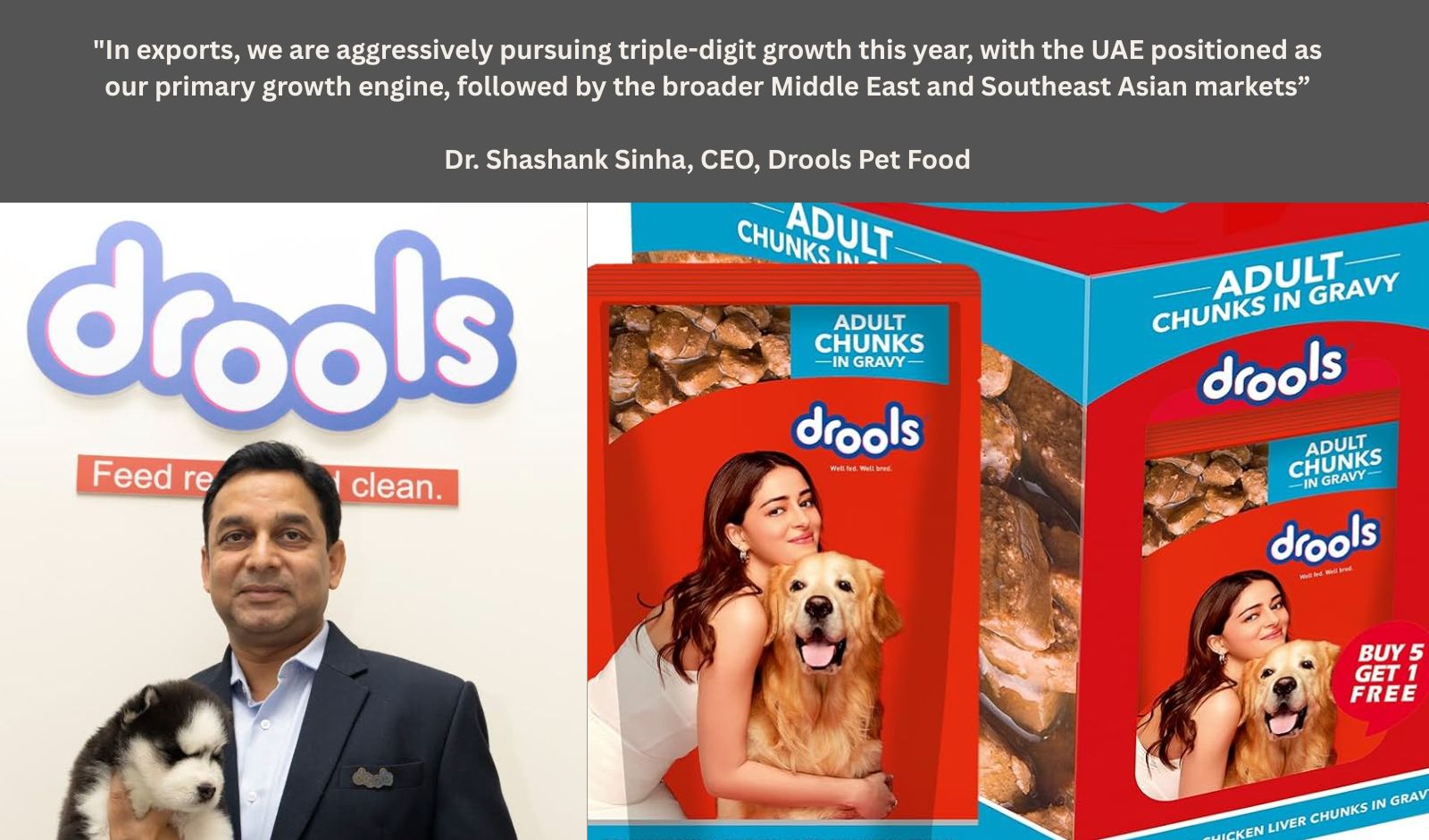
India's pet food market is witnessing steady growth as rising pet ownership, changing consumer preferences and greater awareness of animal nutrition reshape the category. According to IMARC Group, the market was valued at approximately $2.4 billion in 2024 and is projected to reach $ 4.6 billion by 2033, registering a CAGR of 7.2% between 2025 and 2033. India's pet population has also increased from 28.4 million in 2020 to 39.2 million in 2025, with dog food accounting for nearly 70% of pet-food retail value sales in 2025.
Against this backdrop, Drools has strengthened its position in the domestic market while expanding its international footprint. The brand claims a 38% share of India's pet food market and has extended its presence to 22 countries. Its growth has been supported by a broad product portfolio, an extensive distribution network and a pricing approach focused on making quality pet nutrition more accessible.
Over the past decade, Drools has adapted its offerings to changing consumer needs, with products spanning everyday nutrition, treats and newer formats such as wet food and fresh meals.
"Drools focus on affordability, including its 'cost per meal' approach, has been central to reaching a wider base of pet parents in a market where value and convenience increasingly influence purchasing decisions," expressed Dr. Shashank Sinha, CEO, Drools Pet Food.
Strengthening Reach Across Retail Channels
Drools has built a distribution network covering more than 2,000 cities and nearly 50,000 retail touchpoints across India. Its e-commerce presence further extends product accessibility, with the brand stating that it serves all the serviceable PIN codes in the country.
The combination of offline distribution and digital channels has also helped Drools respond to changing shopping habits. While general trade and modern trade remain important to the category, online platforms and quick commerce are gaining traction, particularly for innovative products and convenience-led purchases.
Fresh Food and Wet Nutrition Drive Product Innovation
As it looks to strengthen its portfolio, Drools is focusing on emerging categories such as fresh food and wet nutrition. The brand's newer wet-food products have received an encouraging initial response, with its Fresh Food range designed to make nutritionally balanced, home-style meals more convenient for pet parents.
The offering includes four recipes across two pack sizes, with packaging that does not require refrigeration before opening. The brand is also catering to households seeking vegetarian options through its 100% Veg Gravy, while expanding its range with bone broth in the same Tetra Recart® format.
"Fresh Food remains an emerging category in India, and our focus is on making nutritionally balanced, home-style meals an easy part of everyday feeding routines," said Sinha.
He added that consumer feedback and repeat purchases would guide the brand's plans for expanding the category. Alongside product development, Drools is continuing to engage with veterinarians and make science-led pet nutrition more accessible across markets.
Festive Focus on Pet Safety and Vegetarian Nutrition
For the festive season, Drools is focusing on educating pet parents about safety and responsible pet care during celebrations. Changes in the home environment, new decorations, loud noises and an increase in visitors can affect pets, making it important for households to take precautions.
The brand has also introduced a 100% vegetarian food SKU, particularly for Indian households that prefer vegetarian food choices during festivals. The product has been developed to meet pets' nutritional requirements while maintaining taste.
"During the festive season, our primary agenda is to offer the right advice for pet parents, for optimum care of the pets around the festivities. Pets are curious and usually intrigued by changes around them, so it is imperative that proper care and caution is taken while curating the celebrations and the decorations around the festivals," shared Sinha.
He noted that the brand typically sees a festive-season revenue spike, supported by higher sales of treats, fresh food and biscuits.
Digital Commerce Fuels Demand for Newer Categories
Changing lifestyles and consumer preferences are influencing the way pet food is purchased, with digital commerce gaining ground alongside traditional retail channels. Drools is seeing accelerated growth for products such as Cat Mousse, Fresh Food for Dogs, and treats for dogs and cats across digital platforms.
These categories are benefiting from a younger generation of pet parents who are more willing to explore new formats and prioritize convenience and product innovation.
"Driven by fast-paced lifestyles and evolving consumer preferences, the channel mix between Modern Trade, General Trade and Quick Commerce is increasingly shifting towards digital commerce," noted Sinha.
International Markets and the Next Phase of Growth
While India remains Drools' primary market, the brand is looking to strengthen its presence overseas. Exports currently contribute less than 5% of its business, but international markets are becoming increasingly important to its long-term growth plans.
The company is focusing on the GCC, Southeast Asia and Africa, where demand for nutritionally complete packaged pet food is growing. Cat ownership and cat-food consumption are also gaining traction in several markets.
"In exports, we are aggressively pursuing triple-digit growth this year, with the UAE positioned as our primary growth engine, followed by the broader Middle East and Southeast Asian markets," said Sinha.
He identified cat food as a key growth driver for the international business, with the launch of Cat Mousse and Cat Gravy Chunks expected to support further expansion. Over the next two to three years, the brand aims to sustain double-digit growth while deepening its penetration in India and strengthening customer retention. Its focus on accessible nutrition, newer product formats and international expansion will shape its next phase of growth as India's pet care market continues to evolve.
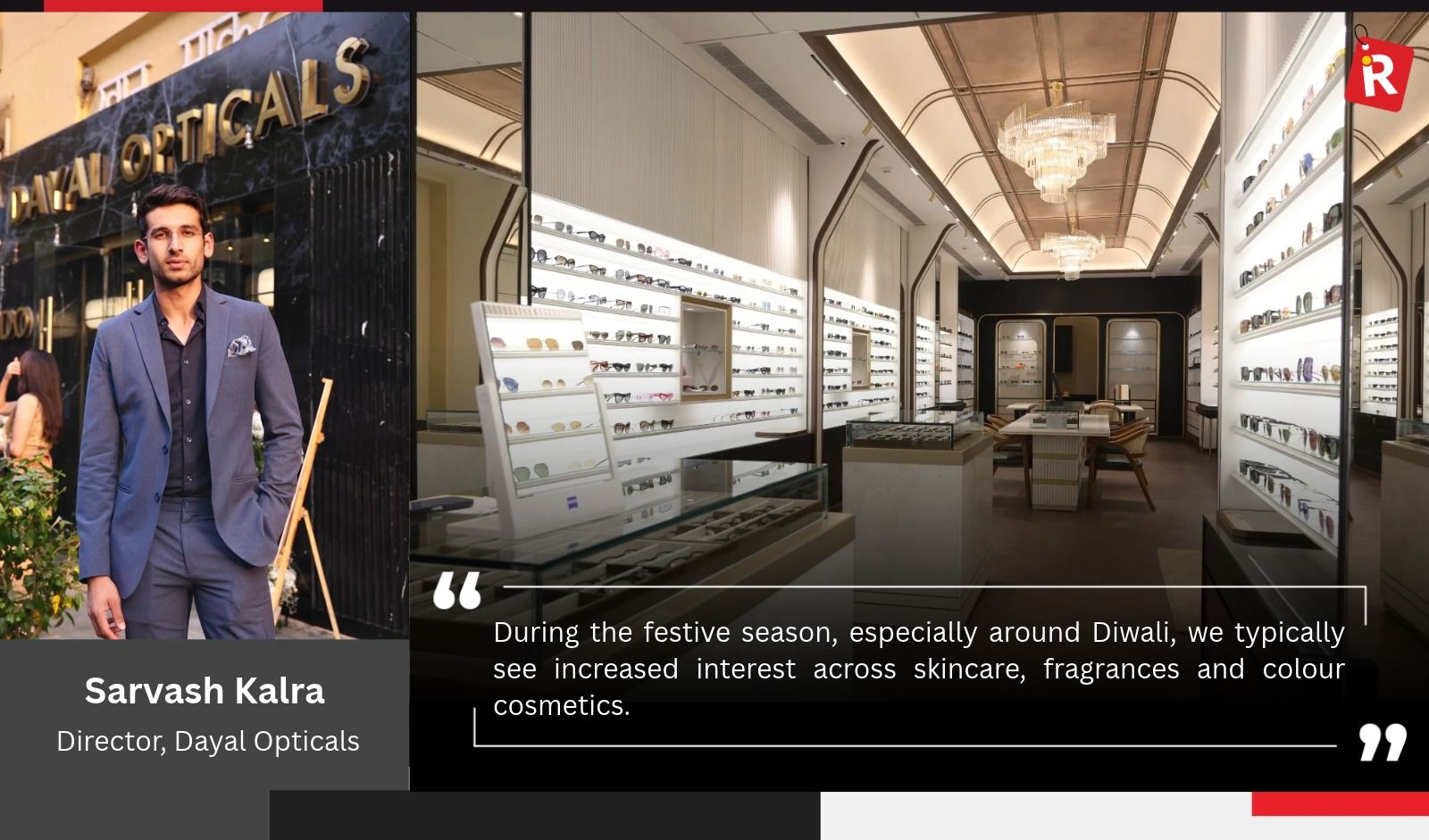
In an industry where brands, trends, and consumer preferences are constantly changing, building a business that stands the test of time is no small achievement. For Dayal Opticals, the journey has been one of steady growth, changing with the times while staying true to its core philosophy of offering quality products and a memorable customer experience.
Founded 65 years ago, Dayal Opticals has grown from a family-run optical store into a luxury eyewear retail destination with 20 boutiques across India. The next chapter of this journey is being shaped by Sarvash Kalra, Director, who joined the business in 2020 and is bringing a fresh perspective to the legacy brand.
The expansion began when his father joined the business around 1995 and opened the first store in Khan Market in 1998. Over the years, the brand established its presence across prominent retail destinations in Delhi-NCR, including Select Citywalk, Galleria Market, MGF Mall, DLF Avenue and The Chanakya. Its footprint has since expanded beyond the region, with boutiques in Mohali, Chandigarh and Mumbai, among other locations.
For Sarvash, however, growth has never been just about adding more stores. “For me, it's not about numbers. It's about quality rather than just quantity. If you spread yourself too thin, you cannot deliver that experience, and then the luxury and feel of the store really goes away,” he said.
A Destination for Global and Independent Eyewear
One of Dayal Opticals' biggest strengths is its carefully curated brand portfolio. The company currently houses around 75–80 brands, including approximately 25–30 boutique and independent labels, alongside established international fashion brands.
The idea is to bring together eyewear brands that customers may not easily find under one roof. While familiar international names continue to attract consumers, Dayal Opticals is also creating space for independent designers and lesser-known labels that stand out through their craftsmanship, materials and design.
“Today, the eyewear industry is quite fragmented and unorganized. We realised that, to do luxury well, we have to offer clients something they have not seen or experienced before. For us, that means bringing those brands together under one roof,” Sarvash explained.
Taking Luxury Eyewear Online
An important milestone in Dayal Opticals' recent journey was its entry into e-commerce. When Sarvash joined the business in 2020, he identified a gap in the luxury optical retail market. While consumers in major cities had access to premium eyewear boutiques, customers in smaller cities often had limited access to the same brands.
He believed that customers who trusted Dayal Opticals enough to visit its stores should also be able to shop from the brand online. Dayal Opticals launched its e-commerce website in 2021, becoming one of the early optical retailers in India to take this step.
The response was encouraging, particularly from customers in Tier II and Tier III cities. Today, the brand delivers across India, including the Northeast and the Andaman and Nicobar Islands.
Partnerships Built Around the Product
Dayal Opticals' recent partnership with D'YAVOL is another example of its approach to brand selection. The eyewear label, backed by Shah Rukh Khan, made its Indian retail debut through Dayal Opticals, with the collection available exclusively across eight of its boutiques in India.
While celebrity association can generate interest, Sarvash believes that the product itself must deliver. “Of course, having a celebrity such as Shah Rukh Khan back a brand is fantastic. But the most important thing is that the product needs to be good. Nobody is going to spend their money a second time if the product is not good,” he noted.
He was particularly drawn to D'YAVOL's focus on materials, product quality, and its vision of building a brand beyond celebrity recognition.
Two Retail Concepts, Two Distinct Experiences
Alongside Dayal Opticals, Sarvash is also developing Brooke & Carter, a more exclusive luxury eyewear retail concept. While Dayal Opticals offers a mix of fashion and boutique labels at relatively accessible luxury price points, Brooke & Carter caters to a more premium customer.
With two locations at DLF Emporio and The Chanakya, Brooke & Carter is positioned alongside some of the world's leading luxury brands, including Cartier, Hermès and Chanel. Its store design, product selection, and overall environment are created to complement the luxury setting around it.
The distinction is important. While Dayal Opticals has greater scope for expansion, Brooke & Carter is intended to remain selective, opening only in locations that match its positioning.
Growth with a Clear Purpose
Dayal Opticals currently has 20 boutiques across India, with its presence concentrated in Delhi-NCR. Its expansion outside the region began with Mohali and Chandigarh in 2023. More recently, the brand entered Mumbai with a boutique in Kala Ghoda and opened another at DLF Summit Plaza in Gurugram.
Despite the opportunities in India's growing luxury markets, Sarvash is not looking at aggressive expansion. His benchmark is approximately two new stores a year, provided the brand can maintain consistent service standards.
He also sees considerable potential beyond metropolitan cities. Markets such as Lucknow, Ahmedabad, Pune, and cities in the Northeast are witnessing growing demand for premium products. “I want a customer walking into our Chandigarh boutique, Mumbai boutique, or Khan Market store to receive the same experience. That consistency is very important to us,” he added.

The Diwali season is giving India’s men’s personal-care market another growth opportunity, with consumers increasingly looking beyond traditional grooming categories towards products addressing specific skin and body concerns.
For men’s personal-care brand Mannlich, the festive period has translated into stronger demand across its portfolio, particularly for gifting. The brand’s gift pack has recorded a nearly 300% increase in daily orders during the festive season, highlighting the growing acceptance of personal-care products as gifting options during Diwali.
“The festive season brings an increase in personal-care purchases as consumers prepare for family gatherings, social occasions and travel. Alongside this, convenience is playing a greater role in how consumers shop for these products, with quick commerce making everyday personal-care essentials more accessible,” said Pritam Kudev, Founder & CEO, Mannlich.
While the company has seen steady demand across its wider portfolio rather than a sharp festive spike, products such as its De-Tan Body Wash, lip-care and body-care range are benefiting from consumers looking for solutions to specific personal-care needs.
Gifting opens new opportunity for men’s personal care
Mannlich’s festive performance points to a broader shift in how consumers are viewing men’s personal care. Traditionally associated with shaving, fragrances and basic grooming, the category is increasingly expanding into specialised skincare and body-care solutions.
Kudev said the brand was created to address gaps in the market around concerns such as body acne, tanning, pigmentation, chafing and intimate hygiene.
“When we started, we noticed that most men's grooming brands focused on appearance, shaving and fragrances, while concerns such as body acne, tanning, pigmentation, chafing and intimate hygiene received much less attention,” he said.
The brand currently has 10 live SKUs spanning body care, lip care, underarm care and intimate hygiene. Its formulations are developed with chemists in Germany and India, validated by Indian dermatologists and manufactured in India.
Mannlich’s product development strategy is centred on identifying specific consumer problems rather than following ingredient-led or trend-driven launches.
Quick commerce reshapes festive buying
The growing role of convenience is also influencing how consumers purchase beauty and personal-care products during the festive season. Quick-commerce platforms have made personal-care essentials increasingly accessible, particularly for last-minute purchases and everyday needs.
According to Kudev, Mannlich is strengthening its presence across quick commerce, online marketplaces and its own website to capture consumers across different shopping occasions.
The company is also using micro-influencers to demonstrate how its products address everyday concerns, as awareness of skincare ingredients and efficacy continues to increase among younger male consumers.
“Social media has made information about skincare more accessible and encouraged men to explore products beyond basic grooming essentials,” Kudev said.
AOV doubles as festive shoppers respond to offers
Mannlich has also seen a significant improvement in its festive-period average order value (AOV). According to the company, AOV has doubled during the festive period, as consumers respond to deals and promotional offers.
The company’s net revenue in September 2026 was approximately five times higher than September 2025, reflecting the brand’s expansion over the past year.
Kudev, however, said premiumisation in men’s personal care should not be viewed simply through the lens of higher prices.
“Premiumisation is not simply about spending more on higher-priced products. It is about offering better formulations and products that deliver tangible solutions to everyday concerns, while ensuring consumers get clear value for their money,” he said.
Mannlich targets ₹100 crore ARR
The festive momentum comes as Mannlich looks to scale rapidly after recording approximately ₹2.6 crore in monthly net revenue as of September 2026, equivalent to an annualised revenue run rate of around ₹30 crore.
The company said it has served more than 10 lakh customers since commencing operations in April 2023 and has achieved EBITDA profitability, alongside approximately 4X year-on-year revenue growth.
Mannlich has raised $294,000 in seed funding, led by BeyondSeed, and is now targeting ₹100 crore in ARR over the next 1.5 years. Over the longer term, it aims to build a ₹500–600 crore revenue run rate over five years.
The company plans to expand its existing categories while entering adjacent skincare segments, including face wash and sunscreen. It also intends to invest in original content and intellectual properties to strengthen brand recall and drive organic discovery and repeat purchases.
“We want to build a global skincare brand for men from India,” Kudev said.
With festive gifting adding a new consumption occasion to the category, Mannlich is betting that the next phase of men’s personal care growth will be driven not just by grooming, but by specialised, problem-solving skincare and body-care products.
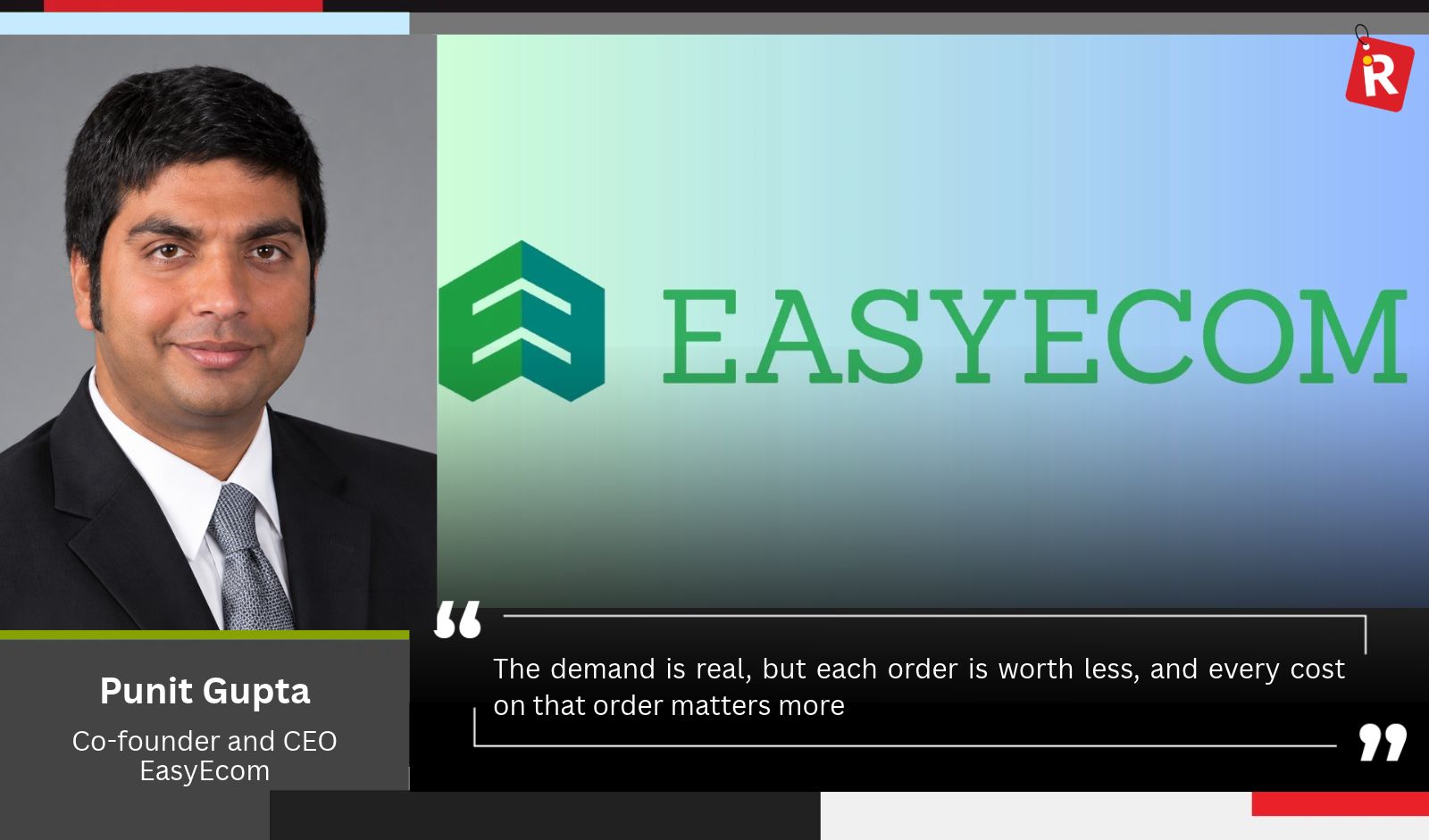
India’s small-town consumers are emerging as a major growth engine for direct-to-consumer (D2C) brands, but lower order values, higher return costs and fragmented last-mile logistics are putting pressure on profitability.
According to Punit Gupta, Co-founder and CEO, EasyEcom, 57.2% of orders on the platform now originate from outside the top 96 cities, but these orders account for only 39.3% of total order value. The gap highlights both the scale of demand beyond metros and the challenge of making smaller baskets commercially viable.
“The demand is real, but each order is worth less, and every cost on that order matters more,” said Gupta. He added that brands succeeding in smaller towns are not necessarily those offering the deepest discounts, but those that keep inventory closer to customers, monitor failed deliveries and focus on driving repeat purchases.
Smaller packs over deeper discounts
For D2C brands looking to penetrate emerging markets, product architecture could play a bigger role than aggressive discounting.
Gupta said smaller packs and lower entry price points can help first-time customers experiment with a brand without forcing companies to sacrifice margins.
“A buyer in a smaller town is often trying the brand for the first time and wants a low-risk entry point. A smaller pack gives them that, and the brand does not have to give away margin to get the order,” he said.
While discounts can accelerate customer acquisition, Gupta cautioned that excessive promotions could train consumers to wait for the next sale. He suggested that brands reserve discounts primarily for clearing slow-moving inventory, while using pack sizes to attract new customers.
Inventory decisions need to become more granular
The ability to identify products that work in specific clusters of emerging markets will also be critical to controlling working capital.
Rather than committing large inventories upfront, Gupta recommended a test-and-scale approach, where brands place limited stock in regional warehouses and track sales, cancellations and returns at a pin-code or town-cluster level.
“Send a little, watch closely, then decide,” he said. Products that demonstrate sustained demand can receive additional inventory, while slower-moving SKUs can be pulled back before they tie up cash.
According to Gupta, national-level inventory data alone is insufficient for this strategy. Brands need visibility into what is selling across individual clusters of towns.
Returns emerge as the biggest profitability risk
While shipping and fulfilment costs are easier to track, returns can have a disproportionately large impact on the economics of low-value orders.
“Returns, first. Shipping and fulfilment costs are visible upfront, but returns hide in the numbers,” Gupta said.
He pointed out that when a cash-on-delivery order is returned, brands may effectively pay for two-way shipping, packaging and inventory that remains tied up in transit. For lower-value baskets, a single return can wipe out the margin generated by several successful deliveries.
Gupta said brands should therefore measure cost per delivered order after returns, region by region, rather than evaluating logistics costs in isolation.
Delivery density holds the key to lower costs
The cost of serving smaller towns varies significantly depending on shipment density. While metro delivery routes can carry dozens of parcels within a concentrated area, smaller-town routes often involve fewer shipments over longer distances.
“Density is the biggest reason,” Gupta said, adding that longer distances and multiple delivery attempts can further increase costs.
However, he believes economics can improve rapidly once order volumes build within a particular cluster. Regional inventory and order consolidation, he said, can have a greater impact on profitability than simply negotiating lower courier rates.
Rather than applying a universal minimum shipment volume to determine whether a town is commercially viable, Gupta suggested evaluating clusters of neighbouring towns together and tracking whether cost per delivered order fits within the brand’s margin.
“If both are true”, the cost fits within the margin and continues to decline as volumes grow, “the market is working for you,” he said.
COD remains a challenge beyond metros
Cash-on-delivery continues to be more prevalent in smaller towns, where consumers may be less familiar with online brands and prefer to pay only when the product arrives.
The model, however, can contribute to higher failed deliveries and return-to-origin rates. Gupta attributed this to a combination of consumer trust and logistical issues, including incomplete addresses and delays that can cause customers to lose interest.
Brands can reduce such losses by confirming orders before dispatch or offering small incentives for prepaid purchases, he said.
Regional fulfilment could reshape unit economics
For brands looking to improve profitability, moving inventory closer to demand could be one of the most effective levers.
“When stock sits closer to the buyer, the order reaches them sooner, and a faster delivery is less likely to be cancelled or refused at the door,” Gupta said.
He added that D2C brands do not necessarily need to build their own warehouse infrastructure. Shared fulfilment facilities can allow multiple brands to store inventory in the same region while splitting fixed costs.
Many third-party logistics providers working with EasyEcom already operate such shared warehouse models, Gupta said, allowing multiple brands to use the same facility while maintaining separate inventories.
Small-town growth is real, but profitability remains uneven
The shift towards smaller cities is therefore showing signs of structural improvement, but the transition is far from complete.
“Honestly, both,” Gupta said when asked whether brands are seeing genuine improvements in small-town unit economics or continuing to subsidise growth through discounts and customer acquisition spending.
Brands that have moved inventory closer to customers, improved order-level data and prioritised repeat purchases are seeing more sustainable economics, he said. Others continue to rely heavily on discounts and advertising to drive growth.
The festive season has further highlighted the challenge, with smaller baskets being seen in smaller towns compared with the previous year.
“Smaller towns clearly have the demand. What decides the outcome is whether the operations behind each order were built for these markets,” Gupta said.
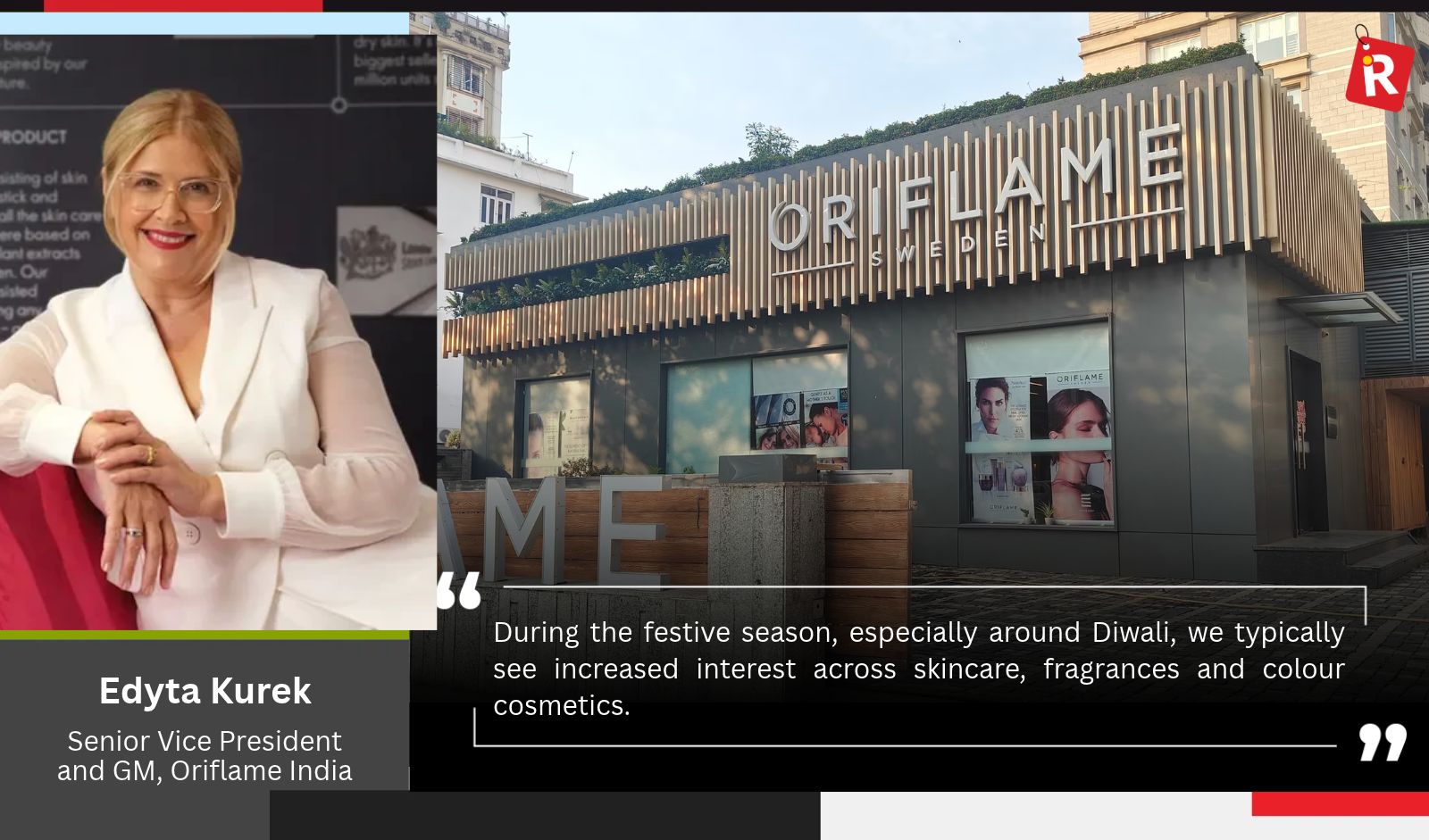
Oriflame expects skincare, fragrances and colour cosmetics to remain among the key beauty categories driving consumer demand during the Diwali and festive season, as shoppers increasingly combine personal grooming, self-expression and gifting.
The company said festive beauty consumption is being driven by consumers looking to refresh their beauty routines and experiment with products that complement festive looks. This includes skincare essentials as well as colour cosmetics such as blushes, lipsticks, foundations and eye makeup.
Within its portfolio, Oriflame products across skincare and colour cosmetics generally benefit from the seasonal uptick. Its skincare portfolio includes NovAge+, Optimals, Tender Care, Milk & Honey Gold and Love Nature, while its colour cosmetics portfolio includes The ONE and Giordani Gold.
“During the festive season, especially around Diwali, we typically see increased interest across skincare, fragrances and colour cosmetics. Consumers are looking to refresh their beauty routines and explore products that complement their festive looks,” said, Edyta Kurek, Senior Vice President and GM, Oriflame India.
Beauty Gifting Gains Momentum
Beyond personal consumption, gifting is emerging as an important driver of festive beauty sales. Fragrances, skincare and personal care products are increasingly being considered alternatives to conventional festive gifts, with consumers looking for products that offer both utility and a personal connection.
Oriflame said fragrances have particular relevance as gifting products because consumers can select scents based on the preferences and personalities of their recipients.
The company has observed in the previou years, that a combination of personal beauty consumption and gifting create additional purchase occasions during the festive season.
Premium and Affordable Beauty See Demand
While premium beauty continues to attract consumers seeking advanced formulations and elevated experiences, Oriflame said festive demand is being spread across price segments.
The company's portfolio caters to different consumer needs, ranging from everyday personal care products to premium beauty and wellbeing offerings. Products such as Tender Care, Milk & Honey Gold, Love Nature and Optimals address everyday skincare and personal care needs, while NovAge+ targets consumers seeking advanced skincare solutions.
Similarly, The ONE and Giordani Gold offer colour cosmetics across different consumer preferences and price points.
The company said consumers are increasingly looking for a combination of quality, experience and value, resulting in festive demand that spans both premium and accessible products.
Consumers Increasingly Buying Across Categories
The festive season is also encouraging consumers to purchase multiple complementary products within the same transaction, potentially lifting average order values.
According to Oriflame, consumers are increasingly combining categories rather than limiting purchases to a single product. A skincare purchase, for instance, may be accompanied by personal care products, while fragrances can be paired with other beauty essentials.
The company said the trend reflects a more considered approach to festive spending, with consumers evaluating both product benefits and value before making purchases.
Limited Editions and Trial Packs Support Discovery
Festive launches, limited-edition products, fragrance collections and new variants also support incremental sales by introducing novelty into the shopping experience.
Oriflame said that it has observed, smaller product sizes and tester packs prove useful in encouraging consumers to try new products before purchasing full-sized versions.
These formats can help brands drive product discovery, trial and conversion, while potentially creating opportunities for repeat purchases after the festive season.
The company expects the broader festive beauty opportunity to be shaped by three key consumer motivations, personal care, self-expression and meaningful gifting, with both premium and value-led products contributing to category growth.
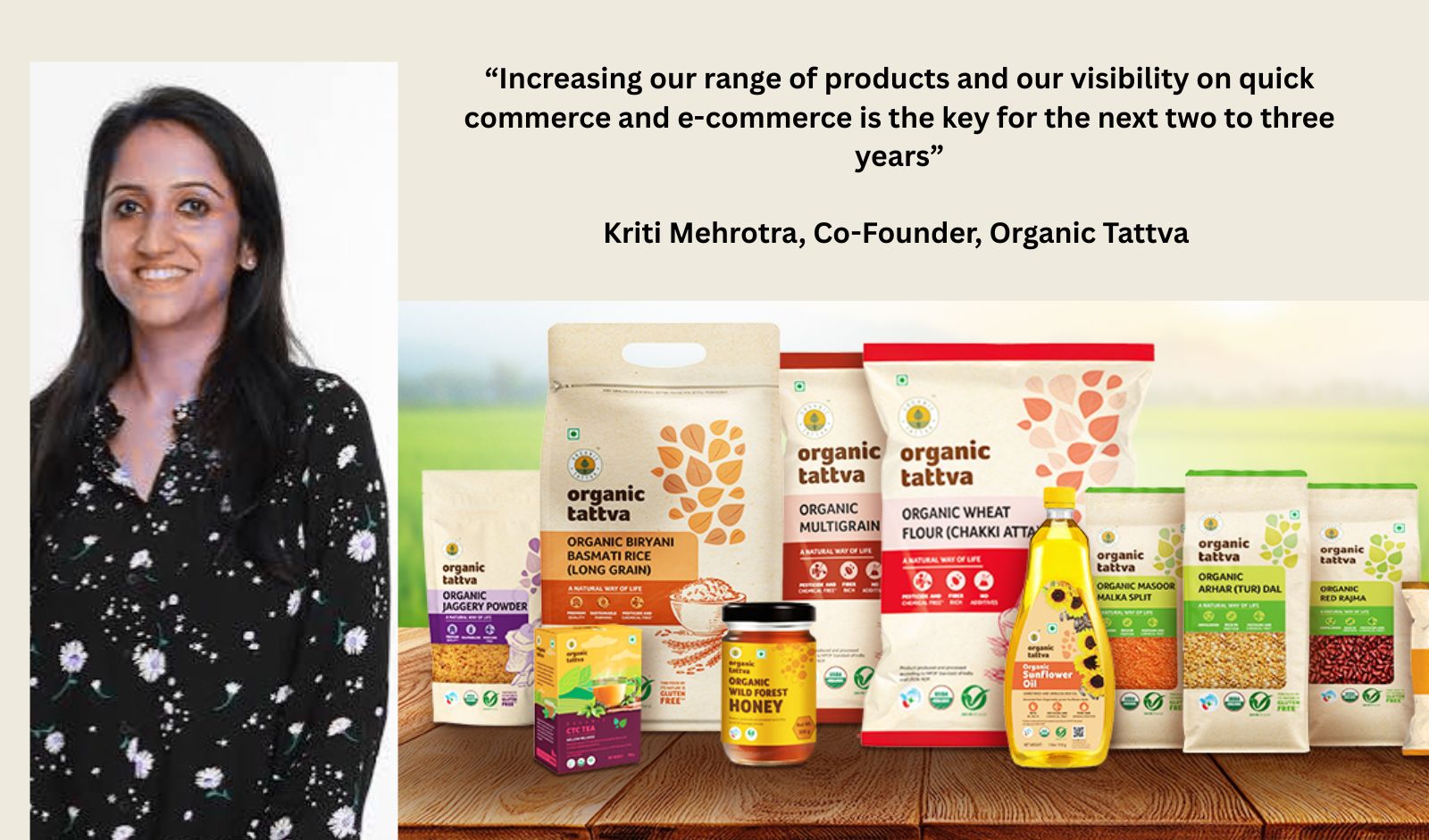
India’s organic food market is witnessing a shift as consumers increasingly look beyond individual organic products to healthier alternatives across their everyday grocery baskets. The rise of e-commerce and quick commerce, alongside growing interest in clean-label foods, is creating new opportunities for brands operating in the category.
For Organic Tattva this changing consumer landscape is opening up avenues for growth across domestic and international markets. The brand, founded by husband-wife duo Kriti and Rohit Mehrotra began at a time when organic food was still a niche category with limited organised competition.
Over the years, Organic Tattva has expanded its offerings across rice, flours, pulses, spices, oils, sugars, ready-to-eat products and teas. Its approach has been to offer consumers a wider selection of organic staples, enabling them to transition more of their household grocery consumption to organic alternatives.
“We started this brand almost back in 2012, 2013. At that time, organic was obviously a very, very niche market. And there were not a lot of brands. It was just us and 24 Mantra at that time. So, you could say we are like one of the pioneers of the organic food industry,” Kriti Mehrotra, Co-Founder, Organic Tattva.
Quick Commerce Emerges as a Key Growth Driver
The evolution of retail channels has significantly changed how consumers discover and purchase organic products. While modern trade and general trade were the primary sales channels when Organic Tattva entered the market, digital platforms have gained prominence in recent years.
The brand is now present across major modern retail chains, including Reliance, Metro, More, Lulu and Spencer’s, alongside e-commerce and quick-commerce platforms such as Amazon, Flipkart, Zepto and Instamart.
Among these channels, quick commerce has emerged as a significant contributor to sales, reflecting the growing consumer preference for convenience and faster access to everyday essentials.
“I don't know the exact numbers, but quick commerce is the major chunk of our sales,” said Mehrotra, adding that the channel could account for more than half of the brand’s sales.
This shift is also influencing the brand’s priorities for the next two to three years. While Organic Tattva continues to maintain its presence in modern trade, its focus is increasingly moving towards strengthening its digital visibility and expanding its product assortment across online platforms.
“Increasing our range of products and our visibility on quick commerce and e-commerce is the key for the next two to three years,” she shared.
Expanding the Organic Grocery Basket
Organic Tattva’s product expansion is centred on making organic food more accessible across everyday consumption categories. Rather than limiting its offerings to conventional staples, the brand is adding products based on emerging consumer demand and gaps in the category.
Recent additions include hing, spices and Khapli Atta, a traditional wheat variety that has been gaining consumer interest.
The brand is also exploring opportunities to encourage larger purchases through bundled offerings on its website and promotional activities across quick-commerce platforms.
During the festive season, Organic Tattva introduced two Diwali gift boxes, marking its first foray into festive gifting. The launch adds another consumption occasion to its existing grocery-focused portfolio.
“We keep evolving the categories, basis demand and things like that,” Kriti said.
The emphasis on expanding the product basket also reflects a broader opportunity in the organic category: moving beyond occasional purchases towards regular household consumption.
Tier-II Cities Offer Further Expansion Opportunities
While Organic Tattva has established a strong presence in Tier-I markets, the brand is increasingly seeing traction from smaller cities.
Its next phase of domestic expansion will focus on deeper penetration into Tier-II markets, with selective exploration of Tier-III cities.
“We have a very solid presence in your Tier-I, and we are hitting very good numbers in Tier-II cities as well,” noted Mehrotra.
However, expanding into smaller markets presents its own challenges, particularly given the nature of the organic food category and consumer awareness levels.
“Definitely Tier-II cities is where we are looking to penetrate deeper, maybe getting a little into Tier-III cities as well. But it's a little tough because the category is such. But yeah, we're seeing very good response from Tier-II cities,” she added.
The brand’s expansion plans are therefore expected to combine greater digital reach with deeper regional penetration, rather than relying solely on an increase in physical retail touchpoints.
Building Consumer Trust Through Transparency
As more brands enter the organic food market, differentiation is becoming increasingly important. For Organic Tattva, consumer trust, certification and supply-chain transparency remain central to its positioning.
The brand holds certifications including USDA, India Organic and European standards. It has also introduced QR codes on its packaging, allowing consumers to access the test report for the specific product lot.
This approach is intended to provide greater visibility into product quality and testing, addressing consumer concerns around authenticity in a category where trust plays a significant role in purchase decisions.
“We have all the necessary certifications in place and now we've implemented a QR code on our packs,” said Mehrotra.
The brand’s sourcing model is another important component of its positioning. Organic Tattva works with nearly 10,000 farmers and procures directly from them, building a supply chain that connects agricultural production with consumer demand.
“We're working with almost 10,000 farmers, procuring directly from them. So, in that way, it is a very sustainable way that we are working from back-end to your reaching all the way to your farm to folk kind of a situation. We are there, we're building a very solid supply chain network that way,” she shared.
Health Foods and Clean Labels Shape Category Demand
The opportunity for Organic Tattva extends beyond organic staples, as consumer interest in healthier food choices continues to expand.
According to Kriti, the broader health food category is gaining traction, particularly in snacks, bakery products and food options for children.
The growing popularity of brands offering products with fewer ingredients and cleaner labels reflects a shift in consumption preferences. Consumers are increasingly looking for alternatives to conventional snacks, including namkeens, bhujiyas and biscuits.
“More than just organic, I would say the health food category is picking up. So, generally, a lot of healthy snacks, healthy bakery items, healthy snacks for kids. All of those things are really picking up,” expressed Mehrotra.
This trend is creating opportunities for brands to reposition familiar food categories around better ingredients and cleaner labels.
For Organic Tattva, the broader shift towards health-conscious consumption reinforces the relevance of its existing portfolio while opening up possibilities for further product development.
International Expansion Gains Momentum
Alongside domestic growth, Organic Tattva is increasing its focus on international markets. Exports currently contribute approximately 25% of the brand’s business, with the US emerging as an important market.
Having entered the US market two years ago, the brand is now looking to strengthen its presence through marketing and wider distribution.
“We are really now pushing our exports. We've started selling our brand in US, and it's been two years, and that we are obviously trying, you know, to expand that market for us,” shared Mehrotra.
The brand is also exporting to the Middle East and is exploring entry into Europe. Other markets under consideration include Canada, Australia, New Zealand and select Asian markets. While Organic Tattva is already present in Singapore and Mauritius, its international expansion will focus on building a stronger presence in existing markets while entering new geographies.
“We're doing a lot of marketing and things like that to make it a very global brand. We're now exporting to Middle East and Europe is where we're trying to enter,” she shared.
The company has not disclosed its revenue or specific growth targets for the next two to three years, but its expansion priorities indicate a continued focus on strengthening domestic distribution, increasing digital sales and scaling its international business.
As the organic food category evolves, Organic Tattva’s next phase of growth will depend on how effectively it combines product innovation, supply-chain credibility and digital distribution to make organic products a more regular part of consumers’ grocery baskets.

NEAT Everyday, a beauty, personal care and wellness brand, is targeting festive sales of ₹1.70 crore during Diwali 2026, representing a 325 percent year-on-year growth over the approximately ₹40 lakh sales recorded during Diwali 2025.
The brand expects the sharp increase to be driven by an expanded retail footprint, growing demand for active nutrition, improved product availability and strategic brand partnerships.
“Compared to our Diwali 2025 sales of approximately ₹40 lakh, this year's target of ₹1.70 crore represents an aggressive 325 percent year-on-year growth, or more than a 4.25x increase. This surge is driven by our expanded retail store footprint, strong active nutrition demand, enhanced product availability, and strategic brand partnerships,” said Darshak Mehta, CEO, NEAT Everyday.
Beauty and Personal Care Gains Festive Momentum
The company's festive outlook comes as India's beauty and personal care market continues to see increasing digital adoption. According to Redseer Strategy Consultants' 2026 online retail outlook, India's online beauty and personal care category is projected to grow by 36–39 percent during the year.
Festive shopping is also contributing to the category's momentum. During the opening 12 hours of Amazon's Great Indian Festival 2026, one in every four products purchased on Amazon.in was a beauty product, while premium skincare and haircare sales crossed 150 products per minute.
Against this backdrop, NEAT Everyday expects skincare, everyday personal care and wellness products to remain relevant during the festive period.
“Consumers are increasingly looking for products that combine convenience, quality and accessible pricing. Festive grooming, gifting and replenishment can create additional purchase occasions for these categories,” Mehta said.
NEAT Everyday's portfolio includes products such as aloe vera gel, rose water, coconut oil and other personal care and wellness products designed around everyday routines.
Premiumisation Coexists With Value Consumption
While premium beauty continues to gain traction online, the festive market is also seeing sustained demand for affordable and mass-market personal care products.
Amazon's Great Indian Festival 2026 reported premium skincare and haircare sales at five times their regular daily levels during the opening phase, pointing to increased consumer interest in specialised beauty products.
For NEAT Everyday, the opportunity lies in addressing the other end of the market through accessible personal care and wellness products.
“The market is catering to both premiumisation and value-conscious consumption. While premium skincare and haircare are seeing strong online traction, accessible personal care products continue to serve everyday needs,” Mehta said.
Omnichannel Retail Becomes Key to Festive Growth
The brand is also looking to leverage an expanding omnichannel presence during the festive period.
NEAT Everyday currently operates 12 physical stores across Mumbai, Ahmedabad and Indore, alongside digital distribution through platforms including Amazon and Flipkart.
The company sees marketplaces, brand websites, physical stores and quick commerce as complementary parts of the consumer journey. Marketplaces facilitate discovery and comparison, while physical stores allow consumers to explore products and quick commerce addresses immediate purchase and replenishment needs.
Redseer's 2026 outlook has identified quick commerce as an important structural growth driver for Indian retail, further increasing the number of channels through which consumers can discover and purchase beauty and personal care products.
Beauty and Wellness Emerge as Festive Gifting Categories
Beyond personal consumption, NEAT Everyday is also tapping the growing role of beauty, personal care and wellness in festive gifting.
Consumers are increasingly exploring alternatives to traditional Diwali gifts such as sweets and dry fruits, with practical beauty and wellness products emerging as gifting options.
NEAT Everyday offers gifting hampers that combine everyday personal care and wellness products, allowing consumers to purchase multiple products as part of a single festive offering.
According to Mehta, such hampers can also help introduce consumers to a broader product portfolio while increasing multi-product purchases during the festive period.
Tier II Markets Add to Growth Opportunity
The company is also looking beyond India's largest metropolitan markets for growth. Redseer's 2026 analysis highlights Tier II and smaller cities as important growth markets for online beauty and personal care, supported by increasing digital access and consumer discovery.
For NEAT Everyday, its presence in Mumbai, Ahmedabad and Indore, combined with digital distribution, provides multiple consumer touchpoints as it looks to capture festive demand.
The brand expects consumer spending during the season to reflect a balance between festive purchases and everyday value. While shoppers are experimenting with new products, price, convenience and utility remain important considerations.
“Festive occasions can encourage multi-product purchases and replenishment of personal care essentials. At NEAT Everyday, we are observing how these preferences influence product selection and purchasing behaviour across channels,” Mehta said.
Looking Beyond Diwali
With a target of ₹1.70 crore for the 2026 Diwali season, NEAT Everyday is positioning the festive period as an important growth opportunity rather than a standalone sales event.
The company plans to evaluate the season through sales growth, category performance and consumer response while continuing to expand product availability across its retail and digital channels.
The 325 percent projected growth also sets a significantly higher benchmark for the brand's festive business, with its expanded retail network and broader product portfolio expected to play a key role in determining whether the company can convert festive demand into sustained post-Diwali consumption.
-
Founded in 2012, Ambrane has expanded into audio, wearables, and smart appliances, strengthening manufacturing and distribution while targeting Rs 1,500 crore in revenue by 2030.
-
Brandman Retail targets 50 stores by March 2027 after recording 20% FY26 revenue growth, while expanding international sportswear brands, Tier-2 and Tier-3 markets, e-commerce and omnichannel capabilities.
-
Plum is scaling its offline footprint from 50,000 to over one lakh outlets, balancing retail reach, store profitability, consumer experience, and growing demand across Tier II and III markets.
-
Drools Targets Triple-Digit Export Growth, Eyes Expansion Across UAE, Middle East and Southeast AsiaWhile India remains Drools' primary market, the brand is looking to strengthen its presence overseas. Exports currently contribute less than 5% of its business, but international markets are becoming increasingly important to its long-term growth plans.






Copyright © 2009 - 2026 Franchiseindia.com Ltd