





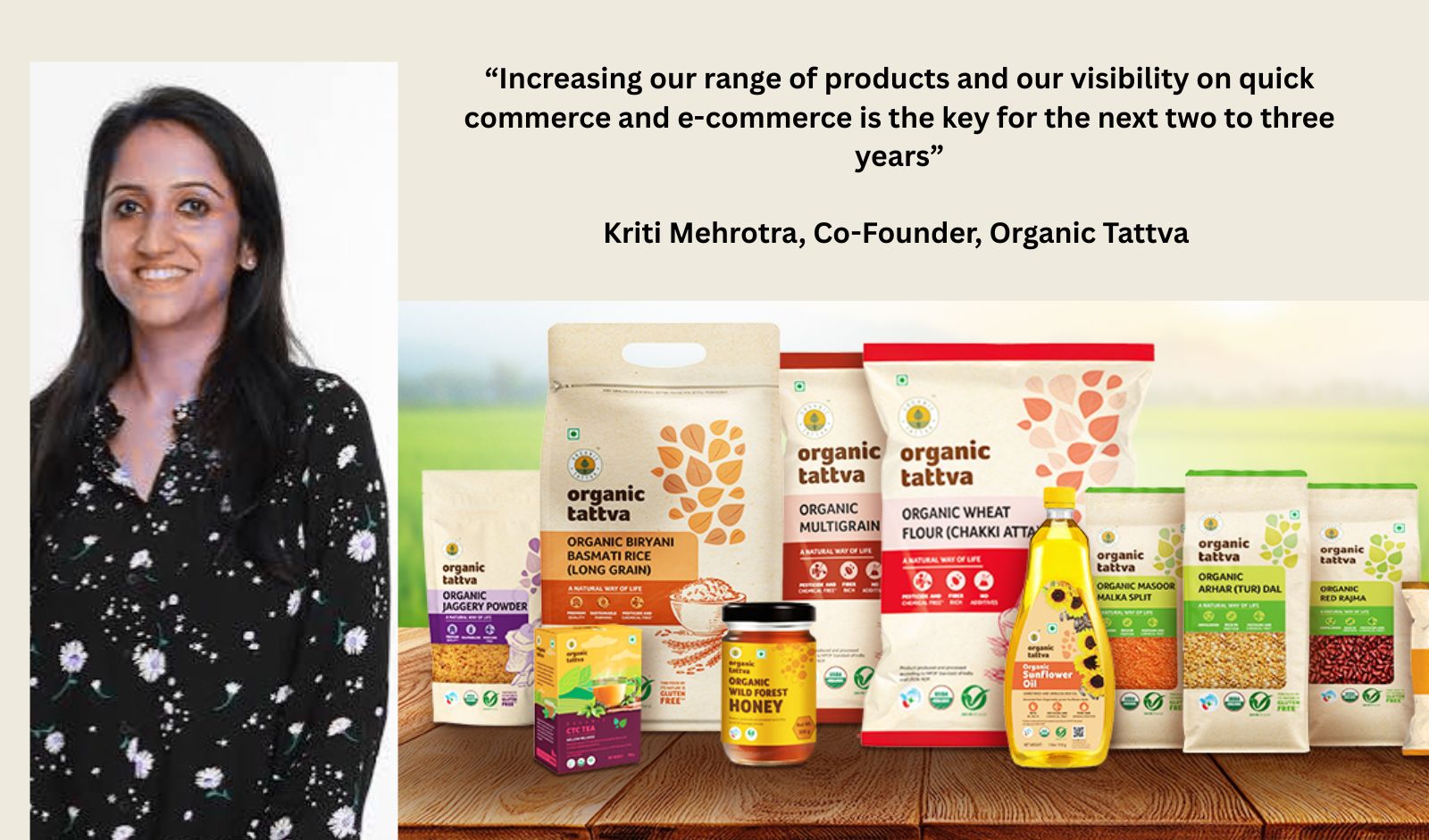
India’s organic food market is witnessing a shift as consumers increasingly look beyond individual organic products to healthier alternatives across their everyday grocery baskets. The rise of e-commerce and quick commerce, alongside growing interest in clean-label foods, is creating new opportunities for brands operating in the category.
For Organic Tattva this changing consumer landscape is opening up avenues for growth across domestic and international markets. The brand, founded by husband-wife duo Kriti and Rohit Mehrotra began at a time when organic food was still a niche category with limited organised competition.
Over the years, Organic Tattva has expanded its offerings across rice, flours, pulses, spices, oils, sugars, ready-to-eat products and teas. Its approach has been to offer consumers a wider selection of organic staples, enabling them to transition more of their household grocery consumption to organic alternatives.
“We started this brand almost back in 2012, 2013. At that time, organic was obviously a very, very niche market. And there were not a lot of brands. It was just us and 24 Mantra at that time. So, you could say we are like one of the pioneers of the organic food industry,” Kriti Mehrotra, Co-Founder, Organic Tattva.
Quick Commerce Emerges as a Key Growth Driver
The evolution of retail channels has significantly changed how consumers discover and purchase organic products. While modern trade and general trade were the primary sales channels when Organic Tattva entered the market, digital platforms have gained prominence in recent years.
The brand is now present across major modern retail chains, including Reliance, Metro, More, Lulu and Spencer’s, alongside e-commerce and quick-commerce platforms such as Amazon, Flipkart, Zepto and Instamart.
Among these channels, quick commerce has emerged as a significant contributor to sales, reflecting the growing consumer preference for convenience and faster access to everyday essentials.
“I don't know the exact numbers, but quick commerce is the major chunk of our sales,” said Mehrotra, adding that the channel could account for more than half of the brand’s sales.
This shift is also influencing the brand’s priorities for the next two to three years. While Organic Tattva continues to maintain its presence in modern trade, its focus is increasingly moving towards strengthening its digital visibility and expanding its product assortment across online platforms.
“Increasing our range of products and our visibility on quick commerce and e-commerce is the key for the next two to three years,” she shared.
Expanding the Organic Grocery Basket
Organic Tattva’s product expansion is centred on making organic food more accessible across everyday consumption categories. Rather than limiting its offerings to conventional staples, the brand is adding products based on emerging consumer demand and gaps in the category.
Recent additions include hing, spices and Khapli Atta, a traditional wheat variety that has been gaining consumer interest.
The brand is also exploring opportunities to encourage larger purchases through bundled offerings on its website and promotional activities across quick-commerce platforms.
During the festive season, Organic Tattva introduced two Diwali gift boxes, marking its first foray into festive gifting. The launch adds another consumption occasion to its existing grocery-focused portfolio.
“We keep evolving the categories, basis demand and things like that,” Kriti said.
The emphasis on expanding the product basket also reflects a broader opportunity in the organic category: moving beyond occasional purchases towards regular household consumption.
Tier-II Cities Offer Further Expansion Opportunities
While Organic Tattva has established a strong presence in Tier-I markets, the brand is increasingly seeing traction from smaller cities.
Its next phase of domestic expansion will focus on deeper penetration into Tier-II markets, with selective exploration of Tier-III cities.
“We have a very solid presence in your Tier-I, and we are hitting very good numbers in Tier-II cities as well,” noted Mehrotra.
However, expanding into smaller markets presents its own challenges, particularly given the nature of the organic food category and consumer awareness levels.
“Definitely Tier-II cities is where we are looking to penetrate deeper, maybe getting a little into Tier-III cities as well. But it's a little tough because the category is such. But yeah, we're seeing very good response from Tier-II cities,” she added.
The brand’s expansion plans are therefore expected to combine greater digital reach with deeper regional penetration, rather than relying solely on an increase in physical retail touchpoints.
Building Consumer Trust Through Transparency
As more brands enter the organic food market, differentiation is becoming increasingly important. For Organic Tattva, consumer trust, certification and supply-chain transparency remain central to its positioning.
The brand holds certifications including USDA, India Organic and European standards. It has also introduced QR codes on its packaging, allowing consumers to access the test report for the specific product lot.
This approach is intended to provide greater visibility into product quality and testing, addressing consumer concerns around authenticity in a category where trust plays a significant role in purchase decisions.
“We have all the necessary certifications in place and now we've implemented a QR code on our packs,” said Mehrotra.
The brand’s sourcing model is another important component of its positioning. Organic Tattva works with nearly 10,000 farmers and procures directly from them, building a supply chain that connects agricultural production with consumer demand.
“We're working with almost 10,000 farmers, procuring directly from them. So, in that way, it is a very sustainable way that we are working from back-end to your reaching all the way to your farm to folk kind of a situation. We are there, we're building a very solid supply chain network that way,” she shared.
Health Foods and Clean Labels Shape Category Demand
The opportunity for Organic Tattva extends beyond organic staples, as consumer interest in healthier food choices continues to expand.
According to Kriti, the broader health food category is gaining traction, particularly in snacks, bakery products and food options for children.
The growing popularity of brands offering products with fewer ingredients and cleaner labels reflects a shift in consumption preferences. Consumers are increasingly looking for alternatives to conventional snacks, including namkeens, bhujiyas and biscuits.
“More than just organic, I would say the health food category is picking up. So, generally, a lot of healthy snacks, healthy bakery items, healthy snacks for kids. All of those things are really picking up,” expressed Mehrotra.
This trend is creating opportunities for brands to reposition familiar food categories around better ingredients and cleaner labels.
For Organic Tattva, the broader shift towards health-conscious consumption reinforces the relevance of its existing portfolio while opening up possibilities for further product development.
International Expansion Gains Momentum
Alongside domestic growth, Organic Tattva is increasing its focus on international markets. Exports currently contribute approximately 25% of the brand’s business, with the US emerging as an important market.
Having entered the US market two years ago, the brand is now looking to strengthen its presence through marketing and wider distribution.
“We are really now pushing our exports. We've started selling our brand in US, and it's been two years, and that we are obviously trying, you know, to expand that market for us,” shared Mehrotra.
The brand is also exporting to the Middle East and is exploring entry into Europe. Other markets under consideration include Canada, Australia, New Zealand and select Asian markets. While Organic Tattva is already present in Singapore and Mauritius, its international expansion will focus on building a stronger presence in existing markets while entering new geographies.
“We're doing a lot of marketing and things like that to make it a very global brand. We're now exporting to Middle East and Europe is where we're trying to enter,” she shared.
The company has not disclosed its revenue or specific growth targets for the next two to three years, but its expansion priorities indicate a continued focus on strengthening domestic distribution, increasing digital sales and scaling its international business.
As the organic food category evolves, Organic Tattva’s next phase of growth will depend on how effectively it combines product innovation, supply-chain credibility and digital distribution to make organic products a more regular part of consumers’ grocery baskets.


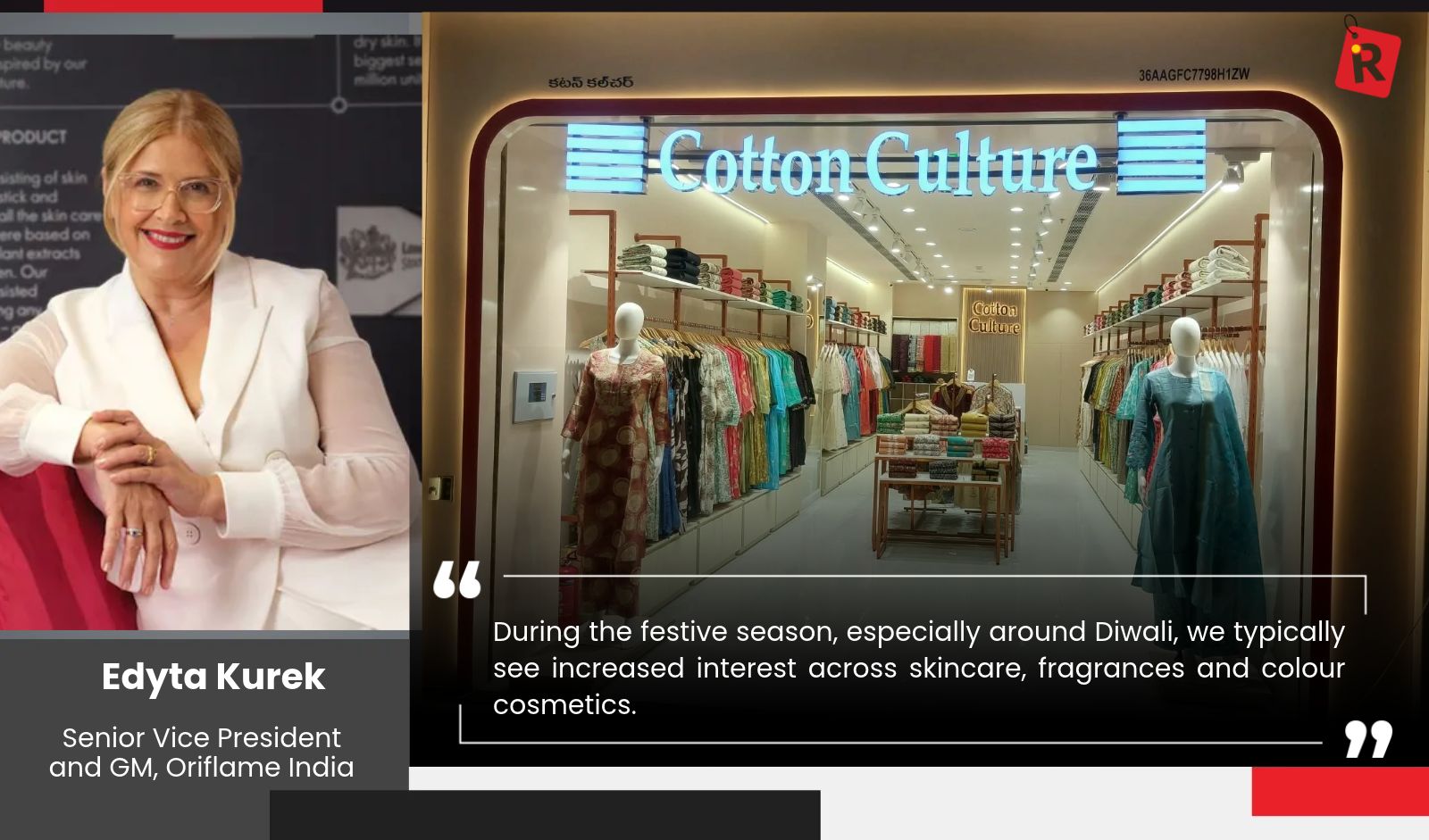
Oriflame expects skincare, fragrances and colour cosmetics to remain among the key beauty categories driving consumer demand during the Diwali and festive season, as shoppers increasingly combine personal grooming, self-expression and gifting.
The company said festive beauty consumption is being driven by consumers looking to refresh their beauty routines and experiment with products that complement festive looks. This includes skincare essentials as well as colour cosmetics such as blushes, lipsticks, foundations and eye makeup.
Within its portfolio, Oriflame expects products across skincare and colour cosmetics to benefit from the seasonal uptick. Its skincare portfolio includes NovAge+, Optimals, Tender Care, Milk & Honey Gold and Love Nature, while its colour cosmetics portfolio includes The ONE and Giordani Gold.
“During the festive season, especially around Diwali, we typically see increased interest across skincare, fragrances and colour cosmetics. Consumers are looking to refresh their beauty routines and explore products that complement their festive looks,” said, Edyta Kurek, Senior Vice President and GM, Oriflame India.
Beauty Gifting Gains Momentum
Beyond personal consumption, gifting is emerging as an important driver of festive beauty sales. Fragrances, skincare and personal care products are increasingly being considered alternatives to conventional festive gifts, with consumers looking for products that offer both utility and a personal connection.
Oriflame said fragrances have particular relevance as gifting products because consumers can select scents based on the preferences and personalities of their recipients.
The company expects the combination of personal beauty consumption and gifting to create additional purchase occasions during the festive season.
Premium and Affordable Beauty See Demand
While premium beauty continues to attract consumers seeking advanced formulations and elevated experiences, Oriflame said festive demand is being spread across price segments.
The company's portfolio caters to different consumer needs, ranging from everyday personal care products to premium beauty and wellbeing offerings. Products such as Tender Care, Milk & Honey Gold, Love Nature and Optimals address everyday skincare and personal care needs, while NovAge+ targets consumers seeking advanced skincare solutions.
Similarly, The ONE and Giordani Gold offer colour cosmetics across different consumer preferences and price points.
The company said consumers are increasingly looking for a combination of quality, experience and value, resulting in festive demand that spans both premium and accessible products.
Consumers Increasingly Buying Across Categories
The festive season is also encouraging consumers to purchase multiple complementary products within the same transaction, potentially lifting average order values.
According to Oriflame, consumers are increasingly combining categories rather than limiting purchases to a single product. A skincare purchase, for instance, may be accompanied by personal care products, while fragrances can be paired with other beauty essentials.
The company said the trend reflects a more considered approach to festive spending, with consumers evaluating both product benefits and value before making purchases.
Limited Editions and Trial Packs Support Discovery
Festive launches, limited-edition products, fragrance collections and new variants are also expected to support incremental sales by introducing novelty into the shopping experience.
Oriflame said smaller product sizes and tester packs are proving useful in encouraging consumers to try new products before purchasing full-sized versions.
These formats can help brands drive product discovery, trial and conversion, while potentially creating opportunities for repeat purchases after the festive season.
The company expects the broader festive beauty opportunity to be shaped by three key consumer motivations, personal care, self-expression and meaningful gifting, with both premium and value-led products contributing to category growth.

NEAT Everyday, a beauty, personal care and wellness brand, is targeting festive sales of ₹1.70 crore during Diwali 2026, representing a 325 percent year-on-year growth over the approximately ₹40 lakh sales recorded during Diwali 2025.
The brand expects the sharp increase to be driven by an expanded retail footprint, growing demand for active nutrition, improved product availability and strategic brand partnerships.
“Compared to our Diwali 2025 sales of approximately ₹40 lakh, this year's target of ₹1.70 crore represents an aggressive 325 percent year-on-year growth, or more than a 4.25x increase. This surge is driven by our expanded retail store footprint, strong active nutrition demand, enhanced product availability, and strategic brand partnerships,” said Darshak Mehta, CEO, NEAT Everyday.
Beauty and Personal Care Gains Festive Momentum
The company's festive outlook comes as India's beauty and personal care market continues to see increasing digital adoption. According to Redseer Strategy Consultants' 2026 online retail outlook, India's online beauty and personal care category is projected to grow by 36–39 percent during the year.
Festive shopping is also contributing to the category's momentum. During the opening 12 hours of Amazon's Great Indian Festival 2026, one in every four products purchased on Amazon.in was a beauty product, while premium skincare and haircare sales crossed 150 products per minute.
Against this backdrop, NEAT Everyday expects skincare, everyday personal care and wellness products to remain relevant during the festive period.
“Consumers are increasingly looking for products that combine convenience, quality and accessible pricing. Festive grooming, gifting and replenishment can create additional purchase occasions for these categories,” Mehta said.
NEAT Everyday's portfolio includes products such as aloe vera gel, rose water, coconut oil and other personal care and wellness products designed around everyday routines.
Premiumisation Coexists With Value Consumption
While premium beauty continues to gain traction online, the festive market is also seeing sustained demand for affordable and mass-market personal care products.
Amazon's Great Indian Festival 2026 reported premium skincare and haircare sales at five times their regular daily levels during the opening phase, pointing to increased consumer interest in specialised beauty products.
For NEAT Everyday, the opportunity lies in addressing the other end of the market through accessible personal care and wellness products.
“The market is catering to both premiumisation and value-conscious consumption. While premium skincare and haircare are seeing strong online traction, accessible personal care products continue to serve everyday needs,” Mehta said.
Omnichannel Retail Becomes Key to Festive Growth
The brand is also looking to leverage an expanding omnichannel presence during the festive period.
NEAT Everyday currently operates 12 physical stores across Mumbai, Ahmedabad and Indore, alongside digital distribution through platforms including Amazon and Flipkart.
The company sees marketplaces, brand websites, physical stores and quick commerce as complementary parts of the consumer journey. Marketplaces facilitate discovery and comparison, while physical stores allow consumers to explore products and quick commerce addresses immediate purchase and replenishment needs.
Redseer's 2026 outlook has identified quick commerce as an important structural growth driver for Indian retail, further increasing the number of channels through which consumers can discover and purchase beauty and personal care products.
Beauty and Wellness Emerge as Festive Gifting Categories
Beyond personal consumption, NEAT Everyday is also tapping the growing role of beauty, personal care and wellness in festive gifting.
Consumers are increasingly exploring alternatives to traditional Diwali gifts such as sweets and dry fruits, with practical beauty and wellness products emerging as gifting options.
NEAT Everyday offers gifting hampers that combine everyday personal care and wellness products, allowing consumers to purchase multiple products as part of a single festive offering.
According to Mehta, such hampers can also help introduce consumers to a broader product portfolio while increasing multi-product purchases during the festive period.
Tier II Markets Add to Growth Opportunity
The company is also looking beyond India's largest metropolitan markets for growth. Redseer's 2026 analysis highlights Tier II and smaller cities as important growth markets for online beauty and personal care, supported by increasing digital access and consumer discovery.
For NEAT Everyday, its presence in Mumbai, Ahmedabad and Indore, combined with digital distribution, provides multiple consumer touchpoints as it looks to capture festive demand.
The brand expects consumer spending during the season to reflect a balance between festive purchases and everyday value. While shoppers are experimenting with new products, price, convenience and utility remain important considerations.
“Festive occasions can encourage multi-product purchases and replenishment of personal care essentials. At NEAT Everyday, we are observing how these preferences influence product selection and purchasing behaviour across channels,” Mehta said.
Looking Beyond Diwali
With a target of ₹1.70 crore for the 2026 Diwali season, NEAT Everyday is positioning the festive period as an important growth opportunity rather than a standalone sales event.
The company plans to evaluate the season through sales growth, category performance and consumer response while continuing to expand product availability across its retail and digital channels.
The 325 percent projected growth also sets a significantly higher benchmark for the brand's festive business, with its expanded retail network and broader product portfolio expected to play a key role in determining whether the company can convert festive demand into sustained post-Diwali consumption.
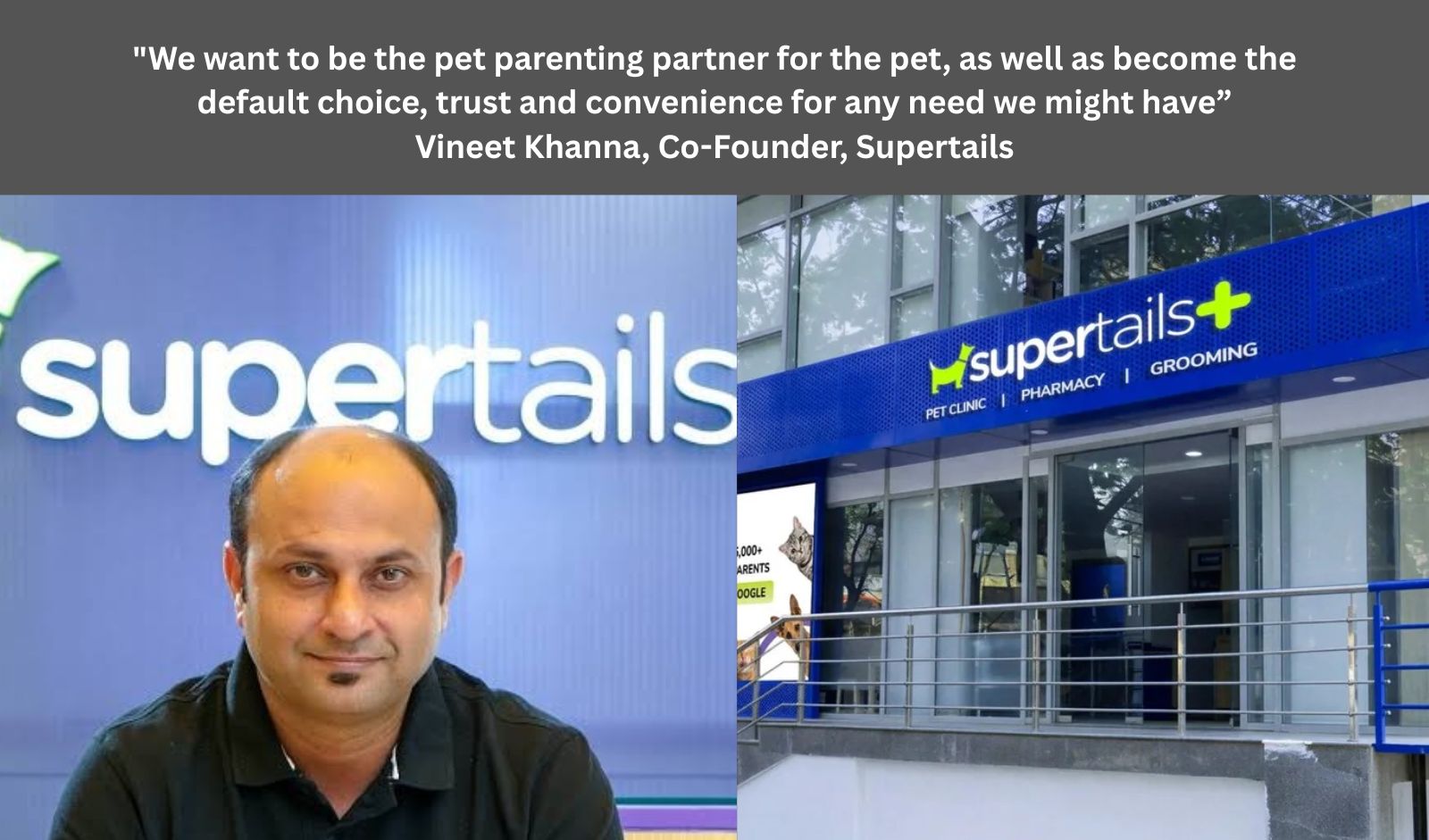
India's pet care market is witnessing a shift as pet ownership, consumer awareness and spending on animal well-being continue to grow. What was once largely a category centred on pet food and basic supplies is expanding into nutrition, preventive healthcare, diagnostics, grooming, medicines and specialised services. For businesses operating in the space, the opportunity lies not just in selling products but in building long-term relationships with pet parents.
Supertails is positioning itself around this larger opportunity. What began as an online marketplace for pet nutrition has evolved into an integrated pet care platform spanning food, accessories, teleconsultations, e-pharmacy, grooming, diagnostics and veterinary healthcare. The brand's ambition is to become a single destination for pet parents, addressing their needs across different stages of a pet's life.
Founded around the idea of building a continuity-of-care platform, Supertails entered the market at a time when India's pet care industry was beginning to gain momentum.
"In India, while we all continue to have more disposable incomes, people are marrying later, they're having kids, fertility rates are dropping, but everybody needs companionship, which is why pet adoption is on the rise. Pet parents are growingly becoming more aware, and they're becoming more and more involved, which is what we call humanisation of pets," shared Vineet Khanna, Co-Founder, Supertails.
He added that these factors are contributing to category growth of over 25 percent annually, creating opportunities for businesses that can address the evolving requirements of pet parents.
From Online Marketplace to a Continuity-of-Care Platform
Supertails was established with the objective of addressing the diverse needs of India's growing pet parent community. The company recognised that every pet has different requirements depending on its age, breed, health and lifestyle. This understanding shaped the company's vision of building an ecosystem that could support pet parents throughout the pet ownership lifecycle.
The business initially started as a marketplace focused on pet nutrition before expanding into accessories. In 2022, its second year of operations, Supertails introduced teleconsultations and private-label products. The following year, it launched its e-pharmacy, extending its services into prescription-based healthcare.
In 2024, the company entered offline healthcare with clinics and hospitals in Bengaluru, offering services ranging from outpatient consultations, grooming, diagnostics and vaccinations to surgeries and emergency care.
Today, its Bengaluru ecosystem combines online access to pet supplies and medicines with physical healthcare facilities. The company also offers quick-commerce deliveries, enabling customers to receive essential supplies and medicines within 30 minutes.
"Supertails is now this continuity of pet care platform for this pet parent who has multiple needs. We just keep on addressing them throughout," said Khanna.
Building an Omnichannel Retail and Healthcare Network
Supertails' retail presence combines its digital platform with quick-commerce infrastructure and offline healthcare facilities. Bengaluru is currently its most developed market, with dark stores supporting 30-minute deliveries of pet supplies and medicines, alongside a network of 12 healthcare facilities.
The company is also present in Delhi-NCR and Mumbai, while other metropolitan markets largely operate through same-day and next-day delivery models. Beyond metros, the platform serves customers through standard delivery.
Its expansion approach is centred on establishing a strong presence within individual micro-markets before replicating the model in other cities.
The offline healthcare business is a relatively recent addition, with the first clinic opening around 18 months ago. A significant proportion of the current network has been added over the last three to six months. According to Vineet, the relationship between the online and offline businesses is central to the company's retail model. While the digital platform supports customer acquisition, the physical healthcare network builds trust and gives the company a deeper understanding of individual pets through their health and purchase data.
Rather than treating online and offline as separate businesses, Supertails views them as interconnected channels serving the same consumer. At a Bengaluru level, more than one-fourth of the company's business comes from its offline clinic channel.
"We can call ourselves having different categories, different product lines, different channels. The consumer and the pet is the same and that's how we define our business as well," said Khanna.
This integrated approach also allows the company to use information such as a pet's age, breed, weight, vaccination history and deworming schedule to anticipate future requirements and recommend relevant products and services.
Metros Drive Spending, but Tier II Markets Offer Opportunity
Metropolitan markets currently contribute approximately two-thirds of Supertails' business, reflecting higher spending propensity and greater awareness of specialised pet care products and services. Consumers in these markets are increasingly looking beyond basic supplies to include quality healthcare, grooming, boarding, walking and other services within their pet care routines. However, the pet care category has a distinct growth trajectory compared with several other consumer sectors. Unlike categories that typically originate in metros before expanding to smaller cities, pet ownership in India has historically had a strong presence in Tier II and Tier III markets.
"As people started to have pets in metros, they started to grow faster as well," expressed Khanna. .
The company is witnessing demand beyond metropolitan markets, including cities such as Jaipur, Jodhpur and other emerging urban centres. Its longer-term expansion plans involve taking the integrated ecosystem beyond metros as well.
Expansion Plans
Over the next five years, Supertails aims to replicate its 30 minute delivery model across 20-30 cities in India. The immediate focus, however, is to strengthen its existing ecosystem in Bengaluru before expanding the healthcare network into Delhi and Mumbai, followed by other metropolitan markets.
"We plan to establish our 30-minute delivery service first before moving towards a more comprehensive ecosystem," shared Khanna.
Product Diversification Beyond Food and Accessories
While pet nutrition remains Supertail's largest business category, contributing more than 55-60 percent of its business, the company is seeing increasing demand across accessories, clothing, supplements, preventive care and technology-enabled products.
Its accessories business is growing as pet parents increasingly seek ways to pamper their animals and make them part of their everyday lifestyles. The shift is particularly visible among Gen Z and Millennial consumers, many of whom are working professionals and are increasingly treating pets as integral members of their households.
This is creating demand for products that go beyond functional requirements. Pet clothing, strollers, cameras, tracking devices and other technology-led products are finding greater acceptance, particularly during festive periods and special occasions.
Supertails has also introduced a dedicated pet parents category, which includes products designed for both pets and their owners. For instance, it introduced twinning apparel that allows pet parents and their pets to wear coordinated designs, colours and fabrics. The company has further expanded into supplements, preventive care and veterinary diets and categories such as tech that are growing.
"We continue to launch ethnic wear, technological gadgets like cameras and health monitoring devices," noted Khanna.
He added that the platform's responsibility is to keep expanding its assortment in line with the varied requirements of different breeds, age groups and pet lifestyles.
'No Bang Diwali' Takes Pet Wellness into Festive Conversations
Alongside its retail and product expansion, Supertails is also using consumer awareness initiatives to build stronger connections with pet parents. For the 2026 festive season, the company introduced its 'No Bang Diwali' initiative, highlighting the stress caused by firecracker noise among pets and community animals.
The campaign uses humour to show Diwali from a pet's perspective, drawing attention to how animals respond to loud noises by hiding under tables, sofas and beds. Beyond the brand film, the initiative has been extended across the company's retail and service touchpoints. Supertails is offering Diwali consultations at its 12 clinics to help pet parents understand how to care for their animals during the festive period. Free earmuffs are also being provided with clinic visits and eligible platform orders.
The festive assortment includes ethnic wear, toys, hampers and gifting options for pets, encouraging consumers to include their animals in the celebrations.The approach also reflects the company's larger positioning around making pet parenting more enjoyable by addressing the practical challenges that often accompany it.
"For the consumer, what we communicate to them is basically one trustworthy place which takes care of most of their pet's needs. But what's more important is how they perceive us is that we know their pets almost as equally or sometimes even better than what they know," highlighted Khanna.
He added that the company's objective is to act as a pet parenting partner, helping consumers navigate these requirements through reliable information, products and services.
Building a Rs 2,000-Crore Brand
Supertails is targeting a topline revenue of Rs 2,000 crore over the next four to five years. The growth ambition is supported by increasing category penetration, repeat purchases and rising average order values. Pet nutrition remains the largest contributor to revenue, while newer categories such as accessories, preventive healthcare, supplements and veterinary diets offer additional opportunities.
The company's larger ambition is to become the default destination for pet parents across India, bringing together convenience, trust and a comprehensive range of products and services.
"We want to be the pet parenting partner for the pet, as well as become the default choice, trust and convenience for any need we might have. So that whenever they think of anything pet care, Supertails comes top of their mind," concluded Khanna.
Supertails is betting on an integrated model that combines commerce, healthcare and consumer engagement. Its ability to replicate this ecosystem while maintaining service quality and building consumer trust will be central to its next phase of growth.

TIGERFIRE, the luxury vodka brand crafted in France, is looking to strengthen its presence in India’s premium spirits market by focusing on product quality, selective distribution and consumer experience. Since its India launch in December 2025, the brand has established a presence in Maharashtra, Goa and Haryana, with Gurugram marking its entry into the National Capital Region (NCR).
Led by Global CEO Badal Moradia, TIGERFIRE is taking a measured approach to expansion, prioritising markets with a strong premium spirits consumer base and an established hospitality and retail ecosystem.
“India has always been a whisky-dominated market, but we’re seeing more interest in vodka, especially at the premium end. People are becoming more open to different spirits and different ways of enjoying them. They want something smooth, they want quality, and they want to understand what makes one spirit different from another,” said Badal Moradia, Global CEO, TIGERFIRE.
The brand positions itself in the luxury spirits segment, although its pricing strategy is aimed at making luxury-quality vodka accessible at a relatively lower price point. TIGERFIRE has received a 95-point rating from the Beverage Testing Institute, placing it as the third-highest-rated vodka globally, according to the company.
French Craftsmanship Meets Indian Brand Identity
TIGERFIRE’s product differentiation lies in its production process and ingredient selection. Made using French winter wheat, the vodka undergoes triple distillation and birch charcoal filtration. The process is designed to retain some of the wheat’s natural flavours and create a distinctive taste profile without additives.
The brand’s development involved visits to more than 25 distilleries worldwide before it finalised its production partnership in France. Moradia said the company spent over four years working on the brand, bottle and liquid, with more than two years dedicated to developing its packaging.
“We actually never set out to make a French vodka. We set out to find one of the best vodkas in the world, regardless of where it was made. We spent more than two years tasting vodkas from different distilleries around the world to find the right liquid for TIGERFIRE. It just so happened to come from France. But the liquid was never something we were willing to compromise on,” Moradia said.
While the production is rooted in French craftsmanship, the brand draws its identity from its Indian origins and the personalities of its founders, Sanjay Dutt and Paresh Ghelani. Its bottle design incorporates Indian influences, including a tiger-eye motif inspired by Dutt’s eyes and detailing reflecting Indian craftsmanship.
Selective Distribution and Experiential Retail Strategy
As part of its retail strategy, TIGERFIRE is focusing on premium liquor outlets, restaurants, bars and hospitality partners rather than pursuing widespread distribution. The company believes that product discovery and consumer experience will play a critical role in building its position in the competitive vodka category.
Moradia highlighted the importance of tastings and on-trade partnerships in encouraging consumers to explore the brand.
“Being a premium brand doesn’t mean you need to be everywhere. It means you need to be available in the right places and deliver the right experience when someone encounters the brand. In a category like vodka, people need to experience the product for themselves. That’s where restaurants, bartenders and mixologists can make a real difference,” he said.
The brand is also looking to strengthen its relationships with distributors and trade partners while increasing its presence across premium retail and hospitality channels.
Expansion Priorities for FY2026–27
For FY2026–27, TIGERFIRE’s priorities include deepening its presence in existing markets, expanding its premium retail and on-trade footprint, and entering additional markets where it identifies the right consumer base and distribution opportunities.
The company is evaluating markets based on demand for premium spirits, the availability of suitable retail and hospitality partners, and the strength of local distribution networks. Given India's state-specific excise regulations and pricing structures, the brand intends to pursue expansion selectively.
“We'd rather enter a market where we can do things well than spread ourselves too thin. The idea is to build depth in the markets we're already in, while opening up the right opportunities in others. For a young brand, getting that foundation right is important,” Moradia said.
Although the company has not disclosed specific sales figures or growth targets, it said the initial response across its three markets has been encouraging. Its immediate focus is on translating early consumer interest into wider distribution, product trials and repeat demand.
Building a Global Spirits Brand
TIGERFIRE was first released in Los Angeles, with India selected for its major launch owing to the brand's presence in the country. The company aims to build an internationally recognised spirits brand that combines global production expertise with an identity rooted in India.
“We've seen exceptional responses from all three markets we're available in so far. Personally, I get so proud when I go to some of the best bars and restaurants in the country and see the bottle on the bar and in their cocktails. It means we're doing something right. That the best bartenders are trusting our product in their drinks,” Moradia said.
With a focus on premium positioning, selective market entry and product-led differentiation, TIGERFIRE is looking to establish a long-term presence in India's evolving luxury spirits market.
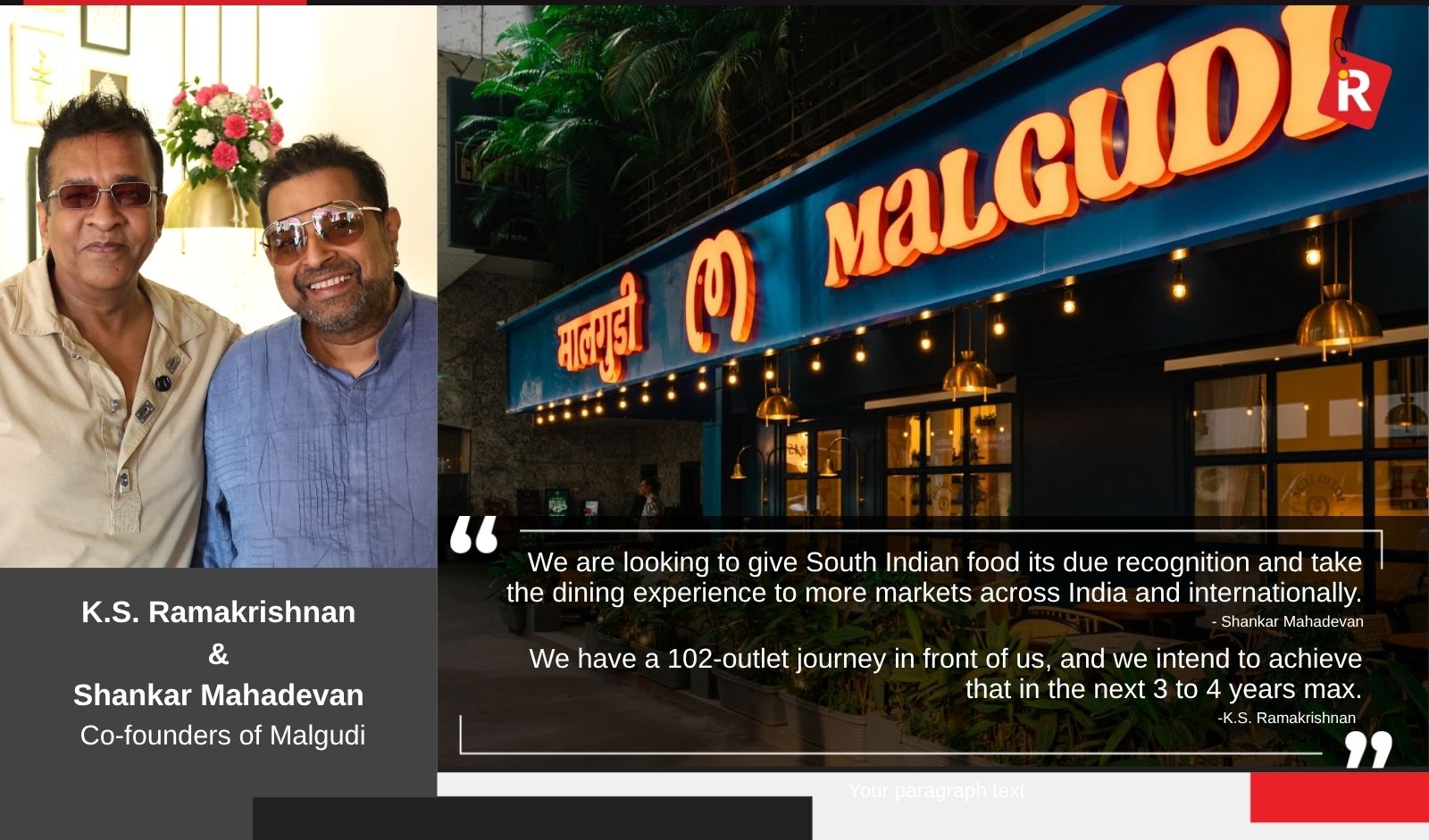
Shankar Mahadevan has made his mark as a singer-composer with hits like ‘Breathless’, ‘Maa’ (Taare Zameen Par), and ‘Mitwa’ (Kabhi Alvida Naa Kehna). Now the Grammy-winning musician is taking his creative ideas to the restaurant industry with Malgudi, which aims to put a fresh twist on South Indian cuisine.
The brand, co-founded by Mahadevan and K.S. Ramakrishnan (Founder of Eatopia Holdings), combines authentic South Indian cuisine with modern decor, menu offerings, and a greater focus on service. The brand sits within the Eatopia portfolio, which includes seven brands, and is growing its presence in India and globally.
"I met up with Ram and decided to do this together," Mahadevan said.
With over two decades of experience in photography and 10 years in the restaurant industry, Ramakrishnan said that the group bought Malgudi as a fast casual brand and decided to reinvent it.
“We wanted to bring credibility to South Indian cuisine," he said.
Also read: How GRM Foods Is Growing 921 Basmati Rice Globally
A New Dining Experience
"The idea was to make sure that South Indian restaurants aren’t just a quick meal option. Often people come here for idlis, vadas and dosas but go elsewhere if they are having a family meal or celebration," Mahadevan said.
That’s exactly what Malgudi has done. It is designed to be ideal for eating out, whether it is family meals or birthdays/anniversary. Not only has the menu been designed well but the interior and cutlery as well as how the staff interact with customers.
"We wanted to create a joyous place to bring families, children and relatives to. It’s somewhere to celebrate an occasion, birthday or anniversary," Mahadevan said.
The concept took around 12-18 months to come up with before expansion of the restaurant-cafe started.
The menu offers a mix of traditional South Indian cuisine along with some newer options. Popular items include podi cheese balls, lotus root, thatte idli, benne dosa, and Mulbagal dosa. Other options include Dindigul biryani, South Indian khao suey, Malabar paratha with curry, and Sri Lankan curry with idiyappam.
The average cost is between Rs 700-Rs 800 each, which makes Malgudi a bit pricier than many traditional South Indian restaurants.
Also read: From Premium Perfumes to Pocket-Friendly Scents
Expansion Strategy:
“We are planning to expand our business in a very structured way. We will use internal resources to fund our expansion,” Ramakrishnan added.
“We’ve got a 13-outlet journey, and we’ve got a 102-outlet journey ahead. We want to reach 102 outlets in the next three to four years,” he added.
Currently, Malgudi is opening its 10th restaurant café outlet in Gurugram and will open 3 more outlets over the next two months. The Eatopia portfolio has around 10 QSR outlets as well.
The business is seeing nearly Rs 200 crore revenue run rate, with revenues growing at a CAGR of 100-150 percent. (Note: Numbers include the entire Eatopia business.)
Ramakrishnan added that it costs between Rs 4-10 crore to invest in an outlet. It depends on the location and outlet type.
Also read: Retail Sales Grow 8 Pc in September 2026 Ahead of Festive Season: Report
Accessing New Markets
The founders think South Indian food would appeal to a wide range of people and communities.
Mahadevan explained how customers from various cultural backgrounds often enjoy eating idli and dosa. The aim of the brand is to target customers seeking a more comfortable experience and those who wouldn’t typically enter a traditional South Indian restaurant.
The brand focuses on serving the market in Mumbai, Delhi-NCR, and Dubai; however, it is also looking at expanding in Ahmedabad and Chandigarh.
They are also looking into opportunities internationally within the UK, Europe, Asia-Pacific, Australia and the US.
Also read: Premiumization Reshapes India’s Home Appliance Retail Market
Quality Over Celebrity
While Mahadevan's association brings recognition to the brand, he believes it cannot replace the basics of running a restaurant.
"Nobody will come and eat a bad dosa because Shankar Mahadevan is associated with it," he said. "The food has to be good."
Ensuring consistent product quality across all outlets will be crucial for Malgudi as it scales. They are focusing on providing an excellent dine-in experience to their customers. Home delivery will be an ancillary business line.
They are looking to grow their restaurant business offering South Indian cuisine to reach 102 outlets in the next 3-4 years. This will depend on how well they provide a consistent eating experience.
Facts
- Inception: 2025
- Headquarters: Dubai
- Revenue Run Rate: Nearly Rs 200 crore (Eatopia)
- Annual Growth: 100 percent–150 percent CAGR
- Restaurant-Café Outlets: 10
- QSR Outlets: Around 10
- Expansion Target: 102 outlets in 3–4 years
- Investment per Outlet: Rs 4–10 crore
- Average Spend: Rs 700–Rs 800 per person
- Planned Markets: UK, Europe, Asia-Pacific, Australia, and US
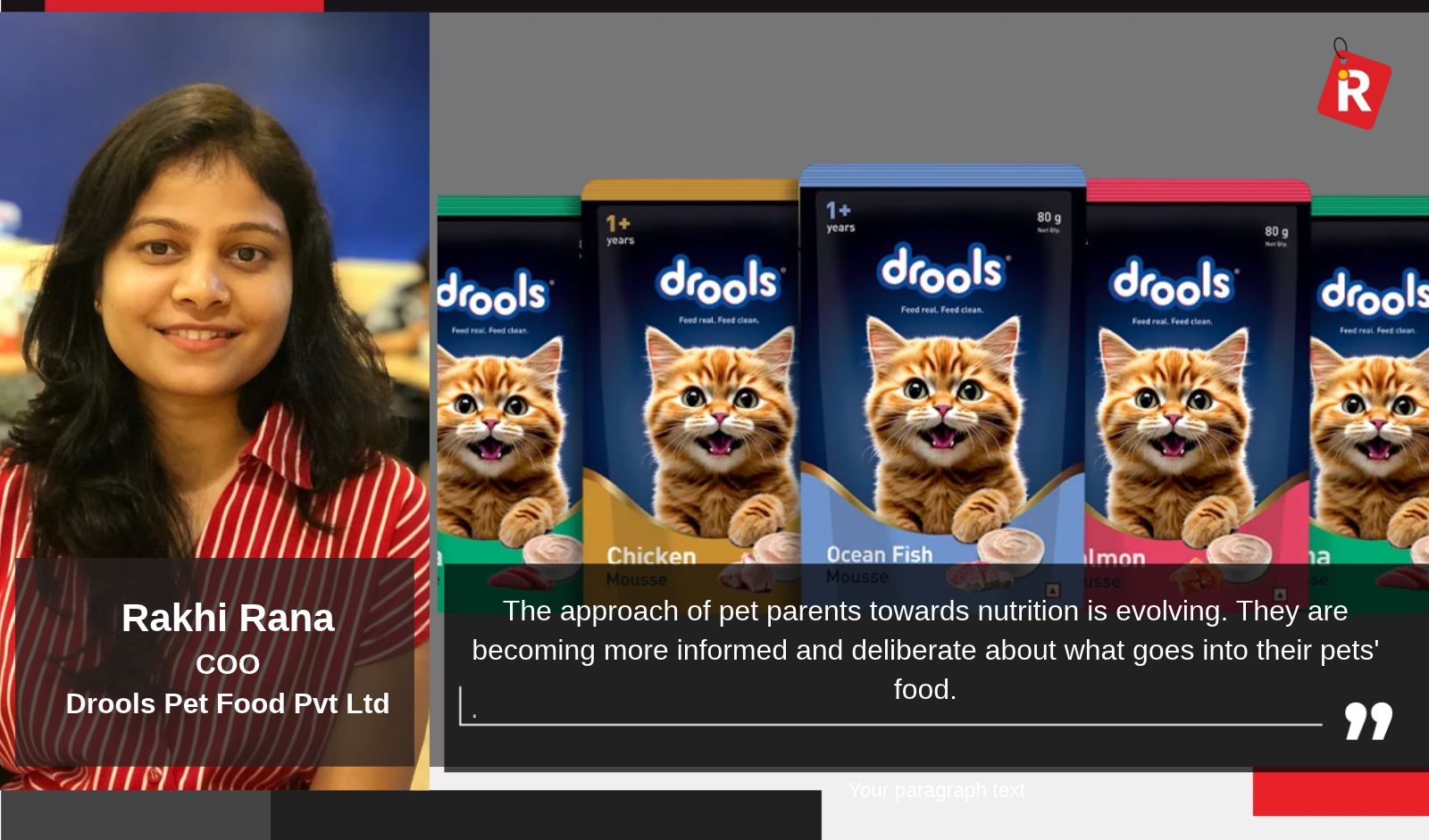
India's pet food market is witnessing a shift as pet ownership grows and consumers increasingly treat pets as family members. What was once largely a functional purchase centred on feeding is gradually evolving into a more considered category, with pet parents paying closer attention to ingredients, nutritional balance, product formats and health benefits. For organised pet food companies, this changing mindset is creating opportunities across premium nutrition, wet food, fresh food, functional products and digital commerce.
For Drools Pet Food, the transformation of consumer behaviour is opening up new avenues for growth. Over the past two to three years, the company has expanded its international presence, strengthened its premium portfolio and invested in emerging product categories to address the changing expectations of pet parents.
According to Rakhi Rana, COO, Drools Pet Food Pvt Ltd, the company's business has recorded a three-year CAGR of approximately 75%, reflecting the momentum behind its expansion strategy and the growing demand for packaged pet nutrition.
"The way pet parents approach nutrition is changing. They are becoming more informed and deliberate about what goes into their pets' food. They want to understand ingredients, preparation methods and nutritional balance, while increasingly looking for food that feels closer to a home-cooked meal. At the same time, packaged pet food has become part of the regular household shopping basket, making convenience, affordability, consistency and trust important purchasing considerations," says Rana.
The Shift Towards Premium and Fresh Nutrition
India's expanding pet population is providing a strong foundation for the organised pet food industry. The country's pet population increased from 28.4 million in 2020 to 39.2 million in 2025, indicating a growing consumer base for pet-care products. According to IMARC Group, India's pet food market was valued at approximately USD 2.4 billion in 2024 and is projected to reach USD 4.6 billion by 2033, growing at a CAGR of 7.2% between 2025 and 2033.
As the category develops, consumers are moving beyond basic feeding requirements towards products that offer specific nutritional benefits. This is particularly visible in the growing interest in wet food and fresh-style formats, which combine recognisable ingredients, higher moisture content and ready-to-serve convenience.
Drools is addressing this shift through its Fresh Food range, featuring meat-rich recipes formulated without corn, wheat, soy or preservatives. The portfolio currently includes four variants: Real Chicken & Veggies, Real Chicken & Pumpkin, Real Chicken and Turkey, and Real Chicken Biryani.
The company has also opted for Tetra Recart packaging, allowing the products to offer home-style meals with complete and balanced nutrition while maintaining freshness and flavour without requiring refrigeration before opening.
"Consumers are increasingly looking for food formats that offer both nutritional value and convenience. Our Fresh Food range responds to this demand by bringing together recognisable ingredients, balanced nutrition and easy-to-serve packaging. We want to make home-style meals a convenient part of everyday feeding routines," Rana explains.
The company's product development strategy also extends to vegetarian offerings. Its 100% Veg Gravy is a moist, plant-derived mealtime option for dogs, catering to households seeking alternatives to meat-based products. Drools is further expanding its wet-food portfolio with bone broth and soups, alongside functional treats for dogs and cats.
Premiumisation Creates New Growth Opportunities
Premiumisation is emerging as another important growth driver for the company. Drools' premium dog food portfolio includes Focus, Canine Creek and Grain Zero, supported by breeder and veterinarian partnerships.
While premium pet food continues to represent a relatively low-volume, high-margin segment, the company sees considerable potential in educating consumers about the nutritional benefits of value-added products.
The broader portfolio spans dry and wet food for dogs and cats, treats, veterinary prescription diets, supplements and pharmaceutical products. Its formulations include grain-free, single-grain and high-meat recipes, reflecting a focus on different nutritional requirements.
For Drools, the opportunity lies not just in introducing premium products but also in building consumer understanding around the role of nutrition in pet health.
"Premiumisation is steadily gaining momentum, but consumer education remains important. Through our premium portfolio, veterinarian relationships and emerging categories such as Fresh Food and Bone Broth, we aim to communicate the nutritional benefits of value-added products and encourage their long-term adoption," says Rana.
Digital Commerce Reshapes Distribution
The changing purchase behaviour of pet parents is also influencing the company's distribution strategy. Drools currently reaches more than 2,000 cities through nearly 50,000 retail touchpoints, while its e-commerce presence provides product accessibility across 100% of serviceable PIN codes in India.
However, digital commerce is increasingly becoming a significant part of its business model. E-commerce accounts for nearly 40% of the company's overall Indian business, while general trade and modern trade each contribute less than 10%.
Quick commerce is emerging as another important growth channel, registering triple-digit year-on-year growth.
The shift reflects the growing preference for convenience-led shopping among younger pet parents, who are increasingly discovering and purchasing new products through digital platforms. Categories such as Cat Mousse, Fresh Food for Dogs and treats for dogs and cats are witnessing accelerated growth across these channels.
As digital commerce gains momentum, the company is looking to use these platforms not only to improve accessibility but also to introduce consumers to newer formats and encourage product experimentation.
International Markets: A New Growth Engine
While India remains Drools' primary market, international expansion is becoming an increasingly important part of its long-term strategy. Exports currently contribute less than 5% to the company's overall business, but the company is aggressively pursuing triple-digit export growth in FY27.
The strategy is centred on three distinct regions, the GCC, Southeast Asia and Africa, each presenting different consumer preferences and category opportunities.
In the GCC, Drools has established a presence across the UAE, Saudi Arabia, Oman, Bahrain, Qatar and Kuwait. The UAE and Saudi Arabia are its key growth markets, supported by rising demand for premium, health-led pet nutrition. The company also operates through its own entity and a dedicated team in Dubai to manage regional operations.
The region is predominantly cat-food-led, with cats accounting for approximately 70% of the pet-care category. The Indian diaspora has helped build familiarity with the brand, while Indian-manufactured pet products are also gaining acceptance among local consumers.
Southeast Asia presents another opportunity, particularly through the growth of digital consumers and e-commerce. Malaysia, Singapore, Indonesia, the Philippines and Vietnam are important markets for the company. Its strategy in the region focuses on premium cat food, prescription diets, veterinary relationships and wider distribution through supermarkets and modern trade.
Africa, meanwhile, represents a more volume-driven opportunity. Markets such as Ghana, Nigeria and Tanzania are seeing the expansion of pet shops, veterinary clinics, supermarkets and organised retail channels. Drools is working with breeders and pet shops to build awareness around packaged pet nutrition, with affordability and accessibility remaining key priorities.
"The international opportunity is not a one-size-fits-all proposition. The GCC is driven by demand for premium nutrition, Southeast Asia offers opportunities through digital commerce and premium cat food, while Africa is a more volume-led market where affordability and distribution are critical. We are building our approach around the specific needs of pet parents in each region," says Rana.
The company's export growth strategy is being supported by its cat food portfolio. Newer offerings, including Cat Mousse and Cat Gravy Chunks, are expected to strengthen its position in international markets and accelerate growth.
Investing in Innovation and Scientific Credibility
Product innovation remains central to Drools' strategy as it looks to differentiate itself in an increasingly competitive category. Alongside expanding its product formats, the company is continuously augmenting its manufacturing facilities and developing an R&D centre in Rajnandgaon, Chhattisgarh.
Its participation in the 51st World Small Animal Veterinary Association (WSAVA) World Congress in Warsaw marked another step in its international engagement. As the first Indian pet-care brand to exhibit at the Congress, Drools showcased its Drools, Vet Pro and Drools Fresh Food portfolios to the global veterinary community.
The company also introduced three specialised feline prescription diets under its expanded Vet Pro range: Cat Obesity, Gastrointestinal for Cats and Cat Urocare. These products are designed to address specific health requirements under veterinary guidance.
The focus on science-led nutrition is also reflected in the company's efforts to develop newer categories that appeal to younger consumers, including Gen Z and the emerging Gen Alpha cohort.
For Drools, innovation is therefore extending beyond traditional dry kibble to include wet food, fresh meals, bone broth, soups, functional treats and specialised nutrition.
Building the Next Phase of Growth
Over the next three to five years, Drools' priorities will centre on strengthening consumer trust, expanding product accessibility and developing emerging categories. The company intends to use consumer feedback and repeat purchases to guide the expansion of its Fresh Food range, while continuing to build its vegetarian and meat-based wet-food offerings.
Veterinarian partnerships and scientific credibility will remain important pillars of its growth strategy, particularly as consumers become more conscious of the relationship between nutrition and pet health.
With India continuing to anchor its business and exports emerging as a long-term growth opportunity, Drools is positioning itself across multiple segments of the evolving pet food market.
As Rana puts it, the company's focus is on making science-led nutrition and meaningful innovation accessible to more pet parents. The opportunity ahead will depend not just on expanding distribution or introducing new products, but on building consumer confidence in packaged pet nutrition as an everyday part of responsible pet care.
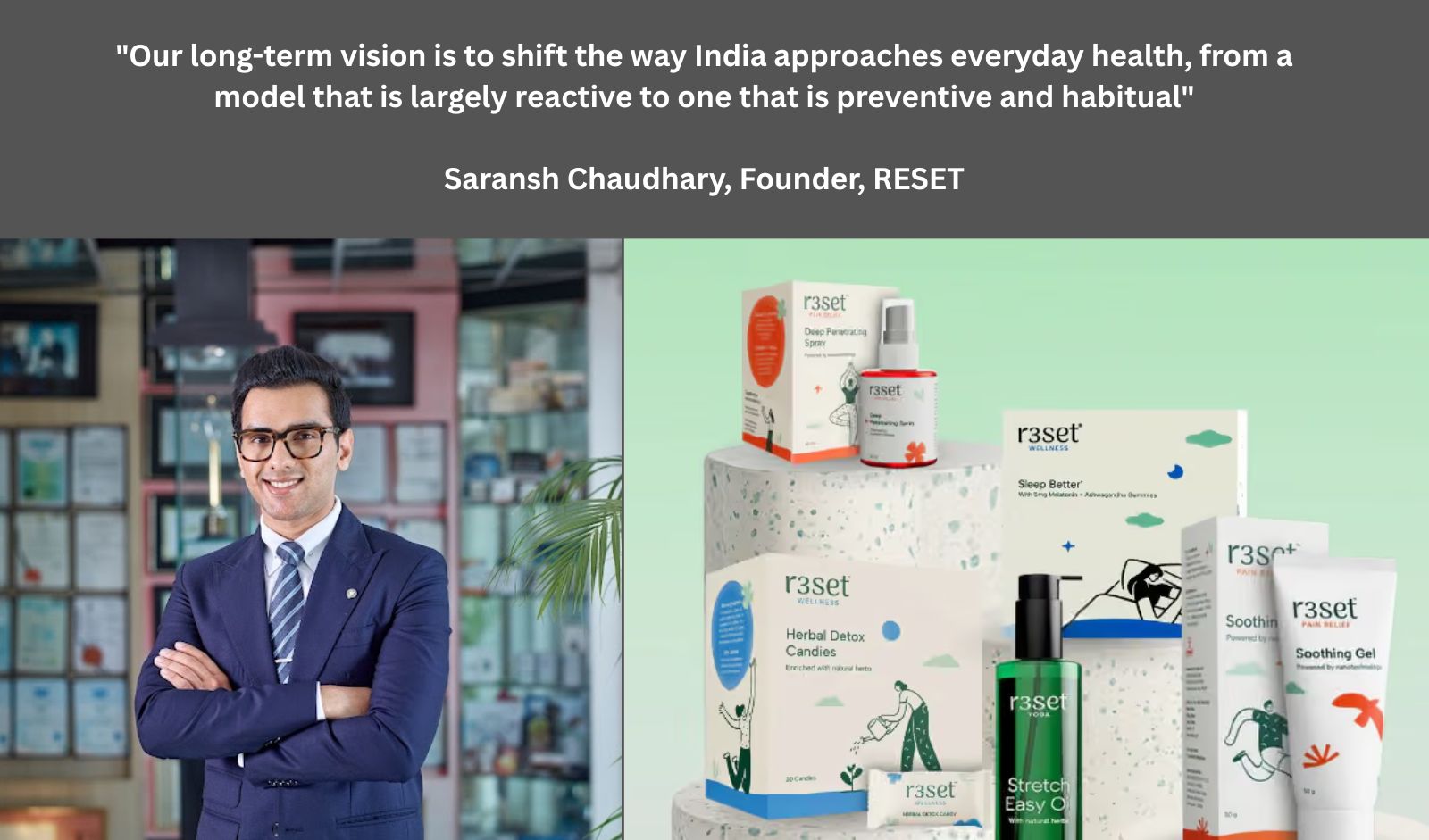
Launched in July 2021, RESET entered the Indian wellness market with a proposition that brought together pharmaceutical formulation science and natural, Ayurveda-rooted ingredients. Backed by Venus Remedies, a research-driven pharmaceutical company with over 35 years of experience in critical care and antimicrobial research, the brand was developed at the Natural Products Research Lab of Venus Medicine Research Centre (VMRC), the company's R&D division.
The idea behind RESET emerged from a gap its founders identified in the Indian pain management market. Indian consumers largely approached pain relief reactively, seeking solutions only when discomfort began affecting their daily lives. The available choices were also divided between conventional painkillers and traditional remedies that often lacked scientific validation.
"We saw an opportunity to bridge that gap by bringing the rigour of pharmaceutical formulation science to natural, Ayurveda-rooted ingredients. Our topical range uses proprietary nanotechnology that helps actives penetrate nearly five times faster than conventional preparations, which is what allows a natural formulation to perform at a clinically meaningful level," shared Saransh Chaudhary, Founder, RESET and CEO, VMRC.
What began as a pain relief business gradually evolved into a broader wellness proposition as consumer insights revealed demand for products that addressed everyday well-being rather than occasional discomfort.
"We began with pain relief, but consumer insight quickly made it evident that people were looking for far more than episodic relief. They wanted a partner in their everyday well-being. That insight shaped RESET's evolution from a pain management brand into a holistic wellness brand, and it is why RESET is built around three ideas: Relief, Revive and Restore," he said.
Today, this philosophy guides the brand's product development and retail approach, with a portfolio spanning pain relief, recovery, sleep, gut health and daily nutrition.
Building an Omnichannel Distribution Network
RESET's retail footoprint comprises e-commerce marketplaces, its direct-to-consumer (D2C) platform, quick commerce, modern retail and specialised wellness spaces. In online retail, Amazon is currently its leading marketplace, while its own website serves as a direct channel for consumer engagement and repeat purchases. The brand is also available on Blinkit, allowing consumers to access its products through quick commerce.
Offline, RESET has established a presence through modern retail partners, including Broadway, across cities such as Delhi, Pune and Hyderabad. It is also present on Smytten across Noida, Ahmedabad and Indore. Beyond conventional retail, the brand is tapping boutique wellness centres, Pilates studios and fitness centres, where its pain relief and recovery products find relevant consumers.
"Our distribution strategy is built on one principle: meet the consumer at the moment the need arises. RESET operates across a set of complementary channels, each doing a distinct job," Chaudhary said.
Explaining the rationale behind its channel mix, he said the objective is to create an ecosystem where product discovery, trial and repeat purchases reinforce one another.
"Our channel choices have been deliberate rather than opportunistic. The intent has been to build an ecosystem in which discovery, trial and repeat purchase reinforce one another, so that every channel earns its place and strengthens the next," he added.
The brand's current revenue mix reflects the importance of online marketplaces, with Amazon leading on volume. However, its D2C platform also contributes a meaningful share, giving the company an opportunity to build stronger consumer relationships and understand purchasing behaviour.
"Marketplaces, with Amazon in particular, currently lead on volume, while our own platform contributes a materially larger share than is typical for a brand at this stage, and that is the number we watch most closely," Chaudhary said.
He added that the contribution from its own platform indicates that consumers are increasingly willing to engage directly with the brand, supporting retention and long-term customer value.
Expanding Beyond Pain Relief
RESET currently has around 15 products across four categories: Pain Relief, Wellness, Vitals and Yoga. While pain relief remains its core category, the brand is building its portfolio around recovery, preventive wellness and everyday nutrition.
Its leading pain relief products include Ultra Potent Gel, Pain Relief Roll-On Emulsion, Deep Penetrating Spray and Instant Ease Tablets. These address muscular discomfort and everyday aches associated with modern, sedentary lifestyles.
Another important product in its portfolio is Stretch Easy Oil, a research-backed Abhyanga formulation featuring chamomile, lemongrass, eucalyptus and camphor. Positioned within its Yoga portfolio, the product is used before or after yoga sessions to ease stiffness and support mobility.
"Along with the Emulsion, it records our highest repeat purchase rates, which tells us that recovery, and not only relief, is where the deeper relationship with a consumer is built," Chaudhary said.
In its Wellness and Vitals categories, Herbal Detox Candy has emerged as one of the fastest-growing products. The formulation combines five Ayurvedic herbs: Kalmegh, Manjishta, Guduchi, Punarnava and Daru Haldi extracts.
The brand is also witnessing adoption of Marine Collagen Peptides and its gummies range, which includes Biotin and Ashwagandha with Melatonin. These products reflect growing consumer interest in preventive wellness, beauty-from-within solutions and daily-care formats.
"Across categories, the common thread is formulation integrity: products that consumers can integrate into their routines with confidence," he said.
Entering Everyday Skin and Wound Care
The next phase of RESET's product expansion will take the brand into everyday skin and wound care. The company sees an opportunity in a category where it believes consumers need more credible, science-led solutions.
The upcoming products have been developed in-house using the company's proprietary patented formulations, allowing RESET to extend its research-led approach into another everyday health category.
"This is a natural extension of our philosophy. Wherever there is an everyday health need that remains underserved by credible, science-led solutions, there is a role for RESET," Chaudhary expressed.
The planned expansion also signals the brand's intention to move beyond its initial positioning as a pain management player and establish a wider presence in the preventive wellness market.
Strengthening Retail Reach Across Metros and Tier II Markets
Over the next two to three years, RESET plans to strengthen its retail presence by deepening distribution in established markets while expanding into newer geographies. The brand is already receiving orders from across the country, with consumption particularly strong in Mumbai, Bengaluru and Delhi NCR. It is also witnessing encouraging traction in Tier II cities, including Jaipur, Jodhpur, Bhubaneswar, Jamshedpur and Panchkula.
This demand is shaping its expansion priorities, particularly as preventive wellness products gain traction beyond metropolitan markets.
"Preventive wellness is no longer a metro conversation, and that shapes how we plan distribution. Our approach is to go deeper in the markets where demand is already proven, while steadily widening our reach across the rest of the country in a planned manner," Chaudhary said.
In established markets, the company will focus on strengthening product availability through modern retail, expanding partnerships with fitness and wellness spaces, and building a presence at airports. The latter is an opportunity to reach travelling consumers who may be looking for products addressing fatigue, discomfort and recovery.
"Adding geographies is the more straightforward part of retail. Building density in markets where demand is already validated is what creates a durable business, and we are pursuing both in sequence rather than trading one against the other," he added.
Making Everyday Wellness a Household Habit
For RESET, long-term growth is closely linked to changing how Indian consumers approach health and wellness. Rather than limiting product consumption to occasions when discomfort becomes disruptive, the brand wants to encourage consumers to incorporate preventive wellness into their everyday routines.
Its 'Dose of Good' philosophy brings together pharmaceutical science and natural healing, with the objective of developing products that deliver benefits while remaining suitable for regular use.
"Our long-term vision is to shift the way India approaches everyday health, from a model that is largely reactive to one that is preventive and habitual. Today, most consumers engage with pain relief or wellness products only when discomfort becomes impossible to ignore. We want RESET to be part of the routine long before that point," Chaudhary concluded.
As the brand expands its categories, distribution network and consumer touchpoints, its larger ambition is to build a wellness business rooted in research, formulation integrity and everyday relevance.
"If, over the next decade, RESET becomes synonymous with everyday well-being in Indian households, and a reference point for how natural wellness can be both credible and effective, we will have achieved what we set out to do," he said.
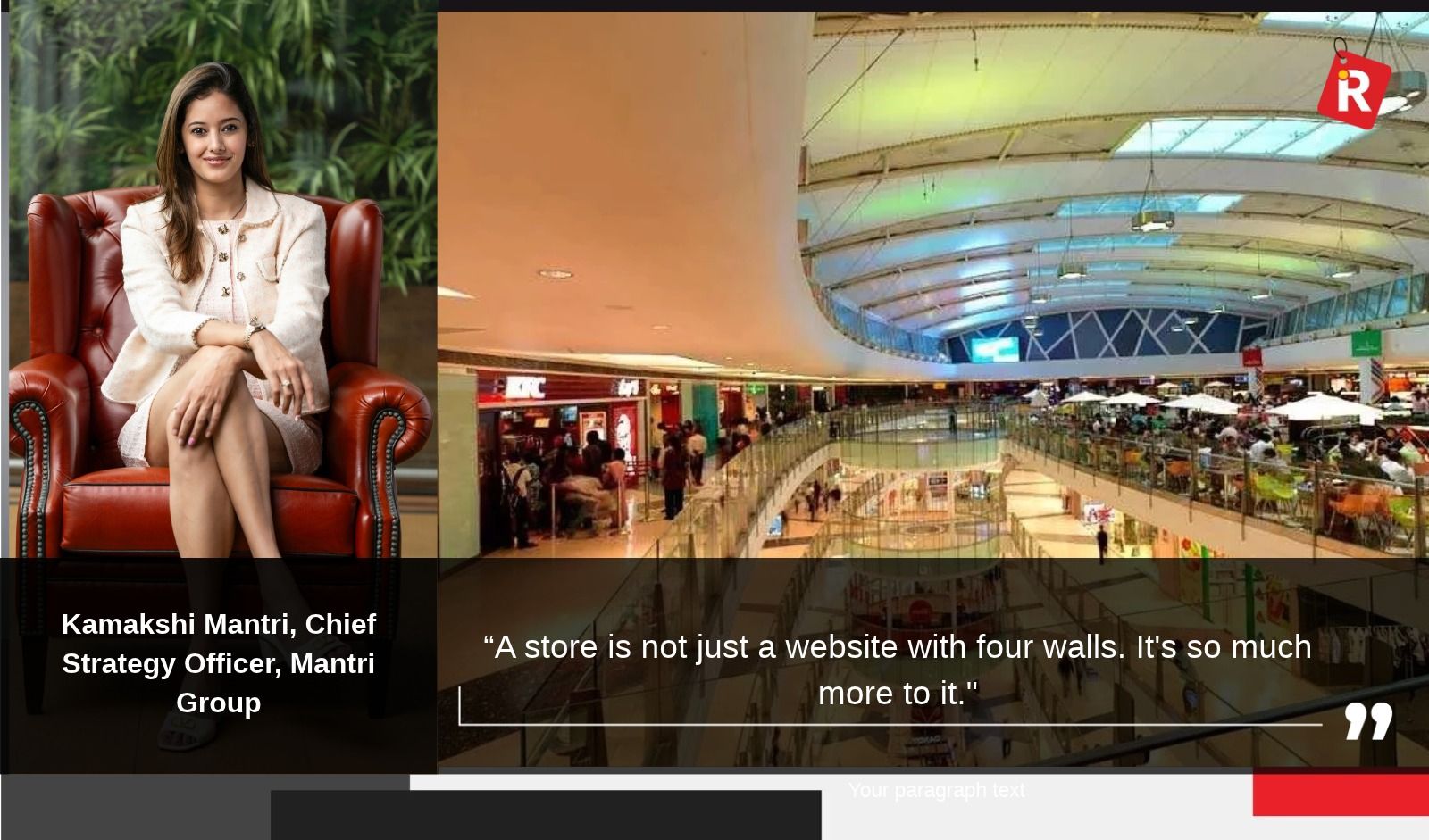
The retail landscape in India is undergoing a significant transformation. As digital-first brands increasingly explore physical retail, shopping centres are evolving beyond traditional destinations for buying products. Consumers today seek experiences, convenience, engagement, and a sense of connection with the brands they interact with. For retailers and mall developers alike, understanding these changing expectations is becoming central to building successful retail businesses.
In an interaction with Retailer Media, Kamakshi Mantri, Chief Strategy Officer, Mantri Group, discusses the nuances of transitioning from online to offline retail, the importance of festive shopping in India, and the growing role of food and beverage (F&B) spaces in shaping the modern mall experience.
D2C Brands: Why Offline Retail Requires a Different Mindset
For direct-to-consumer (D2C) brands that have built their businesses online, entering physical retail is an exciting opportunity. However, the transition requires more than simply replicating an online store in a physical environment. It calls for a fundamental shift in how brands understand consumer behaviour and the shopping journey.
According to Mantri, one of the most common mistakes D2C brands make when opening their first physical store is underestimating the importance of store design and the psychology behind it.
“A store is not just a website with four walls. It's so much more to it,” she emphasized.
Unlike online shopping, where consumers largely interact with products through images, descriptions and digital interfaces, an offline store engages multiple senses. Everything, from the lighting and layout to the fragrance, mirrors, product placement and overall ambience, influences the customer's perception and purchasing decisions.
“When a customer walks in, what are the first items that greet them? How does the lighting look? How does the mirror make them feel when they try on their clothes? What is the quality of the products? How much rack space do you give versus display space? All these little things matter,” she explained.
For retailers, this means approaching store planning as a carefully considered exercise in customer experience. Product visibility, ease of navigation, visual merchandising, and the overall look and feel of the space must work together to encourage exploration and influence buying behavior.
However, the physical environment is only one part of the equation. The human element is equally important, particularly the role played by store associates.
Mantri believes that store staff should be viewed as brand ambassadors rather than employees whose primary responsibility is billing. “The store staff cannot just be a cashier or an accountant you have hired to do the billing. They almost have to be hospitable in nature. They need to create a relationship with the customer and walk them through the buying journey.”
This relationship should extend beyond the customer's time inside the store. Associates can follow up through WhatsApp, share relevant offers, inform customers when previously unavailable products are back in stock, and even facilitate online orders when a desired product is not available at the physical location.
Such practices create continuity between online and offline channels while ensuring that retailers do not lose sales simply because of inventory limitations.
Mantri also encourages D2C brands to look beyond the immediate financial performance of their physical stores. While profitability remains important, an offline presence delivers significant intangible value by strengthening brand credibility and recognition.
“An offline store creates a brand identity. It creates a kind of trust in the eyes of the customer that this brand has arrived. It's not an online-only brand. It exists offline,” she said.
The Festive Season: India's Biggest Retail Opportunity
In India, the festive season has traditionally been synonymous with shopping. From appliances and electronics to jewellery, fashion and lifestyle products, consumers often plan major purchases around Diwali and the months leading up to it.
As Mantri observed, many consumers deliberately postpone significant purchases until the festive period. “People wait for Diwali to buy a new fridge, a microwave and many jewellery items. They say, ‘Diwali jab aayega tab lenge.’” This consumer mindset makes October to December particularly important for the retail industry. The period encompasses pre-Diwali shopping, Diwali, pre-Christmas and Christmas purchases, followed by New Year shopping, creating a concentrated window of heightened consumption.
Recognizing this opportunity, Mantri Malls has introduced the Mantri Shopping Festival, a three-month initiative designed to make festive shopping more engaging and rewarding. The festival brings together participating brands under a larger retail celebration, with attractive discounts, offers and experiences for shoppers. Complementing this is the mall's Shopping On programme, which rewards customers based on their spending through gifts, vouchers and opportunities to win bigger prizes, including cars and bikes.
“Our message is simple: shop and win, shop and earn with us at Mantri,” noted Mantri.
The festival also incorporates entertainment and engagement beyond conventional retail promotions. Every year, Mantri Malls invites a prominent celebrity to launch the shopping festival, offering visitors an opportunity to interact with personalities they may otherwise only see on screen.
For Mantri, this is an important part of the mall's role as an experience destination. “It's also a way for all our customers to meet a celebrity whom they don't get to meet on a day-to-day basis. As a mall, we kind of try to bridge that gap.”
The festive season is also an important period for retailers to introduce new concepts, refresh existing stores and undertake renovations. Mall developments and brand launches are planned with the objective of ensuring that customers experience something new when they visit during the peak shopping months.
F&B: From Dining Destinations to Informal Co-working Spaces
Another notable shift in consumer behavior is the changing role of food and beverage spaces within shopping centres. Traditionally, F&B was largely concentrated in dedicated food courts, with dining considered a complementary activity to shopping. Today, that approach is evolving rapidly.
According to Mantri, restaurants, cafés, coffee shops and bars are increasingly becoming destinations in their own right, serving purposes that extend well beyond eating and drinking.
“An F&B outlet today is so much more than just a place where people go to grab a bite. They almost nowadays double as informal co-working spaces,” she observed.
The appeal lies in the combination of ambience, comfort, food and flexibility. Consumers are increasingly choosing cafés and restaurants as alternative environments for meetings, creative work and casual professional interactions.
A change of setting can offer a welcome break from conventional office environments, while access to favourite beverages, food and comfortable seating makes these spaces conducive to spending extended periods of time.
Mantri pointed out that it is not unusual to find someone spending three to four hours at a coffee shop with just one coffee or a cookie. Their visit is not necessarily driven by consumption alone; it is also about finding a comfortable environment to work, unwind, or enjoy some personal space.
This behavioral shift is influencing how malls plan their F&B offerings. “At Mantri, we understand this, and that's why F&B is no longer like earlier, when there used to be a food court, and all the food items would be only there,” she explained.
Instead, F&B is increasingly being integrated across different floors and zones of the mall. Coffee shops, tea bars, matcha bars and other specialised concepts are strategically introduced in different areas to encourage visitors to pause, relax and spend time wherever they are.
The idea is to make food and beverage accessible throughout the mall rather than confining it to a single designated area.
Building the Next Chapter of Experiential Retail
Across these three areas, a common theme emerges: retail is no longer defined solely by the transaction. Whether it is a D2C brand establishing its first physical store, a mall creating a compelling festive shopping programme or an F&B operator offering a space to work and socialise, the emphasis is increasingly on the experience surrounding consumption.
For retailers, this requires a deeper understanding of the customer journey, thoughtful investments in physical environments and a willingness to build relationships that extend beyond the point of sale.
For shopping centres, it means creating destinations that offer multiple reasons to visit, return and engage.

Electronics Mart India Limited (EMIL) is sharpening its expansion strategy for FY2026–27, with plans to open 25–30 new stores and enter West Bengal, beginning with Kolkata. The company is focusing on cluster-led expansion, strengthening its presence in existing markets while tapping emerging consumption centres and improving the productivity of its retail network.
The company’s expansion priorities include deepening its presence in Telangana, Andhra Pradesh and Delhi-NCR, alongside building a scalable presence in West Bengal. Kolkata is emerging as a key growth market, with the company seeing potential to establish around 30 stores in the city over the next two years.
“Our expansion strategy is centred on cluster-led growth, deepening our presence in established markets while entering new geographies where we see a meaningful opportunity for organised electronics retail. We plan to open approximately 25–30 stores during FY2026–27 across existing markets and new geographies, subject to property availability, market potential and capital-allocation priorities,” said Vishal Pundir, VP, Strategy & Operations, Electronics Mart India Limited.
Beyond geographical expansion, EMIL is evaluating opportunities in growing urban centres and the expanding peripheries of existing cities, where rising residential development and improving consumer access are creating demand for organised electronics retail. However, the company is prioritising sustainable store economics over the pace of expansion.
Location Strategy Anchored in Demand and Store Economics
EMIL’s location-selection strategy considers multiple factors, including consumer demand, purchasing power, competitive intensity, real estate costs and supply-chain efficiencies. The company assesses household formation, population growth, consumption patterns and the presence of a growing middle-income customer base before entering a market.
Local income profiles and purchasing behaviour also influence product assortment, pricing, premium offerings and financing options. On the real estate front, visibility, accessibility, parking, frontage, floor space and delivery access are among the key considerations.
“We evaluate occupancy costs against realistic sales potential and do not want high rentals to compromise the long-term economics of a store. A location becomes more attractive when it can be supported efficiently by our warehouses, distribution network and existing store ecosystem. This helps us improve replenishment, inventory availability and logistics costs,” Pundir said.
The company also evaluates projected revenue, operating expenses, capital expenditure, inventory requirements, break-even timelines and payback periods before approving a new location. Its objective is to identify markets where consumer demand, competitive positioning and real estate economics collectively support a sustainable retail operation.
Multi-Brand Outlets Remain Core to Retail Strategy
EMIL continues to rely on its multi-brand outlet (MBO) format as the backbone of its retail business. At the end of FY2025–26, the company operated 215 MBOs and eight exclusive brand outlets (EBOs).
Its MBOs offer customers access to multiple leading brands across smartphones, IT products, televisions, refrigerators, air conditioners, washing machines and other consumer appliances under one roof.
Store size and format are determined by the catchment's population, purchasing power, anticipated footfall, category mix, competitive landscape and sales potential. While larger urban markets may require wider assortments and additional display space for premium products, stores in smaller cities and emerging catchments are calibrated to local demand.
“Our focus is on the productivity of every square foot. The objective is not to create the largest possible store, but to ensure that the space, assortment, inventory and operating costs are aligned with the revenue opportunity,” Pundir said.
Specialised formats and EBOs complement the MBO network by addressing specific product categories and brand experiences where there is a clear customer proposition.
Tier II and III Markets Offer Expansion Opportunities
The company sees significant headroom for organised electronics retail beyond major metropolitan markets. Rising aspirations, greater access to branded products, increasing digital awareness and consumer financing are supporting demand in smaller cities.
However, EMIL believes store maturity and productivity, rather than geographical classification alone, determine profitability. While established markets such as Hyderabad and other parts of Telangana and Andhra Pradesh benefit from brand familiarity, operating experience and an established supply chain, newer markets require an initial investment in building awareness and customer relationships.
“We do not assume that every Tier II or Tier III location will outperform a metropolitan market, or vice versa. We evaluate smaller-city opportunities individually, based on the addressable market, competition, customer demand and achievable sales per square foot,” Pundir said.
Store Productivity and Premiumisation to Drive Growth
Alongside network expansion, EMIL is banking on same-store sales growth, the maturing of newer outlets, premiumisation and operational efficiencies to strengthen its business.
Demand for premium smartphones, larger-screen televisions, advanced air conditioners, high-capacity appliances and connected-home products is creating opportunities to improve average transaction values. Stronger brand partnerships are also enabling the retailer to offer wider assortments, participate in new product launches and respond to evolving consumer preferences.
The company is also focusing on customer retention, local marketing, inventory planning, supply-chain productivity and data-led merchandising to improve existing store performance.
This strategy is reflected in its FY2026–27 first-quarter performance, with revenue from operations growing 39% year-on-year to Rs 2,419 crore, while same-store sales growth stood at 34.2%.
“A significant part of our network is relatively young. As these stores gain brand recognition, customer traffic and scale, we expect operating leverage and profitability to improve. Our growth strategy combines network expansion with higher productivity from existing stores. The objective is to build a larger business while progressively strengthening its earnings quality,” Pundir said.
Disciplined Capital Allocation to Support Expansion
With large-format electronics retail requiring substantial investment in store fit-outs and inventory, EMIL is maintaining a disciplined approach to capital allocation.
Management has indicated an average store fit-out capital expenditure of approximately Rs 2,500 per sq. ft. This translates into an investment of around Rs 2.5 crore for an illustrative 10,000-sq.-ft. store, excluding initial inventory requirements. Actual investments vary depending on the location and store format.
The company follows a mix of leased and owned property models, retaining flexibility in expansion while selectively considering property ownership where long-term economics justify it.
Payback periods are another important consideration. Management has indicated indicative payback periods of around 10–11 months in its established southern cluster and 16–18 months in the northern cluster. These benchmarks vary depending on market maturity and individual store performance.
“We follow a disciplined capital-allocation approach. Every store proposal is evaluated on expected revenue, gross margins, rental and employee costs, initial inventory, capital expenditure, break-even and payback. Our focus is on profitable expansion rather than expansion for its own sake,” Pundir said.
The company is also working on improving inventory turns, managing working capital and increasing throughput across its network to support better absorption of fixed costs as the business scales.
Specialised Formats to Tap Premium Home Solutions
Apart from its core MBO business, EMIL sees specialised retail experiences as an opportunity to strengthen customer engagement and tap premium consumption.
Its existing portfolio includes Kitchen Stories, Easy Kitchens and Audio & Beyond, which cater to specialised requirements in kitchen solutions and audio-related categories.
The company sees potential in premium kitchen appliances, home cinema, premium audio and smart-home solutions, where customers benefit from product demonstrations, consultation and guided selection. These formats can also support premiumisation by enabling consumers to evaluate integrated products based on functionality, design and suitability for their homes.
“Specialised retail experiences are an important complement to our core multi-brand business, particularly in categories where customers benefit from demonstrations, consultation and guided product selection. Our approach will remain selective and commercially disciplined. We will evaluate the size of the opportunity, customer demand, store economics, brand partnerships and the potential to scale before committing to wider expansion,” Pundir said.
As EMIL expands its geographical footprint, the company is looking to build a complementary retail ecosystem in which MBOs remain the foundation, while specialised formats deepen engagement in categories that require more immersive shopping experiences. The broader strategy is to combine wider market reach with stronger store-level productivity, premium product offerings and disciplined investment to sustain long-term growth.
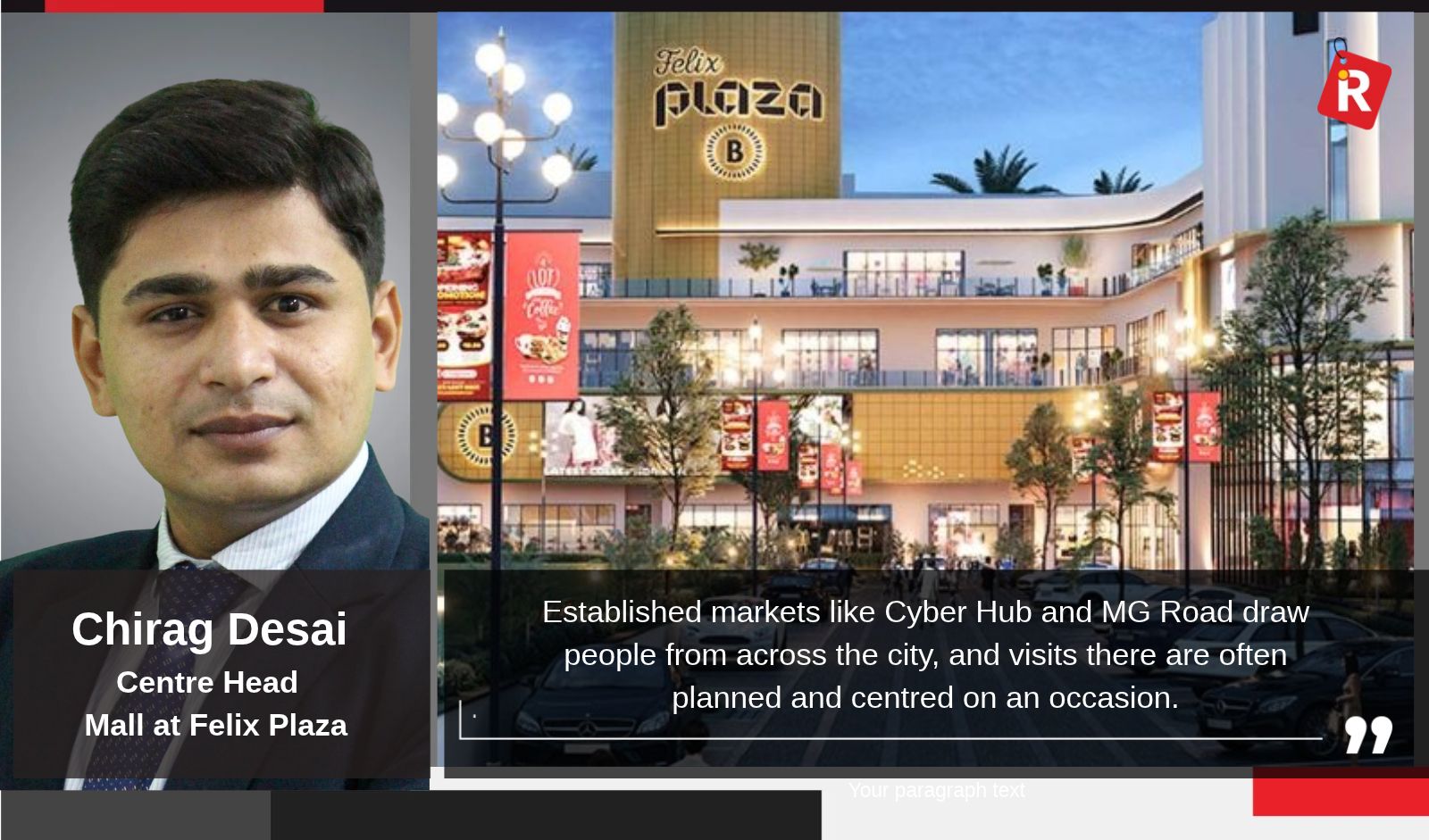
New Gurugram’s transformation from a predominantly residential market into a growing retail and lifestyle destination is reshaping consumer shopping patterns, with neighbourhood retail centres gaining traction among families, young professionals and residents of nearby housing societies.
Felix Plaza in Sector 82A is part of this shift, bringing together more than 100 stores across 26 categories, including fashion, footwear, beauty, accessories, homeware, dining and entertainment. The destination houses brands such as H&M, Marks & Spencer, Westside, Tommy Hilfiger, Calvin Klein and Cinepolis.
According to Chirag Desai, Centre Head – Mall at Felix Plaza, the growth of organised retail in New Gurugram has followed the expansion and occupation of residential communities in the area.
“Five years ago, New Gurugram was mostly a residential story. Families moved into new housing societies, but for anything beyond daily needs they drove across the city. As those communities have filled up, retail has followed. What started as convenience retail has grown into full lifestyle destinations,” said Desai.
Neighbourhood Retail Gains Ground
The growing appeal of neighbourhood retail destinations reflects a shift in how consumers approach shopping and leisure. While established commercial hubs such as Cyber Hub and MG Road continue to attract visitors from across Gurugram, neighbourhood centres are increasingly catering to frequent, convenience-led visits.
Desai said consumers in New Gurugram tend to favour destinations that combine multiple needs, allowing them to shop, dine and socialise without travelling long distances.
“Established markets like Cyber Hub and MG Road draw people from across the city, and visits there are often planned and centred on an occasion. New Gurugram is more local, more family-led and more spontaneous. Shoppers here want variety and good value in one place,” he said.
He added that convenience extends beyond location to include parking, seating and easy movement between stores, particularly for families visiting with children and older members.
While larger malls continue to play a role in the retail ecosystem, neighbourhood destinations are becoming an option for regular weekend outings and impromptu plans. Desai noted that physical retail can differentiate itself from online and quick-commerce platforms by offering product trials, discovery and opportunities for shoppers to seek opinions before making purchases.
Shopping Becomes a Leisure Activity
Consumer behaviour at Felix Plaza varies between weekdays and weekends. Weekday visits are generally shorter and more purposeful, with customers visiting for errands, individual purchases or coffee and dinner. Weekends, in contrast, see families and groups combining shopping with dining and entertainment.
“On weekdays people come for something specific; at the weekend the visit itself becomes the outing,” Desai said.
He observed that fashion and footwear often draw consumers to the centre, while categories such as beauty, accessories and homeware encourage them to explore further. Dining and entertainment extend the duration of visits, making the overall experience an important part of the destination's retail proposition.
Families from nearby residential communities form a significant part of the weekend audience, alongside young professionals who have recently moved to New Gurugram. According to Desai, proximity encourages frequent and sometimes unplanned visits, helping build a repeat customer base.
Weekend visits also tend to involve larger groups shopping across multiple categories, which can increase spending per visit compared with weekday trips. However, the centre has not disclosed specific transaction values or repeat-visit figures.
Tenant Mix Focuses on Variety and Repeat Visits
Felix Plaza's retail strategy centres on bringing together established brands and emerging labels across different price points and categories. The aim is to cater to consumers with varied preferences while encouraging them to spend more time at the destination.
“Our aim is for different tastes and budgets to share one afternoon. We balance fashion and footwear, which bring people in, with beauty, accessories, homeware, dining and entertainment, which turn a quick errand into a full outing,” Desai said.
He added that maintaining a sustainable neighbourhood retail destination requires regular attention to the tenant mix and the overall customer experience. While proximity can attract initial visits, retaining customers depends on fresh offerings, effective brand engagement and an environment that encourages repeat visits.
The centre also focuses on practical amenities, including valet services, pram services and convenient movement between stores. These features are intended to improve accessibility for families and support longer visits.
For retailers, sustained footfall must translate into sales for the destination to remain commercially viable. Desai said balancing the tenant mix with the customer experience is important for tenant retention and occupancy.
Expansion and Community-Led Experiences
Felix Plaza plans to continue developing its tenant mix by adding brands that reflect New Gurugram's changing consumer profile, including emerging labels alongside established retailers. The centre also intends to strengthen its dining and leisure offerings.
Community-led initiatives, including festive celebrations, family-oriented weekends and brand activations, are expected to form part of its strategy to encourage repeat visits and position the centre as a social destination for nearby residents.
Looking ahead, Desai is optimistic about the centre's growth prospects over the next 12–24 months, supported by the continued development and occupation of housing societies in New Gurugram.
“We are optimistic. New Gurugram’s population keeps growing as more housing societies are completed and occupied, which steadily widens our catchment. These residents want a weekend destination close enough for an impromptu plan, with enough to do that nobody watches the clock. That demand will be the main driver of our growth,” he said.
As residential development continues to reshape New Gurugram, neighbourhood retail destinations such as Felix Plaza are positioning themselves around convenience, category diversity and experience-led shopping. Their long-term performance, however, will depend on converting local catchment demand into consistent store sales, repeat visits and sustainable tenant performance.
-
Oriflame expects skincare, fragrances and colour cosmetics to drive festive beauty demand, with gifting, premiumisation, cross-category purchases, limited editions and trial packs supporting consumer discovery and incremental sales.
-
NEAT Everyday targets ₹1.70 crore Diwali 2026 sales, aiming for 325% YoY growth, driven by retail expansion, active nutrition demand, product availability and strategic partnerships.
-
The brand's ambition is to become a single destination for pet parents, addressing their needs across different stages of a pet's life.
-
TIGERFIRE is strengthening its presence in India’s luxury vodka market, focusing on premium spirits, French craftsmanship, selective retail expansion and experiential marketing under Global CEO Badal Moradia.






Copyright © 2009 - 2026 Franchiseindia.com Ltd