




Associate Editor, IndianRetailer.com & Retailer Media Nov 19, 2026 /


India's fashion retail market is entering an interesting phase of evolution. For years, the growth story of international fashion brands was largely centred around metropolitan cities, affluent consumers and occasion-led purchases. However, the landscape is changing. Rising digital exposure, growing aspirations and increasing purchasing power in select pockets of smaller cities are reshaping the way consumers discover, experience and buy fashion.
For international brands looking at India, the opportunity is no longer restricted to the traditional luxury and premium retail hubs. It is increasingly about identifying the right consumer communities, understanding regional market dynamics and creating a retail proposition that resonates with local aspirations.
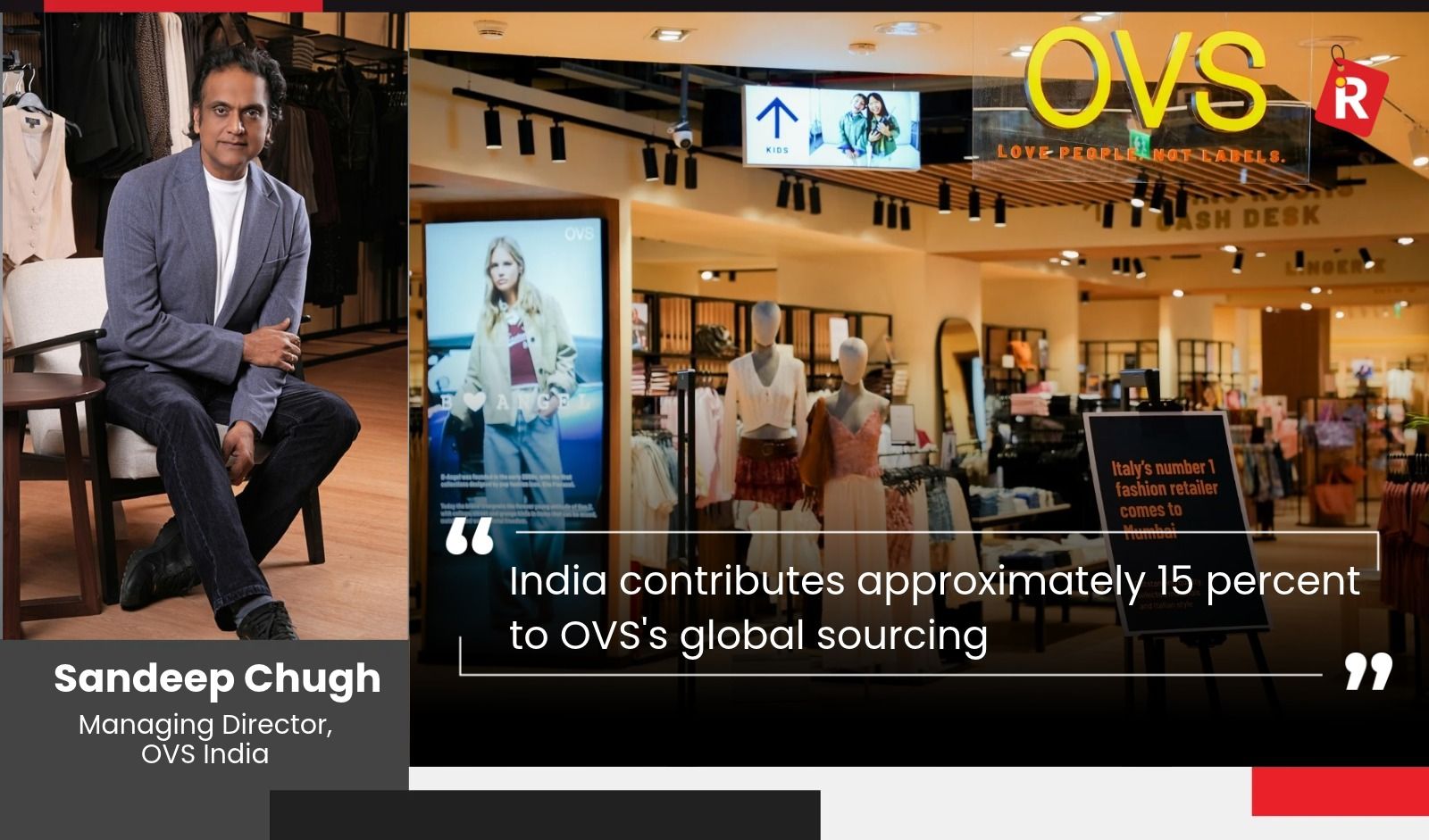
Sandeep Chugh, Managing Director, OVS India, believes that the country's fashion opportunity lies in recognizing its diversity rather than approaching it as one large, homogeneous market. "India as a market has phenomenal potential across the country. It's about identifying the right pockets and carving your journey accordingly," he said.
His observation reflects a larger shift in the Indian retail ecosystem. While metros and Tier I cities continue to be important launchpads for international brands, smaller cities are steadily emerging as meaningful consumption centres. Markets such as Patna, Raipur, Bhilai, Bilaspur, Panipat and Karnal are attracting attention, driven by consumers who are increasingly aware of global fashion trends and are willing to spend on brands that offer the right combination of product, quality and experience.
The New Geography of Fashion Consumption
One of the most significant changes influencing India's retail market is the democratization of information. Smartphones, social media and digital content have narrowed the information gap between consumers in metropolitan cities and those in smaller towns.
Fashion awareness is no longer dependent on physical proximity to premium shopping destinations. Consumers across geographies are exposed to international trends, new brands and evolving lifestyles, often in real time.
Chugh points out that digitalization has fundamentally changed consumer behavior. A young consumer in a remote corner of Punjab, for instance, may be just as informed about fashion trends as someone living in Delhi or Mumbai.
However, awareness alone does not translate into a viable retail opportunity. Brands must identify the right consumer segments within these markets, particularly those with the purchasing power and inclination to spend on premium fashion.
"There are pockets within Tier II and III markets where people have a reasonably good amount of money to spend. The overall per capita income of a town may be low, but there will be a significant chunk of people who have the ability to spend," he explained.
For Chugh, the strategy is therefore not about entering every city, but about understanding where the relevant consumer exists. He draws on his earlier experience in consumer electronics to illustrate this point, recalling how a large-capacity refrigerator was first sold in Coimbatore rather than the metros, challenging conventional assumptions about where premium products would find buyers.
From Occasion-Led Purchases to Everyday Fashion
Another important development is the gradual change in the way Indian consumers approach fashion spending. Traditionally, premium and luxury consumption in India has been closely associated with weddings, festivals, and other significant occasions. Shopping was often planned around specific events, with consumers willing to make larger purchases during these periods.
That behavior, however, is gradually evolving. A younger, more aspirational consumer is increasingly willing to purchase fashion simply because they want something new, rather than waiting for a special occasion.
Chugh believes the distinction between occasion-led and everyday fashion consumption is beginning to blur. "People are realizing it's important to live life and have the best experience. The contribution of mood-based buying is increasing. Tomorrow, it could be my friend's birthday, and I want to buy something new rather than waiting for a big festival or occasion," he stated.
This shift creates opportunities for brands to build more regular engagement with consumers. Instead of relying heavily on festive sales cycles, retailers can focus on fresh collections, relevant product categories and everyday fashion propositions that encourage repeat visits.
OVS: Building an Independent Presence in India
For OVS, India represents a strategic market with significant long-term potential. Unlike brands that enter the country through licensing or joint-venture arrangements, OVS India operates as a wholly-owned Indian subsidiary, with the company directly managing its retail business.
Chugh describes it as the first independent subsidiary established by OVS outside Italy, reflecting the group's commitment to building its business in India. Interestingly, OVS has had a sourcing presence in India for several years. According to Chugh, India contributes approximately 15 percent to OVS's global sourcing, even though its retail operations in the country began much more recently.
The brand follows a global sourcing model, with products reaching India from multiple manufacturing hubs, including India, China, Vietnam, Bangladesh, Turkey and Europe.
This sourcing flexibility allows the business to access different production bases while developing collections suited to its Indian consumers.
In terms of product performance, women's wear has emerged as the strongest category, contributing approximately 45–50 percent of the business. Men's wear accounts for around 35 percent, while children's wear contributes approximately 20 percent.
The performance of women's wear is particularly encouraging for the brand, given the challenges international fashion retailers often face in winning over the Indian women's fashion consumer.
Children's wear, meanwhile, remains an important strength for OVS globally. The brand has a particularly strong position in Italy, where it enjoys a 25 percent market share in the category.
Among individual product categories, women's dresses, seasonal jackets and the PIOMBO Tech tracksuit collection have been performing well. The brand is also looking to build interest around MYA, its relaxed-fit and free-size women's wear offering.
The Store as a Brand Experience
While digital channels have transformed fashion discovery, Chugh believes physical retail continues to have a defining role in building consumer relationships. For OVS, the first phase of its India strategy is centred on creating a strong physical retail presence. But the emphasis is not simply on opening stores; it is on making every store an environment where customers can experience the brand.
"Physical retail is a place where people live the brand," Chugh noted. He believes that the opportunity lies in combining product presentation with meaningful consumer interaction. Customers should be able to touch and feel fabrics, understand product quality, explore sustainability credentials and appreciate the value proposition.
For him, the store experience must go beyond merchandising and transactions. It should create a lasting impression that encourages consumers to return.
Chugh has also been personally involved in customer engagement at the brand's Delhi store, spending weekends interacting with shoppers and even serving coffee to visitors. He points to the strong customer ratings received by the brand's stores at Pacific Mall and Sky City, which he attributes to the emphasis on engagement, service and memorable experiences.
Choosing the Right India Entry Strategy
India's regulatory environment, market diversity and operational complexities mean that international brands need to carefully evaluate their entry strategies. Licensing, joint ventures and wholly owned subsidiaries each offer different advantages, depending on a brand's objectives, investment appetite and long-term commitment.
Chugh believes there is no universal formula for entering India. The choice ultimately depends on the brand's vision and, more importantly, the quality of its local partner.
"All the ways and means of approaching India are justifiable if the partner you associate with is able to live up to your expectations," he stated. A strong local partner must demonstrate ownership, investment commitment and the ability to understand the consumer. For brands with a long-term outlook, entry models can also evolve as the business matures and market understanding improves.
He also sees potential for the organized factory outlet and affordable branded fashion segment to expand further. Currently, much of this market is driven by discounted previous-season merchandise. Dedicated product lines created specifically for outlet channels are still relatively limited, although the concept is gradually gaining traction.
A Measured but Ambitious Growth Roadmap
Rather than spreading itself across multiple brand propositions immediately, OVS is focused on establishing itself as a family fashion destination in India.
The company's expansion plans reflect a measured approach to building scale. It aims to have three stores by the end of 2026, expand to seven by the end of 2027 and reach approximately 11 stores by December 2028. Over the next five to seven years, the ambition is to build a network of 25–40 stores.
These will be large-format stores, typically ranging between 8,000 and 12,000 sq. ft., offering a comprehensive family fashion proposition. The initial focus will remain on metropolitan and Tier I markets, particularly the country's top 20 markets and leading 25 malls.
For Chugh, the immediate priority is to learn from the Indian consumer and translate those insights into stronger business decisions. "Every brand has to go through a learning curve. Understanding the nuances and ensuring that all the learnings during this phase are rightly implemented is very important," he added.
The company also intends to strengthen its marketing initiatives as it builds on the insights emerging from direct consumer interactions.


India’s home appliance market is evolving. Consumers are becoming increasingly aware of health, water quality, indoor air pollution, and energy usage. What was once a must-have purchase for any household is now part of a wider conversation about living healthier and more sustainably. Brands that began with solutions for specific household needs are also eyeing adjacent categories to manage shifting consumer expectations.
Kent RO Systems has been diversifying from water purification to air purification, kitchen appliances, energy-saving fans, and most recently clean energy solutions. Founded in 1999 by Dr Mahesh Gupta, the Noida-based company has slowly increased its product portfolio, but has continued to focus on home health and efficiency.
Speaking about the company's journey and changing market opportunities, Dr Mahesh Gupta, Chairman and Managing Director, Kent RO Systems, said its expansion has been guided by consumer requirements and the company's ability to bring value to new product categories.
Also read: Aadyam Handmade Looks Beyond Traditional Textiles
A Journey Beyond Water Purification
Dr Gupta's entrepreneurial journey began before Kent entered the water purification business. An IIT Kanpur graduate, he worked with Indian Oil for a decade before leaving the organisation in 1988 to establish an oil conservation business focused on manufacturing oil flow meters.
In 1998, he began developing the initial prototype for Kent's RO water purification business, which was formally established in 1999. The company is headquartered in Noida, Uttar Pradesh, with manufacturing facilities in Roorkee and Greater Noida.
Over the years, Kent expanded into air purifiers, kitchen appliances, and other household solutions. It also entered the BLDC ceiling fan category around three to four years ago, with products designed to reduce electricity consumption.
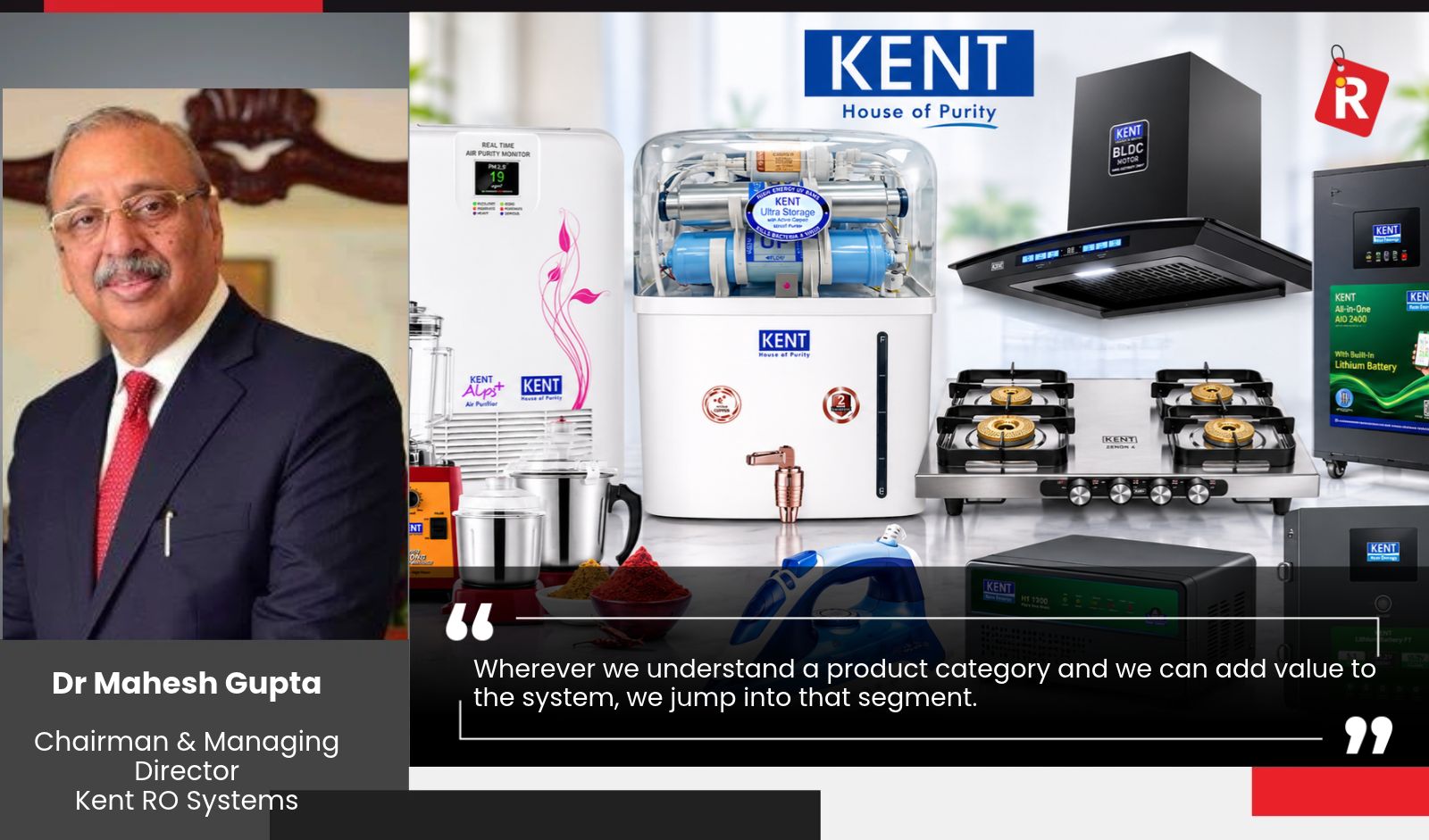
"Wherever we understand a product category, and we can add value to the system, we jump into that segment," Gupta said, explaining the company's approach to diversification.
Also read: India’s B2C E-Commerce Funding Falls 33 Pc to USD 1.6 Bn in 2026 YTD
Consumer Awareness Driving Demand
The increasing awareness about the quality of water has been a major factor driving the demand for household water purification solutions. "Consumers are concerned about the quality of the water that comes out of their taps and are looking for ways to protect their families from potential health risks," Gupta said.
However, he believes there is considerable room for market expansion, as only around 10 percent of Indian households currently have RO water purifiers.
"People are becoming aware that the water which they get in the taps is not so clean. But they want to be totally insured against the impact of the bad water on their health," he said.
He added that consumer education remains important, particularly in communicating why boiling water alone may not be sufficient in every situation. Beyond water, demand for healthier cooking solutions and energy-efficient appliances is also creating opportunities across household categories.
Also read: How Jaipur Rugs Is Expanding Its Global Footprint
Clean Energy: A New Growth Area
Kent's latest diversification is its entry into clean energy with the launch of Kent New Energy. The company has invested Rs 250 crore initially and plans to spend Rs 50 crore more to complete its facilities.
New business includes lithium batteries and solar hybrid inverters. The battery solutions feature 4G monitoring and active balancing technology, and the inverters are engineered to meet household energy needs from solar power and decrease reliance on diesel generators.
The company has also developed Kent Ojis, an AI-based voice assistant supporting nine Indian languages.
Kent is targeting Rs 500 crore in revenue from its energy business in FY28, with plans to increase this to Rs 750 crore in the following financial year.
Gupta believes the category could become a significant contributor to the company's business. "We feel this new energy sector is a very big sector for growth to us, would match the water purification category in two to three years' time," he said.
Also read: How Ambrane is Creating Its Next Growth Chapter
Innovation and Distribution Remain Priorities
As competition increases across household appliances, Kent is focusing on product differentiation through research and development. According to Gupta, R&D constitutes about 2-3% of profits. This helps the company to innovate for better product performance.
"We try to anticipate consumer needs in the future, and bring in solutions with unique value propositions," Gupta said.
Another important part of its growth strategy is its distribution strategy. Products are distributed through traditional retail, modern retail, large format retail, and e-commerce. In each channel, products are differentiated to limit competition within distribution channels. In addition, the company is increasing its network of distributors and retailers in Tier II and Tier III regions in order to meet demand.
However, there are issues regarding consumer awareness. Uncertainty in the global supply chain means that there have been pressures on sourcing components, and therefore increasing production costs.
Also read: How India’s Beverage Shelf Is Evolving
Expanding Across Household Categories
Looking ahead, Kent aims to strengthen its presence across water purification, appliances, fans, and clean energy. The company intends to expand market coverage through retail partnerships and online sales while continuing to invest in product development.
Gupta said the priority is to make these solutions accessible to a wider consumer base. "Our endeavour would be to expand this market and offer and cover as much of the market as possible through a retail network or through online sales," he said.
For Kent, the next phase of growth will depend on how effectively it can build new categories while sustaining its position in its original water purification business.
Also read: Beyond Plates and Bowls: India’s Changing Dinnerware Market
Indian handloom has been narrating stories of various communities through its weaving for centuries. Now, with changing consumer preferences and lifestyles, traditional textiles are being given a new meaning in modern-day households. Brands have created avenues for skilled artisans by bringing together India’s beautiful weaving traditions with modern designs to create beautiful products such as sarees, dupattas, and home décor products.
Aadyam Handmade is a social initiative of the Aditya Birla Group that aims to strike this balance by connecting traditional weaving communities with modern-day consumers. The brand recently opened its new store in Gurugram, extending its presence in a market it feels is relevant for its craft-led offerings.
Speaking about the expansion, Manish Saksena, Business Lead, Aadyam Handmade, said the brand follows a selective retail strategy rather than focusing on opening stores across multiple locations.
Also read: India’s B2C E-Commerce Funding Falls 33 Pc to USD 1.6 Bn in 2026 YTD
Selective Retail Expansion
"We are a brand which is for the discerning few. It is not something which we feel has a reason to be at many points of sale. Therefore, we very carefully select our markets," Saksena said.
He added that Gurugram brings together culturally diverse consumers from India and overseas, creating an audience that appreciates Indian craftsmanship presented through a contemporary lens.
The brand's approach to retail expansion is centred on identifying locations where consumers understand and value handmade products. Rather than prioritising the number of stores, Aadyam Handmade aims to offer a carefully curated retail experience.
Also read: How Jaipur Rugs Is Expanding Its Global Footprint
Connecting Artisans to Consumers
Traditional weaving communities are at the core of Aadyam Handmade. We partner with artisans in known textile hubs across the country to ensure weaving techniques are maintained and to create products that will make a point in today’s world.
"We are very much rooted in traditional craft. We are actually about authenticity and preservation, and not just the product. It is also about preserving the livelihood of these highly skilled people," Saksena said.
He explained that the brand has developed a community of weavers who work as partners through transparent associations. Products are co-created with these communities, retaining their traditional foundations while incorporating design elements that make them relevant to consumers across different markets.
Also read: How Ambrane is Creating Its Next Growth Chapter
Handloom Finds New Consumer Interest
Consumer interest in handmade textiles has changed considerably over the years. Saksena believes that handloom was once a natural part of everyday Indian wardrobes and homes, but the arrival of globalised products gradually changed consumption patterns.
"Over the last 15 years or so, there has been a resurgence where people have again realised that there were certain really beautiful textiles in our vocabulary, and they were missing that kind of rootedness in their wardrobes as well as in their homes," he said.
He added that handmade products are increasingly finding space alongside Western and contemporary offerings. While consumers have different spending preferences, the brand primarily attracts customers who understand textile craftsmanship and value authenticity.
Also read: How India’s Beverage Shelf Is Evolving
Expanding Beyond the Loom
Aadyam Handmade currently operates across two broad product segments: home furnishings and handmade textiles, including sarees, dupattas, and shawls. Its design approach combines traditional weaving techniques with international influences to make the products relevant across markets.
The brand is also preparing to expand beyond its existing categories through a broader handcrafted portfolio.
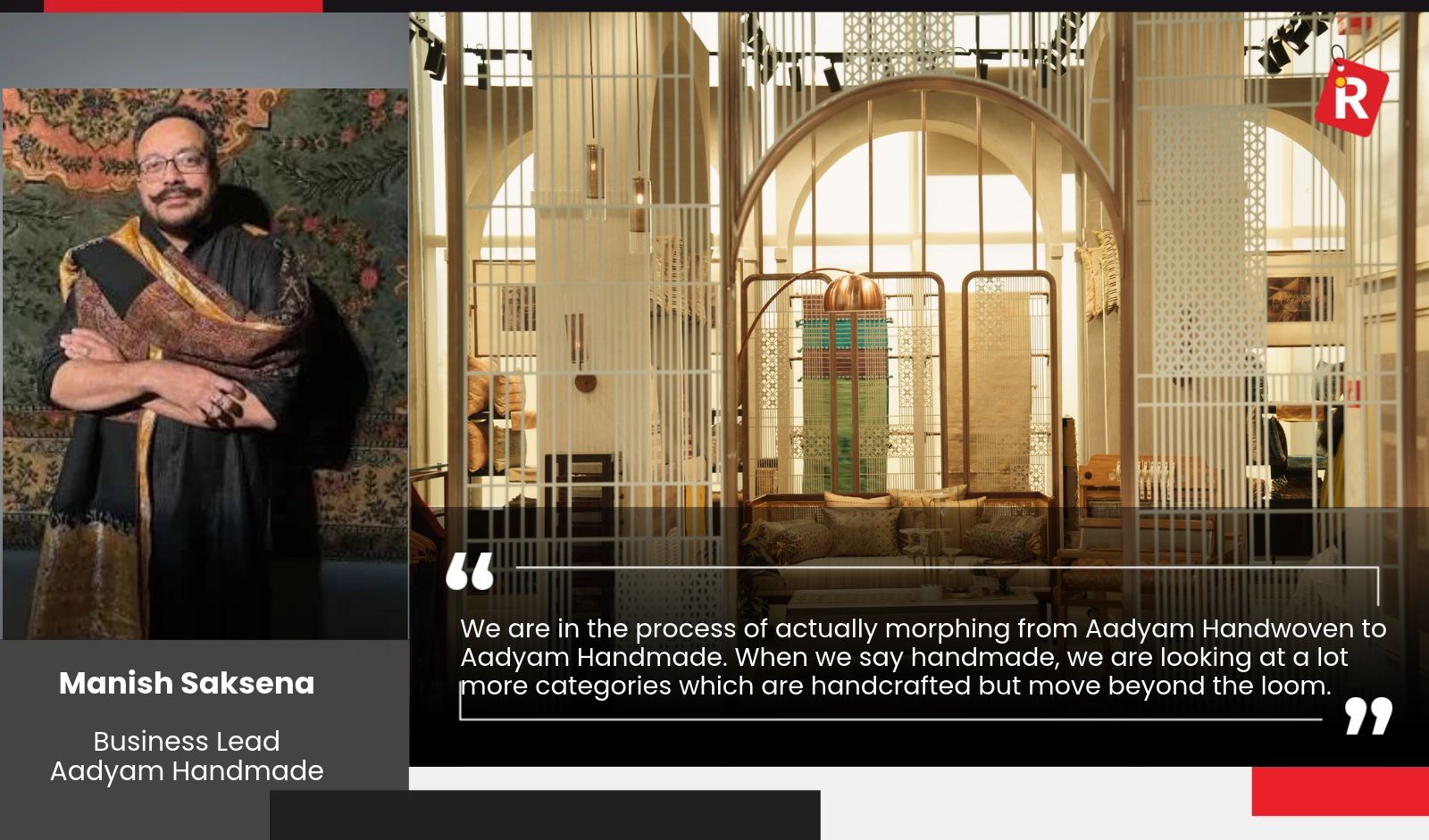
"We are in the process of actually morphing from Aadyam Handwoven to Aadyam Handmade. When we say handmade, we are looking at a lot more categories which are handcrafted but move beyond the loom," Saksena said.
The first step in this direction has been handmade perfumes sourced from the Kannauj region. The brand is also planning to introduce handcrafted jewellery and explore the wellness category.
Also read: Small Feet, Big Business: Kids’ Footwear Steps Up Growth
 Digital Channels Increase Broader Reach
Physical retail expansion is still selective, but online channels are expanding the brand’s reach to consumers beyond its store footprint.
"We are already supplying our products to almost about 180 cities in India, and a good amount of healthy business is also coming from international customers," Saksena said.
The brand believes that physical stores and digital platforms play complementary roles. Online engagement introduces consumers to its products, while stores give them the chance to experience the craftsmanship firsthand.
It also conducts cultural initiatives under its Culture Beyond Textiles programme, bringing audiences closer to performing arts and other forms of cultural expression.
Also read: India’s Rice Market: From Everyday Staple to Branded Growth Opportunity
Sobhita Dhulipala Adds to Brand's Cultural Connect
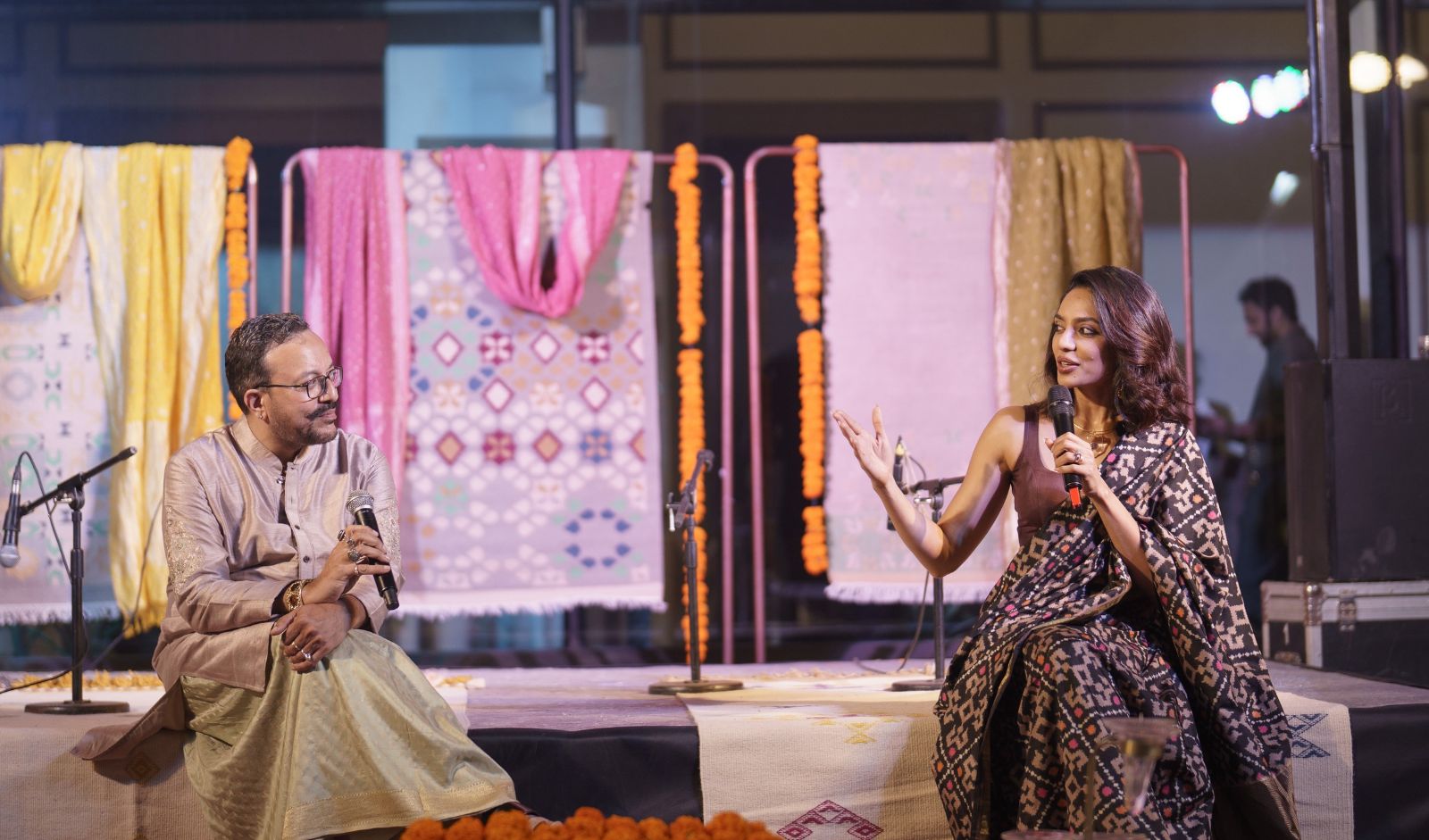
The association of the brand with actor Sobhita Dhulipala as a brand ambassador has also helped it create a connection with younger consumers and those who are more global. The association was driven by a common love of handmade items and something unique.
"When Sobhita Dhulipala speaks about it, it appears truly from the heart. It is not something that she is mouthing, but something she is genuinely into," said Saksena. Digital engagement, increased exposure on social media platforms, and cultural initiatives increase consumer interest.
Also read: Retail Sales Grow 8 Pc in September 2026 Ahead of Festive Season
Quality and Sustainability
Aadyam Handmade places great importance on creating quality pieces. They have increased their network of partners to promote traditional weaving, create quality items and provide a sustainable way of life for weavers.
Saksena said, "The beauty of handwoven is that it is not about depth. It is not about scale. It is always about every loom producing a certain amount. It is more about how you grow horizontally and keep adding weavers to your partnership base."
He added that maintaining quality, transparency, and fair livelihood opportunities remains important to the business.
Looking ahead, Saksena believes Indian handloom brands need to strengthen quality standards and transparency to compete internationally. "Just because it is handcrafted, I don't think we can use it as an excuse to look at it as something which can be of inferior quality," he said.
For the brand, the next phase of growth will involve taking Indian craftsmanship into new product categories and markets while keeping artisan livelihoods and traditional techniques central to its business model.
Also read: How Indian Fashion Brands Are Building the Next Premium Retail Market
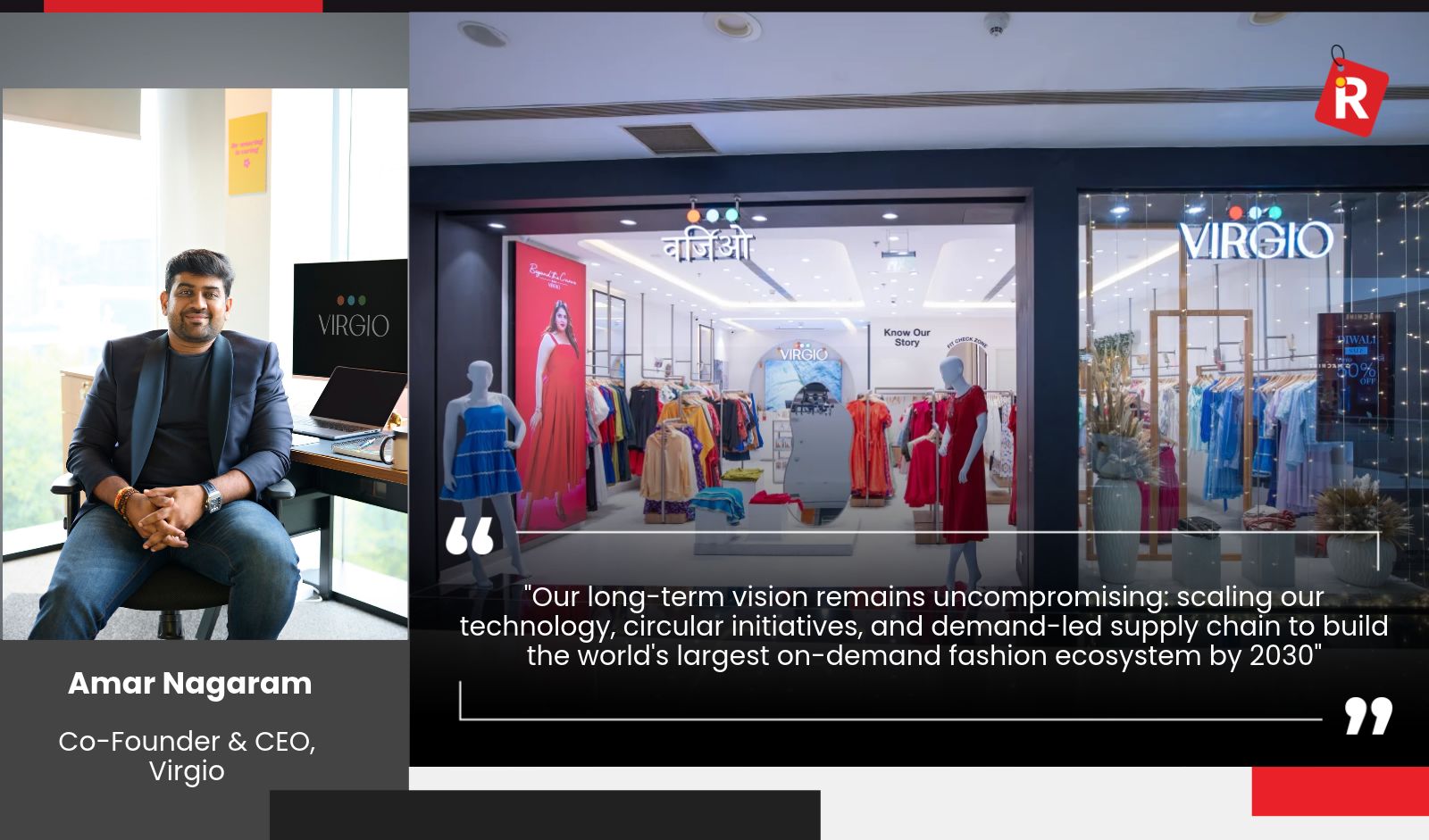
The traditional fashion industry has long operated on a cycle of predicting trends months in advance, manufacturing large volumes and relying on discounts to clear unsold inventory. VIRGIO, which entered the Indian market in 2022, initially started as a fast-fashion brand but gradually identified the structural challenges associated with this approach. The company subsequently shifted towards an agile, technology-driven and circular fashion model focused on producing according to consumer demand.
"While VIRGIO originally began as a fast-fashion play, running that model up close revealed the deep structural crises endemic to the industry, colossal garment waste and low-quality synthetics. We realized that true innovation wasn't about churning out more cheap clothes; it was about fixing the broken supply chain. That catalyzed our decisive pivot into building an agile, technology-driven, and circular fashion company," explained Amar Nagaram, Co-Founder & CEO, Virgio.
Over the last three years, VIRGIO has developed its operations around demand-led manufacturing, faster product cycles and controlled inventory. The company said it is currently growing at more than 100% year on year, supported by its technology-led operating model and expanding consumer reach.
AI and Made-on-Demand Production Reshape the Supply Chain
At the centre of VIRGIO's operating model is its proprietary AI engine, which analyses real-time consumer signals to identify emerging preferences and determine which designs should move into larger production batches. Instead of committing to high inventory volumes upfront, the company tests products through smaller batches and scales styles based on customer response.
The approach has also enabled VIRGIO to move away from conventional seasonal collection cycles towards a weekly product-release format called 'VIRGIO Thursday'. Through this model, the company introduces new styles more frequently while shortening the time between design and market availability.
"We dismantled rigid seasonal cycles to introduce 'VIRGIO Thursday,' our weekly Made-On-Demand release cadence powered by our proprietary AI engine. By scanning real-time consumer signals, testing micro-batches, and scaling only customer-verified favorites, we have compressed design-to-market cycles to mere days while keeping unsold deadstock down to single-digit margins," Nagaram said.
The company has also introduced digital smart codes to provide garment-level traceability, adding transparency to its production process. According to Nagaram, combining technology with demand-led manufacturing has helped the brand align production more closely with actual consumer preferences.
"Complemented by complete garment traceability via digital smart codes, the breakout success of our size-inclusive line Beyond The Curve, and a rapidly scaling multi-city retail footprint, VIRGIO has commercially validated that on-demand, conscious fashion can achieve rapid, profitable scale in India," he added.
D2C Leads VIRGIO's Omnichannel Retail Model
Alongside its technology-led supply chain, VIRGIO is building an omnichannel presence through its proprietary website, third-party marketplaces and physical stores. The company's owned channels, comprising its D2C platform and offline stores, contribute approximately 70–75% of its overall business.
Its D2C platform accounts for around 60% of revenue, while marketplaces such as Myntra, Nykaa Fashion and Ajio contribute approximately 30%. The company sees its owned digital platform as an important growth driver, supported by higher average transaction values.
"Our D2C platform acts as the core growth engine, driving 60% of total revenue with an Average Order Value tracking roughly 30% higher than third-party marketplaces like Myntra, Nykaa Fashion, and Ajio, which account for 30% and serve as valuable top-of-funnel reach," Nagaram said.
Offline, VIRGIO currently operates seven stores across five major cities, contributing approximately 10% to its revenue mix. These stores function as experience-led retail spaces where customers can assess the fabric quality, fit and draping of products before making a purchase.
The physical channel is also generating higher average order values than digital channels. According to the company, offline AOV is nearly twice that of its digital channels, with dresses contributing around two-thirds of in-store sales.
"These stores serve as essential touch-and-feel experience spaces where consumers can physically experience the hand-feel, draping, and quality of our sustainable natural fabrics. Because of this sensory validation, our physical stores deliver exceptional unit economics, generating AOVs nearly 2X higher than digital channels, with dresses driving roughly two-thirds of in-store sales," Nagaram said.
For the company, physical retail therefore serves both as a consumer engagement channel and a contributor to higher-value transactions.
Dresses and Beyond The Curve Drive Category Growth
Dresses remain VIRGIO's strongest-performing category across channels, accounting for nearly two-thirds of offline sales and driving significant volumes online. The brand is also witnessing growing demand for co-ord sets and versatile separates, particularly among consumers looking for clothing that can transition across work, social occasions and celebrations.
"Dresses continue to be our undisputed hero category across channels, accounting for nearly two-thirds of our offline sales and driving significant volume online. Consumers are drawn to our structured fits, contemporary western silhouettes, and the touch-and-feel quality of our certified natural fabrics," Nagaram said.
He added that co-ord sets and separates are also gaining traction as consumers increasingly seek versatile clothing that can be styled across multiple occasions. "Alongside dresses, modern co-ord sets and versatile separates are witnessing rapid growth, driven by consumer demand for smart, multi-occasion wear that transitions effortlessly from work to celebrations."
Another growth driver has been Beyond The Curve, VIRGIO's size-inclusive label. Rather than simply extending conventional sizing patterns, the brand develops its designs around Indian body proportions, addressing fit-related challenges in the women's fashion market.
The label has achieved an annualised revenue run rate of Rs 25 crore in its first year, according to the company. Its collections focus on fashion-forward occasionwear and dresses for curvy consumers.
"Additionally, Beyond The Curve has emerged as a high-growth powerhouse, delivering an annualized run-rate of Rs 25 crore in its first year. By engineering patterns from the ground up specifically for Indian body proportions rather than scaling up standard sizes, it has unlocked immense demand for fashion-forward, curvy occasion-wear and dresses, proving that well-fitted, trend-first designs represent a massive, underserved opportunity in Indian womenswear," Nagaram said.
Festive Strategy Focuses on Weekly Product Drops
For the festive season, VIRGIO is relying on its Made-on-Demand model to introduce weekly, trend-led collections across VIRGIO and Beyond The Curve. Instead of depending on one-time seasonal discounting, the company is focusing on versatile occasionwear that consumers can continue wearing beyond celebrations.
"Rather than relying on one-off seasonal discounting, our festive strategy leverages our agile Made-on-Demand model to introduce weekly, trend-led contemporary drops across VIRGIO and Beyond The Curve. We are catering to the growing appetite for versatile, occasion-ready silhouettes that consumers can re-wear beyond celebrations," Nagaram said.
The company is also witnessing increasing demand from non-metro markets, which it expects to contribute to its festive performance. Supported by its omnichannel presence and growing consumer demand, VIRGIO anticipates more than 100% year-on-year growth during the festive cycle while maintaining healthy margins and strong sell-through.
Rs 100 Crore Revenue Target and Vision for 2030
Going forward, VIRGIO's expansion strategy is focused on strengthening its digital capabilities and improving productivity across its existing physical retail network. On the online front, the company plans to increase the style-testing capacity of its proprietary AI engine to support more frequent product launches and further scale its D2C platform. It also intends to accelerate the growth of Beyond The Curve.
"Our expansion strategy centers on sustainable, value-driven growth that strengthens both our digital core and physical presence. Online, we are expanding our proprietary AI engine to significantly increase our style-testing capacity, fueling our weekly 'VIRGIO Thursday' Made-on-Demand drops and scaling our D2C platform while accelerating our size-inclusive label, Beyond The Curve," Nagaram said.
On the offline front, the company is prioritising store-level productivity, customer experience and profitability rather than focusing solely on adding outlets.
"Offline, our focus is on maximizing store-level productivity, customer experience, and profitability across our existing locations," he added.
VIRGIO is targeting the Rs 100 crore revenue milestone over the next year while maintaining strong contribution margins and keeping deadstock at single-digit levels. Over the next two to three years, it plans to deepen its product offerings through its AI-driven manufacturing ecosystem.
Elaborating on the company's longer-term ambition, Nagaram said, "Our immediate horizon is focused on crossing the Rs 100 crore revenue milestone over the next year while sustaining strong contribution margins and single-digit deadstock. Over the next two to three years, we will deepen our offerings by leveraging our AI-driven agile manufacturing ecosystem."
The company's ambition extends beyond scaling its domestic retail presence. It aims to build a global on-demand fashion ecosystem by 2030, supported by investments in technology, circular initiatives and demand-led production.
"Looking ahead, our long-term vision remains uncompromising: scaling our technology, circular initiatives, and demand-led supply chain to build the world's largest on-demand fashion ecosystem by 2030," Nagaram said.
As VIRGIO enters its next phase of growth, its focus will remain on scaling its technology-led operating model while balancing faster product cycles, consumer demand, inventory discipline and profitability.

The festive beauty market is witnessing a shift in consumer priorities, with shoppers increasingly looking beyond traditional makeup staples and placing greater emphasis on skin preparation, hydration, product performance and versatility.
While lip colours, eye makeup and highlighters continue to remain important parts of festive beauty routines, the emphasis on achieving healthy-looking, effortless skin is becoming increasingly prominent. Social media discovery and creator-led education are also making consumers more informed about formulations, application techniques and product benefits, raising expectations around both performance and ease of use.
“Today's festive glam starts long before the makeup goes on; it’s all about achieving that effortless, healthy-looking glow. Thanks to social media discovery and creator education, consumers are more informed than ever. They want products that deliver on performance, ease of use, and versatility,” said Medhavi Nain, GM Marketing, House of Beauty Global.
Premium Beauty Gains Through Value Proposition
The premium beauty segment is also finding stronger relevance among informed consumers, although the market continues to cater to both premium and mass-market preferences.
Rather than premiumisation replacing affordability, consumers are increasingly evaluating purchases based on formulations, performance, brand credibility and the overall experience. House of Beauty said its focus is on communicating the value proposition of premium products while making them accessible to a broader consumer base through different price points.
“The market is not necessarily moving in one direction; premium and mass-market beauty serve different consumer needs. While affordability and accessible price points remain important, premium beauty is benefiting from consumers who are increasingly informed about formulations, product performance, brand credibility and the overall experience,” said Medhavi Nain, GM Marketing, House of Beauty Global.
Omnichannel Shopping Shapes Beauty Discovery
Beauty consumption is also becoming increasingly omnichannel, with marketplaces, brand-owned digital platforms, physical stores and quick-commerce platforms playing different roles in the purchase journey.
“Festive beauty shopping is increasingly omnichannel, with each platform playing a distinct role in the consumer journey. Online marketplaces offer reach, convenience and product discovery, while brand-owned digital platforms can help communicate product benefits, collections and brand stories in greater depth,” said Medhavi Nain, GM Marketing, House of Beauty Global.
She added that physical retail remains valuable for consumers who want to experience products firsthand, particularly when choosing shades, textures and finishes, while quick commerce is contributing to the evolving convenience-led shopping landscape.
“Rather than viewing these channels in isolation, we believe in delivering a consistent experience across touchpoints and understanding how each channel contributes to discovery, conversion and loyalty,” Nain said.
Lip Products, Eye Palettes Drive Festive Demand
Despite the broader shift towards skin preparation, established makeup categories continue to perform strongly during the festive period.
“Lip products continue to be among our best sellers, as consumers look for colours that complement their celebratory looks. Eye palettes and setting sprays also see strong demand, with consumers seeking versatile eye looks and long-lasting makeup that stays fresh through the extended celebrations, evening parties and festive gatherings,” said Medhavi Nain, GM Marketing, House of Beauty Global.
Gift Sets Create Incremental Opportunities
Curated beauty kits and festive collections are also becoming an important tool for driving discovery and incremental purchases. By combining complementary products, brands can simplify purchase decisions while encouraging consumers to experiment with products they may not have otherwise purchased individually.
“Curated gift sets and festive collections play an important role in making beauty gifting more convenient, considered and engaging. By bringing together complementary products, they simplify purchase decisions while offering consumers an opportunity to discover products they may not have considered individually,” said Medhavi Nain, GM Marketing, House of Beauty Global.
At Anastasia Beverly Hills, House of Beauty has introduced four festive celebration kits, combining best-selling makeup products in ready-to-gift combinations designed for the festive season.
North and West Remain Key Markets
From a geographic perspective, the North and West regions are currently witnessing the strongest demand for Anastasia Beverly Hills products and are expected to remain important markets for festive growth.
Overall, the evolving festive beauty landscape points towards a consumer who is more informed, more experimental and increasingly comfortable navigating multiple shopping channels. For brands, the opportunity lies not only in capturing seasonal demand but also in using festive occasions to drive product discovery, premium adoption, gifting and repeat purchases.
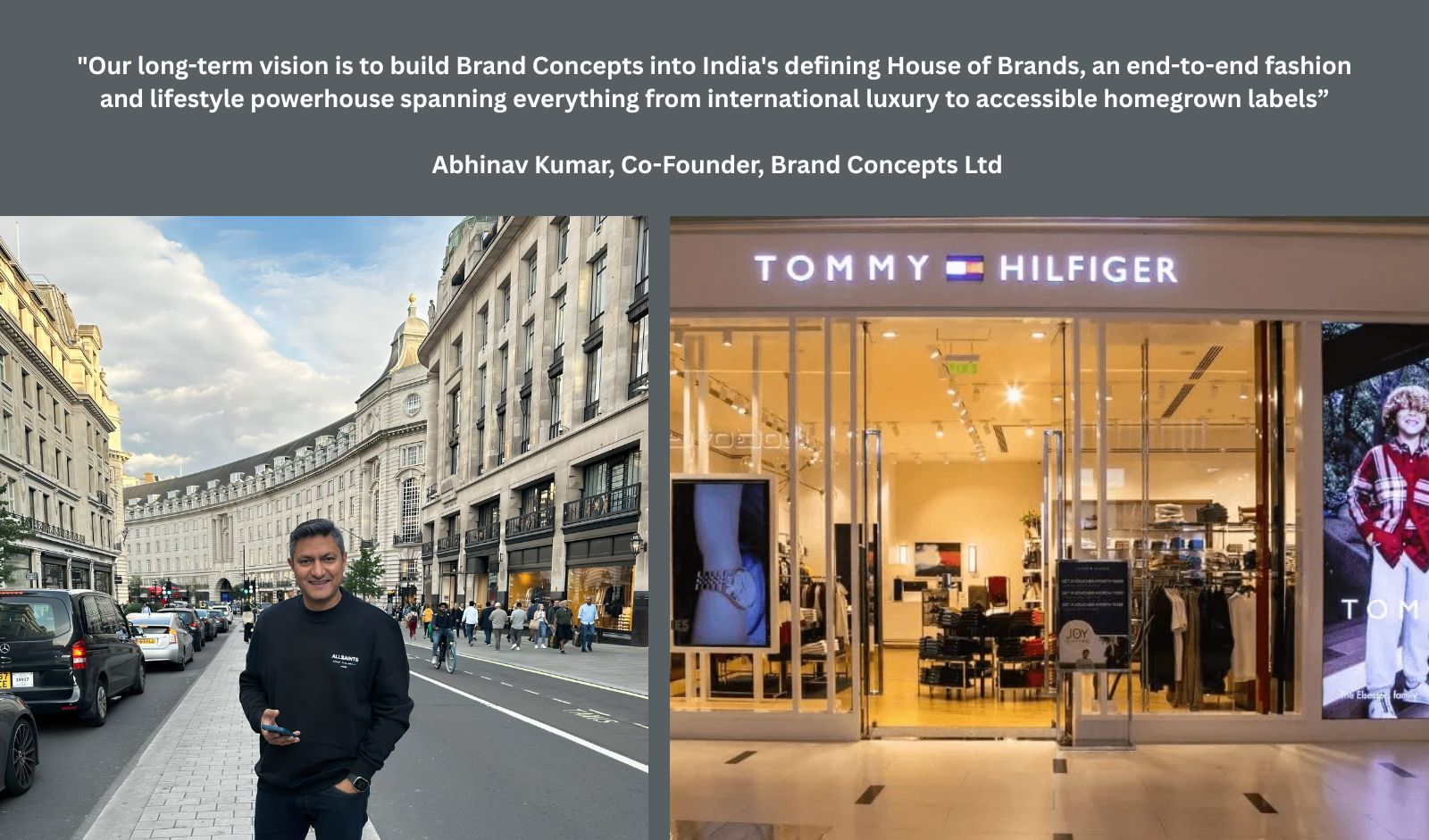
India's fashion accessories and travel gear market is witnessing a shift as consumers increasingly view bags, luggage and small leather goods as extensions of their personal style rather than merely functional purchases. Growing brand consciousness, changing lifestyle preferences and rising demand for premium products are creating opportunities for companies operating across fashion and lifestyle categories. Brand Concepts Ltd. has been building its presence in this evolving market through a portfolio of international labels, in-house brands and multi-brand retail formats. Founded in 2007, the company has transitioned from character licensing to a broader fashion and lifestyle business, with brands such as Tommy Hilfiger, Superdry, United Colors of Benetton, Juicy Couture and Off-White in its portfolio.
"Our journey since 2007 has been defined by deliberate strategic pivots and identifying unaddressed white spaces in the Indian consumer landscape," said Abhinav Kumar, Co-Founder, Brand Concepts Ltd.
The company initially worked with character-led brands such as Cartoon Network and Rocky S in the school bags segment. Its partnership with Tommy Hilfiger for travel gear and small leather goods marked a significant turning point, taking it into the premium fashion accessories category.
In 2010–11, Brand Concepts introduced BAGLINE, a multi-brand retail destination bringing premium travel gear, handbags and lifestyle accessories under one roof. It subsequently incubated its own labels, Sugarush and The Vertical, targeting emerging niches in women's and contemporary men's accessories.
Over the years, the business has evolved into a House of Brands spanning youth-led lifestyle labels, established international names and premium fashion. Today, its portfolio includes United Colors of Benetton, Tommy Hilfiger, Superdry, Juicy Couture and Off-White™.
"Ultimately, our story isn't just about accumulating logos or scaling retail square footage. It has been about anticipating the Indian consumer's mindset shift, from viewing travel bags and accessories as utilitarian necessities to treating them as central fashion and lifestyle statements," Kumar said.
Building an Omnichannel Retail Ecosystem
Brand Concepts' retail model combines exclusive brand outlets, multi-brand retail, wholesale distribution and online platforms. The company operates more than 37 exclusive brand outlets across its portfolio, including BAGLINE stores and monobrand boutiques for labels such as Off-White™ and Juicy Couture.
Its offline presence extends to airports, luxury retail destinations and shop-in-shop formats across department store chains such as Shoppers Stop and Lifestyle. The company also has a distribution network spanning more than 2,000 multi-brand retail touchpoints nationwide.
On the digital front, its presence includes proprietary platforms such as Bagline.com, Juicycouture.in and Off-White.in, alongside marketplaces including Amazon, Myntra and Flipkart. It has also expanded onto premium commerce platforms such as Tata CLiQ Luxury and Nykaa Fashion, while selectively exploring quick-commerce channels.
"For Brand Concepts, omnichannel retail has never been about indiscriminate expansion or chasing vanity store numbers; it is about building a disciplined ecosystem where physical visibility and digital access feed each other," Kumar said.
The company's overall revenue mix is approximately 55% offline and 45% online, reflecting the importance of both physical retail and digital commerce in reaching consumers across markets.
The company aims to ensure that consumers experience consistent pricing, brand communication and product availability regardless of where they shop.
"Ultimately, this integrated network ensures our brands are present wherever the modern consumer decides to discover, touch, and transact," Kumar added.
Southern India in Focus for Retail Expansion
Having established a presence across Northern and Western India, Brand Concepts is now accelerating its expansion across Southern India. Its approach is based on different retail formats depending on the consumer profile and market potential.
In Tier I cities, the company is focusing on standalone Exclusive Brand Outlets (EBOs) for premium and bridge-to-luxury labels such as Off-White and Juicy Couture. These stores are being considered for prominent high-street malls and high-conversion locations such as airport terminals. Meanwhile, in Tier II and Tier III markets, BAGLINE will remain an important expansion vehicle, allowing the company to bring multiple international labels across travel gear, handbags and lifestyle accessories under one roof.
"Our expansion is anchored in unit-level profitability and store productivity rather than chasing door counts for top-line vanity," Kumar said.
Alongside geographical expansion, the company is looking to broaden its product portfolio beyond travel utility into apparel, footwear and statement handbags. The objective is to build wider lifestyle ecosystems around its brands and participate in more consumer spending occasions.
Manufacturing Integration to Strengthen Margins
A key differentiator in Brand Concepts' business model is its investment in backward-integrated manufacturing. Its 8-acre facility at Vikram Udyogpuri in Madhya Pradesh currently delivers an annual production capacity of 4.2 lakh hard-luggage units and 1 million backpacks.
The company has developed only a fraction of the facility's total footprint, leaving room for capacity expansion without significant greenfield capital expenditure. It currently manufactures up to 50% of its luggage in-house, giving it greater control over production, costs and product availability.
Kumar believes this integration will become increasingly important as the company expands its retail network and product portfolio.
"Bringing up to 50% of our luggage manufacturing in-house insulates us from global supply chain shocks, protects our gross margins, and ensures every new store we open is backed by rock-solid unit economics," he said.
The manufacturing facility is expected to support the company's expansion across both premium retail destinations and emerging Tier II and Tier III markets.
Handbags and Small Leather Goods Drive Festive Demand
During the festive season, women's handbags and Small Leather Goods (SLGs) have emerged as the strongest-performing categories for Brand Concepts. Demand for statement pieces and bridge-to-luxury designs is driving growth across Juicy Couture and BAGLINE's curated collections.
Premium wallets, belts and gifting sets from Tommy Hilfiger and United Colors of Benetton are also witnessing traction across festive, wedding and corporate gifting occasions.
"In handbags, we are seeing strong demand for statement pieces and bridge-to-luxury designs, particularly through brands like Juicy Couture and our curated BAGLINE edit," Kumar said.
Travel gear is another important category. While mass-market luggage faces price-led competition, the company is witnessing stronger demand in the premium, design-led trolley segment.
"Today's traveler treats luggage as a fashion accessory rather than a utility box," Kumar said.
Collections from Tommy Hilfiger, Superdry and United Colors of Benetton are benefiting from increased travel activity and consumers' preference for products that combine functionality with brand appeal.
The company is also observing different consumption patterns across markets. While metropolitan consumers are increasingly gravitating towards minimalist designs and understated luxury, Tier II and Tier III shoppers are showing greater interest in branded lifestyle products that combine aspirational appeal with accessible value.
Across its portfolio, Brand Concepts is expecting strong double-digit growth during the festive season, supported by demand across online and offline channels.
Targeting 20–25% CAGR Through Brand Diversification
Looking ahead, Brand Concepts aims to strengthen its position as an integrated fashion and lifestyle company, with a portfolio spanning international luxury, premium and accessible labels. The company is targeting a sustained 20–25% CAGR in top-line growth over the next two to three years. Tommy Hilfiger continues to be its core revenue contributor, accounting for around 80% of its wholesale volume. Meanwhile, newer international brand partnerships are expected to contribute to the next phase of growth.
Juicy Couture is one of the company's key growth priorities, with a revenue target of ₹50 crore by FY2027–28. The expansion will focus on statement handbags and apparel, supported by a wider retail presence.
For Off-White, the strategy is centred on establishing the brand's positioning and building a consumer community rather than prioritising store numbers or immediate volume commitments. The company plans to establish its presence across four to five premier luxury retail corridors over the next two years.
Kumar said the company's focus remains on balancing expansion with financial discipline and profitability, rather than pursuing revenue growth at the expense of margins.
With international brand partnerships, category diversification, omnichannel distribution and manufacturing integration forming the pillars of its business model, Brand Concepts is positioning itself to capture the changing demand for premium fashion and lifestyle accessories in India.
"Our long-term vision is to build Brand Concepts into India's defining House of Brands, an end-to-end fashion and lifestyle powerhouse spanning everything from international luxury to accessible homegrown labels," Kumar said.
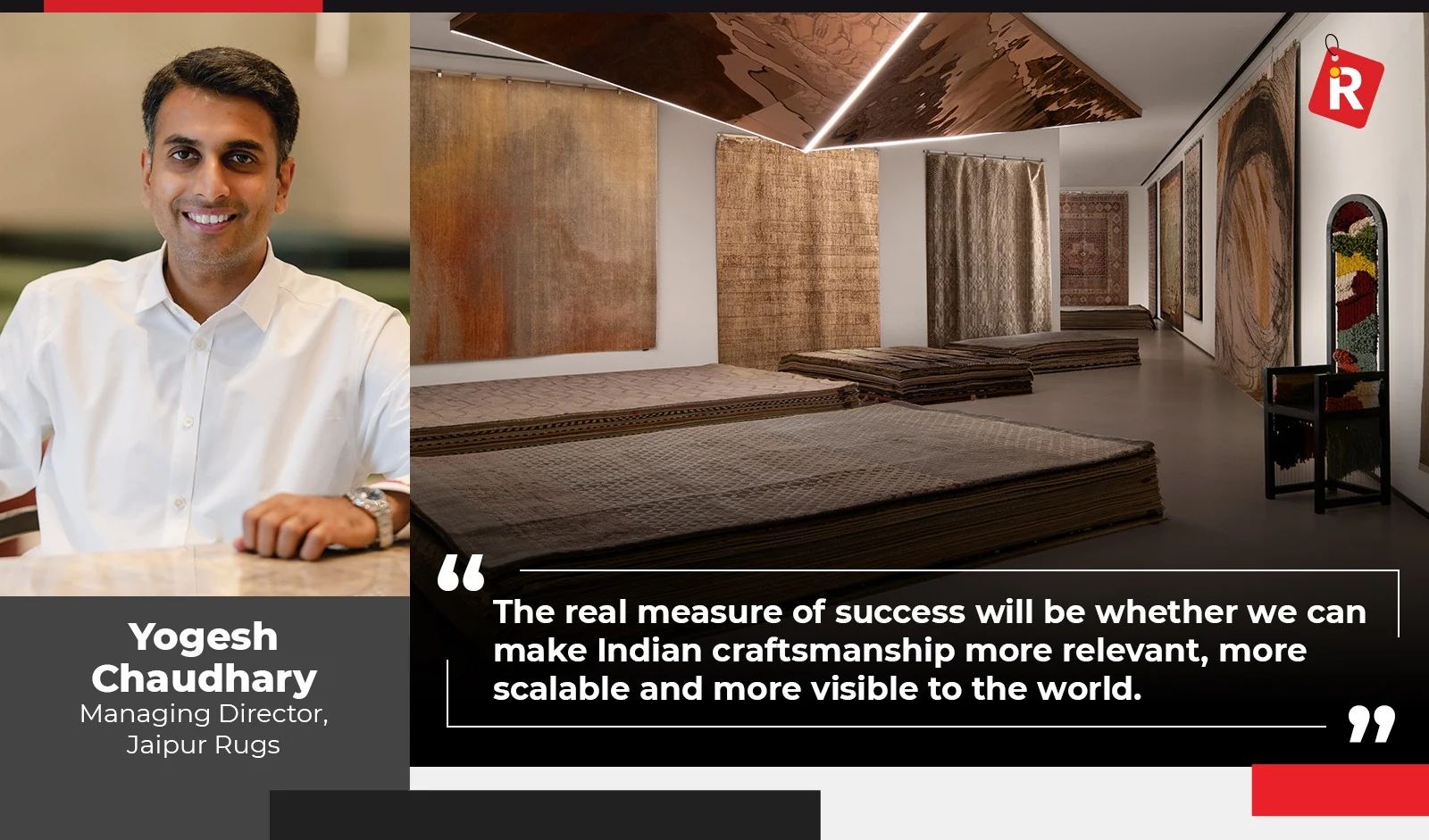
As the next generation takes a larger role at Jaipur Rugs, Managing Director Yogesh Chaudhary is looking to balance the company’s legacy with a more contemporary approach to business. Founded in 1978 by Nand Kishore Chaudhary, the Jaipur-headquartered company has built its business around handmade rugs and artisan-led craftsmanship.
“I see leadership as the ability to honor what has been built while having the courage to reimagine what comes next,” Yogesh Chaudhary, Managing Director, Jaipur Rugs, said.
Chaudhary aims to combine entrepreneurial thinking with respect for artisans and heritage, while strengthening design, expanding retail and digital channels, and building collaborations to take Indian craftsmanship global.
From One Store to 18
Since 2016, Jaipur Rugs has expanded from one store in Delhi to 18 stores across India. The company has also established a presence in global markets including Milan, Singapore, Dubai, London, Russia and China.
The company currently generates revenue of around Rs 400 crore, with stores, online platforms and e-commerce forming its key sales channels.
“For me, this growth is not simply about the number of stores or markets. It is about taking Indian craftsmanship from the village loom to the global design stage,” Chaudhary said.
Retail Expansion
Jaipur Rugs is also expanding its physical retail presence. Its latest Mumbai store spans 20,000 sq. ft. and brings together rugs, design and craftsmanship under one roof.
The company plans to open 15–20 additional stores over the next five years across India and select international markets. Chaudhary said the focus will remain on key metros, emerging design destinations and global markets.
“Our retail expansion is not about opening stores for the sake of scale; it is about creating spaces where people can truly experience the world of Jaipur Rugs,” he said.
New-Age Collaborations
Jaipur Rugs is exploring beyond home interiors, with its PUMA collaboration bringing Indian craftsmanship to younger, contemporary consumers.
“The PUMA collaboration came from a shared belief that culture becomes more powerful when it is allowed to cross boundaries,” Chaudhary said.
He said such partnerships can help introduce craft and handmade products to consumers who may not have previously engaged with the category.
Digital and Product Innovation
Technology is another area where Jaipur Rugs is seeking to modernize its operations. The company has invested in e-commerce, digital platforms, data-led decision-making and product innovation.
According to Chaudhary, digital channels have expanded the company’s reach across India and international markets.
“Digital is now a significant and steadily growing contributor to our business,” he said, adding that its impact extends beyond sales to how the company connects with customers.
Building the Next Chapter
Over the next three to five years, Jaipur Rugs plans to expand its store network, grow its digital business, enter adjacent categories and build more collaborations with Indian and international designers.
“Our objective is to create multiple growth engines rather than depend on a single channel or category,” Chaudhary said.
He believes the next generation’s role is to extend rather than replicate the legacy. “The real measure of success will be whether we can make Indian craftsmanship more relevant, more scalable and more visible to the world,” he added.
Facts
- Founded: 1978
- Founder: Nand Kishore Chaudhary
- Headquarters: Jaipur
- Core Offering: Handmade Rugs
- Revenue: Rs 400 Crore
- Retail Stores: 18
- Store Expansion Target: 15–20 New Stores in 5 Years
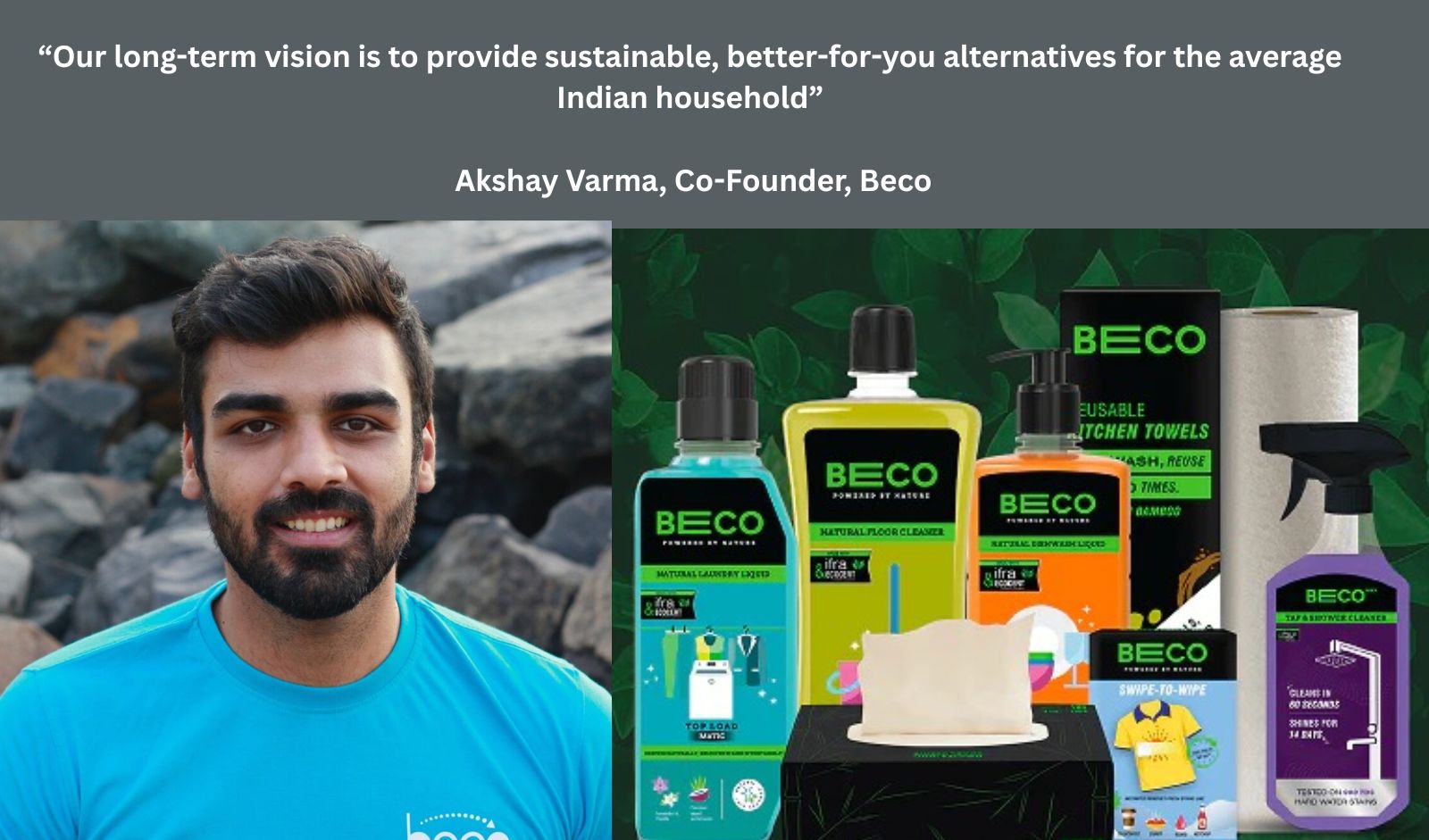
India's home care market has traditionally been dominated by established FMCG companies, but changing consumer preferences and growing interest in sustainable alternatives are creating opportunities for new-age brands. Beco began as an effort to address the growing problem of plastic waste and later evolved into a broader home care business. The brand entered the market in 2019 with bamboo-based tissues, followed by garbage bags in 2020 and home cleaning products in 2023, including laundry detergent, floor cleaners and dishwash liquids.
"Two things happened in 2018. One, during our beach cleanups, we found a plastic wrapper that belonged to a chocolate that had been discontinued in the 2000s. It looked almost new. That made us realise how long the plastic we use today can last. The second was the plastic ban in Maharashtra, which created demand for alternatives. However, the available options were either not user-friendly or two to three times more expensive," said Akshay Varma, Co-Founder, Beco.
Despite its large market size, the home care category remained dominated by established players, with relatively limited innovation compared with segments such as personal care and snacking. This gap led to the birth of Beco.
Building an Omnichannel Retail Presence
Beco has expanded its distribution across e-commerce, quick commerce, general trade and modern trade. The brand is currently present in approximately 5,000 general trade stores across nine key markets: Mumbai, Delhi, Pune, Hyderabad, Chennai, Bengaluru, Chandigarh, Lucknow and Kochi.
Its modern trade presence includes approximately 150 D-Mart stores and over 250 Reliance Retail stores. While the brand initially entered D-Mart with four SKUs across 10 stores, it has since expanded its reach and is working towards increasing its assortment. Its Reliance Retail presence currently focuses on the tissue category, with plans to introduce its cleaning products as well.
Beco has also entered army canteen stores with four SKUs. On the digital front, it is available across major e-commerce and quick-commerce platforms, including Amazon, Flipkart, Blinkit, Zepto, Swiggy Instamart, Flipkart Minutes, BigBasket and JioMart. Currently, online channels contribute approximately 80% of the brand's sales, while offline retail accounts for the remaining 20%. However, expanding its physical distribution network is emerging as a major business priority.
"Over the next two to three years, we will continue expanding our categories and growing our online channels. Offline will be a major push, focusing on modern trade and key outlets. We have a target to reach over 25,000 general trade stores and expand across modern trade outlets catering to the mass-premium segment," Varma shared.
Beco is also looking to increase its presence in Tier-II cities and rural markets and make sustainable household products accessible through the retail touchpoints where consumers regularly purchase their everyday essentials.
Large share revenue from quick commerce
While offline expansion remains a priority, quick commerce has emerged as one of Beco's strongest growth channels. The platform-led business now contributes approximately 45% of the company's overall revenue, compared with 30% in the previous year.
Beco currently holds the number two position in categories such as dishwash and floor cleaners across several quick-commerce platforms, according to Varma. The brand is listed across approximately 90% of dark stores and is working on improving product availability, fill rates and visibility to strengthen its position.
"Quick commerce is growing phenomenally. It contributes roughly 45% of our overall revenue, compared with 30% last year. We are growing across channels and gaining in several categories," he said.
The channel's growing importance is also reflected in the brand's approach to product accessibility. Unlike discretionary purchases, household cleaning products are regular-use essentials, and consumers generally expect them to be available when needed.
Varma believes that sustainability alone cannot drive adoption in this category. Product performance, competitive pricing and availability remain equally important.
"In a category like home care, efficacy is very important. People are not going to compromise on cleaning performance for sustainability. That is the table stake. The second is price. Consumers are not willing to pay even a 10% premium in home care, especially when comparing products with mass-premium offerings such as Surf Excel Matic or Vim Liquid. The third is accessibility. You have to be available where the consumer is buying," he explained.
Product Performance and Pricing Drive Category Competition
Beco competes with established FMCG companies in traditional cleaning categories such as laundry detergents, floor cleaners and dishwash liquids. In newer segments, including limescale removers and kitchen degreasers, it faces competition from emerging home care brands. The company is positioning itself through product innovation, targeted communication and consumer education around the benefits of its formulations.
In the tissue segment, the brand operates in a relatively fragmented market, competing with established players such as Origami and Paseo. Varma said Beco has built a strong retail position in the category despite entering it later than several competitors.
"With the cleaning category, we focus a lot on the right communication and storytelling around the products, what they contain, what traditional products have and what we don't have, and why our products are better. Our brand equity and communication across social media, along with influencer marketing and other activities, have helped us build our position," he said.
Laundry liquid is currently BECO's largest-selling category, contributing approximately 33-34% of its total sales. At the individual product level, its reusable bamboo kitchen towel is the highest-selling SKU, contributing approximately Rs 7 crore in revenue. The product is positioned as an alternative to both microfiber cloths and conventional paper towels.
Sourcing and Manufacturing: Building Greater Control
As Beco initially outsourced its entire production but gradually increased control over manufacturing and product development. Its research and development and formulations are managed in-house, while manufacturing follows a combination of owned facilities and third-party partnerships.
Around 80% of its tissue paper production takes place at its own manufacturing facility in Maharashtra, with the remaining 20% outsourced to third-party manufacturers. For home cleaners, Beco works with third-party manufacturers through technology-transfer arrangements. The company develops formulations and sources specific proprietary ingredients, which are supplied to manufacturing partners for incorporation into the final products. Its home cleaning products are manufactured across three regions in India: North, South and West.
The brand also works with more than 10 global manufacturers of natural and synthetic ingredients to introduce newer formulations into the Indian home care market.
On the sourcing front, approximately 80% of its bamboo requirement is currently sourced from central India, while the remaining 20% is imported from China and Thailand. This marks a shift from its initial sourcing model, when almost all its bamboo was imported. For surfactants, approximately 70% is sourced domestically, while 30% comes from Malaysia and Indonesia.
Varma said ingredient innovation also plays a role in managing costs and improving product formulations. One example is the use of methyl ester ethoxylate (MEE), a palm oil-based surfactant, as an alternative to petroleum-based surfactants commonly used in detergents and dishwash liquids.
"We are working with more than 10 global manufacturers of ingredients. They develop both natural and synthetic ingredients, and we are among the early players in India to incorporate some of these into our formulations. For instance, we use a palm-based alternative to a petroleum-based surfactant. This helps us maintain cost efficiency and gives us the flexibility to switch formulations when commodity prices fluctuate, ensuring that the cost impact on consumers remains minimal," Varma said.
Targeting Rs 2,000 Crore Revenue and a Larger Market Share
Beco's next phase of growth will focus on strengthening its position in key categories, expanding offline distribution and increasing household penetration. Over the next three years, the company aims to establish itself as the number two player in its major categories, including dishwash, floor cleaning and laundry care, while targeting a market share of 15-20% in these segments.
Additionally, the brand is targeting Rs 2,000 crore turnover over the next three to four years. The founders also aspire to take the company public within the next three years. For the brand, the long-term opportunity lies in making sustainable alternatives a regular part of Indian household consumption rather than limiting them to a niche segment of environmentally conscious consumers.
"Our long-term vision is to provide sustainable, better-for-you alternatives for the average Indian household. We want to become one of the largest players in these categories and create a significant presence across consumer households," Varma said.
With everything now connected, it is becoming part of our daily life to have good power sources. We now live in a world filled with electronic devices, including smartphones, laptops, wireless headphones and smartwatches. As we become increasingly reliant on these, we now see a change in how we buy our accessories. Speed of charging, compatibility, quality, and reliability have become key factors.
This change has resulted in the growth of the electronics sector in India. The total Indian electronics market is projected to reach USD 125 billion in 2026 according to Ken Research and is anticipated to reach USD 300 billion by 2031. This growth is allowing local electronics brands to innovate, manufacture, and provide their products to consumers.
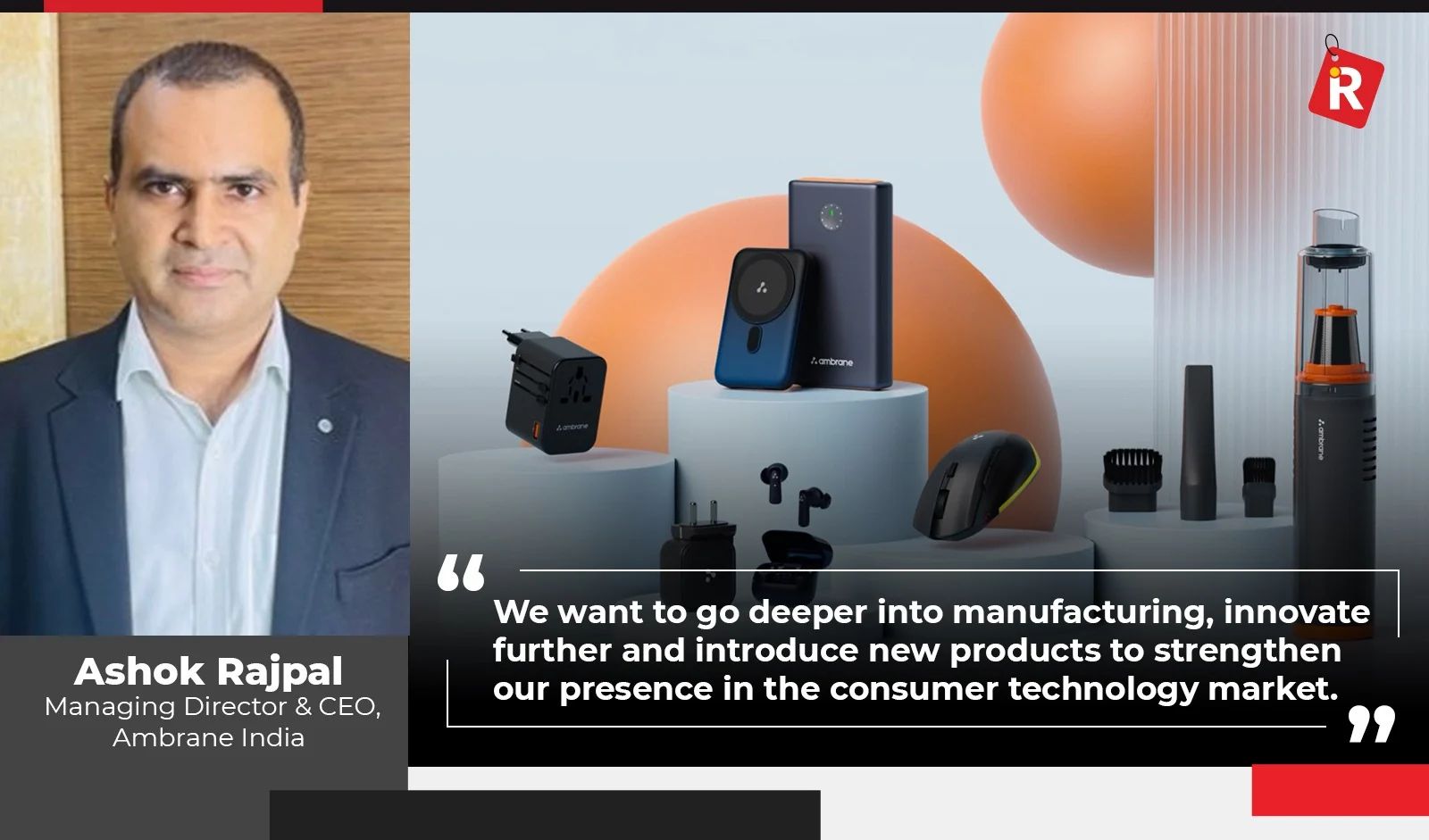
One such company is Ambrane India, which entered the market in 2012 with its focus on power banks and mobile accessories. Founded by Ashok Rajpal in Delhi, the company has slowly grown its product portfolio to include charging products, audio, wearables, and small household products.
"We started Ambrane India in 2012 with the idea of bringing more innovative products into the Indian market," said Ashok Rajpal, Managing Director and CEO of Ambrane India.
Also read: How India’s Beverage Shelf Is Evolving
From a Small Shop to a Manufacturing Business
The start of Ambrane was with products like power banks and other IT accessories. Before starting their brand, they spent 4-6 months getting to know the market, finding out what consumers want and which products would fulfill their expectations.
"We started with a small shop in Nehru Place to understand the market. We wanted to know what kind of products customers were looking for and what their expectations were," Rajpal said.
The company subsequently established its manufacturing operations, focusing on product quality and component sourcing. According to Rajpal, Ambrane was among the early brands to use lithium-ion cells sourced from South Korea, including those supplied by Samsung and LG.
Its manufacturing journey started with a facility measuring approximately 5,000 square feet and a workforce of around 50 people. Currently, the Delhi-based company has manufacturing units covering over 80,000 sq ft and employs more than 1,000 people.
Its portfolio has also expanded to more than 200 SKUs, covering charging cables, chargers, power banks, audio products, wearables, and small home appliances. The company has additionally introduced AA and AAA lithium-ion cells as an alternative to traditional cells.
Also read: From Organic Hampers to Personalised Gifts
Changing Consumer Demand
Consumer expectations in the mobile accessories market have changed considerably over the past few years. Earlier, customers could purchase a basic charger for Rs 200-300. Today, they increasingly look for chargers that match their devices and support higher charging requirements.
Rajpal explained, "The Indian consumer today has become smarter. People understand new technologies and know what products they need. They are looking for chargers and power banks that can support multiple devices, including laptops and other gadgets."
He identified charging products, particularly power banks, chargers and cables, as the company's strongest growth categories.
However, Ambrane is also expanding into smart home appliances, including vacuum cleaners, blowers, leaf blowers and car washers. The company is exploring further opportunities in products such as purifiers and other household gadgets.
Rajpal said the company's growth has come from maintaining focus on its existing categories while developing new products. According to him, established and newer categories are currently contributing equally to business growth.
Also read: Diwali Brings Growth in Furniture and Home Decor Sales
Online Discovery and Offline Expansion
For electronics accessories, online platforms have played an important role in introducing new products to consumers. Ambrane initially experienced this with power banks, as retailers often found it tough to explain unfamiliar products and their benefits to customers.
Rajpal said, "When a new product enters the market, online becomes a favourable platform because brands can educate customers through videos, product specifications and detailed listings."
He added that once products become established, offline retail becomes an important sales channel. Products that initially generated 80-90 percent of business through online channels can gradually move towards a 50:50 contribution between online and offline sales.
Ambrane currently reaches customers through e-commerce, modern retail, general trade, and B2B channels. Its products are available through major retail chains such as Reliance, Vijay Sales, and Croma. The company also claims to work with approximately 200 distributors and more than 20 modern retail chains.
Also read: India’s Alco-Bev Market Sees Festive Push as Premium Spirits Gain Ground
Local Manufacturing and Distribution Expansion
Domestic manufacturing remains an important part of Ambrane's business strategy. Having a local presence means greater control over quality, supply chains, and manufacturing, as well as faster incorporation of customer feedback.
This can be seen from the overall manufacturing goals set by India. It aims to build an electronics industry worth USD 500 billion in the country by 2030, with exports worth USD 240 billion. This would also provide greater value addition within the country of over 35 percent (NITI Aayog report on Global Value Chains).
According to the KPMG report, 2026, furthermore, the Electronics Manufacturing Services (EMS) sector is also projected to triple by FY2030 to USD 150 billion.
Ambrane has recorded more than 40 percent year-on-year growth over the past three years. The company is targeting at least 50 percent growth in the coming year and plans to increase its distributor network from around 200 to more than 500 within the next three years.
Rajpal also believes that Tier II and Tier III markets are becoming increasingly important. He said consumer awareness, purchasing preferences, and demand for gadgets are becoming similar across different city categories.
Also read: Diwali Demand Puts India’s Home Appliance Market on a Premium Growth Path
Ambrane's Next Growth Phase
Ambrane is also exploring international opportunities through partners in the Middle East, Europe, and US. The company has established a subsidiary in the US and has connected with Amazon in the Middle East, although its expansion plans there are awaiting more stable market conditions.
On the operational front, the company introduced SAP at its manufacturing facility in early 2019. It is ISO-certified and claims to hold more than 500 product certifications, including BIS certifications. It is also exploring AI-driven technology to improve operational efficiency.
In the future, Ambrane plans to increase manufacturing facilities around Jewar Airport. The proposed facility will cover more than 500,000 square feet, around six times its existing 80,000-square-foot setup.
Rajpal said, "We want to go deeper into manufacturing. With a larger setup, we will be able to innovate further, introduce new gadgets and add more categories to our portfolio."
With annual revenue currently at approximately Rs 400 crore and year-on-year growth of around 50 percent, the company is targeting revenue of Rs 1,500 crore by 2030. It expects to maintain annual growth of 50-60 percent as it expands its product portfolio, manufacturing capacity and distribution network.
For Ambrane, the next phase will be looking at trying to find a balance between the more traditional charging market and new consumer tech markets, while increasing its manufacturing base in India.
Also read: How India’s Edible Oil Market Is Evolving
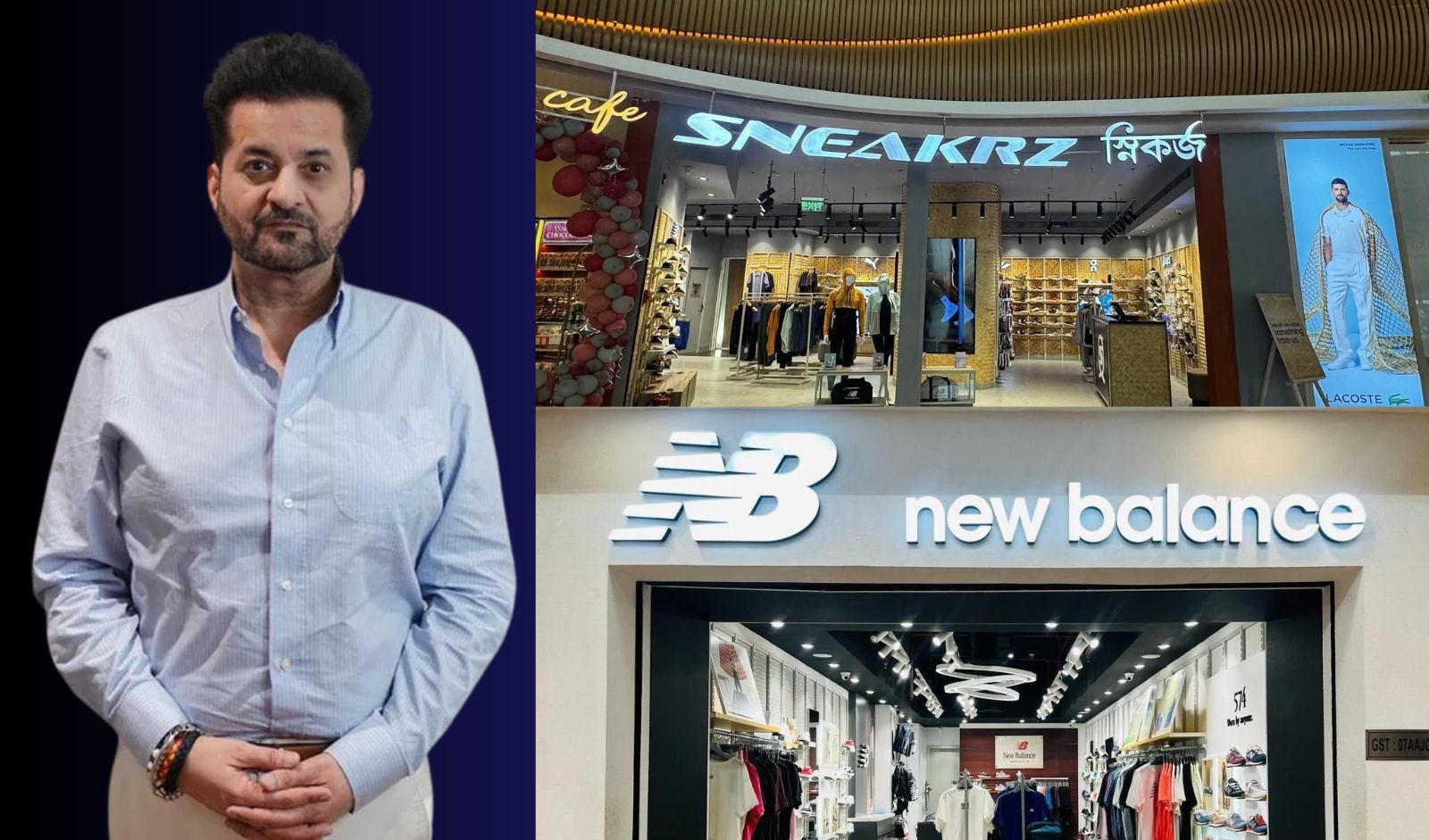
Brandman Retail is stepping up its expansion in India’s premium sportswear, footwear and lifestyle market, targeting 50 stores across its retail formats by March 2027, as it looks to capitalise on rising consumer interest in international sports and lifestyle brands.
The company reported revenue of ₹162.41 crore in FY26, up from ₹135.22 crore in FY25, marking a growth of around 20% year on year. The performance was supported by the strengthening of its brand portfolio and expansion through exclusive brand outlets and its Sneakrz retail format.
For FY27, Brandman Retail is prioritising retail network expansion, deeper brand partnerships and e-commerce growth. While the company has not yet finalised a specific revenue target for the year, it plans to enter new markets while continuing to strengthen its presence across existing locations.
The company currently operates a portfolio spanning performance footwear, sportswear, outdoor and lifestyle categories, with brands including New Balance, ANTA, Saucony, Timberland, Rockport and Wilson.
“High-growth categories such as performance footwear, sportswear, outdoor and lifestyle fashion make up the larger part of our portfolio. The growing interest in fitness and sports in India is creating opportunities across our brand portfolio,” said Arun Malhotra, Founder & Managing Director, Brandman Retail.
Tier-2 and Tier-3 cities in focus
Beyond metropolitan markets, Brandman Retail sees significant potential in Tier-2 and Tier-3 cities, where consumer interest in international sportswear and lifestyle brands is increasing.
The company plans to evaluate individual markets based on their potential and deploy retail formats suited to local demand. Alongside physical stores, digital platforms and e-commerce will play a key role in expanding the company’s reach while maintaining brand positioning and customer experience.
“Physical outlets and digital platforms can both be used to increase our reach, and we will make sure the brand experience and positioning are maintained effectively,” Malhotra said.
Global brand portfolio to drive growth
Brandman Retail is also evaluating opportunities to add more international brands and complementary product categories to its portfolio. While footwear and fashion remain its core focus, the company is looking for global partnerships that can deliver long-term relevance in the Indian market.
“We continue to evaluate opportunities to expand our portfolio through partnerships with global brands that hold tremendous potential for the Indian market in the long run,” Malhotra said.
Its existing partnerships with New Balance, ANTA, Wilson and Saucony remain central to the strategy, while the company is also building Rockport’s presence in India through licensing and brand development.
The company is also exploring collaborations with athletes and sports communities as well as e-commerce platforms to expand consumer engagement and visibility.
“Our focus remains on strengthening existing partnerships with New Balance, ANTA, Wilson and Saucony, among other brands, while exploring collaborations with athletes, sports communities and e-commerce platforms,” Malhotra said.
Omnichannel and technology investments
The company's expansion strategy also includes strengthening its omnichannel capabilities. Investments are being directed towards new stores, retail infrastructure, inventory management, e-commerce and technology, with the objective of connecting physical and digital channels more effectively.
Brandman Retail said the overall investment quantum and allocation across these areas are currently being finalised for disclosure.
The company is also looking at India-led sourcing and manufacturing as a potential long-term opportunity. It believes the evolution of India's manufacturing ecosystem and the Make in India initiative could help global sports and lifestyle brands develop more efficient supply chains, improve cost management and bring products to market faster.
“India-led sourcing and manufacturing is attracting growing interest, and the Make in India initiative provides a positive opportunity to strengthen the local operating environment for global sports and lifestyle brands,” Malhotra said.
Building a long-term sports and lifestyle platform
Over the next three to five years, Brandman Retail aims to combine retail expansion with a stronger international brand portfolio and more efficient omnichannel operations.
While established metropolitan markets will remain important, emerging cities are expected to become an increasingly significant part of the company's growth strategy. Technology and data will also be used to improve productivity, inventory management and customer experience.
“Over the next three to five years, we want to grow our retail presence and strengthen our international brand portfolio, while making our omnichannel efforts more efficient,” Malhotra said.
The broader ambition is to position Brandman Retail as a long-term partner for global sports and lifestyle brands entering and expanding in India, while maintaining disciplined expansion, healthy profitability and sustainable value creation.
As India’s beauty market becomes increasingly omnichannel, brands are discovering that building an offline footprint is not simply about opening more stores. The challenge lies in identifying the right markets, managing store-level economics, ensuring product availability and creating an in-store experience that adds value to consumers who are already discovering products online.
For beauty and personal care brand Plum, the shift in consumer behaviour has made offline retail an increasingly important part of its growth strategy. While consumers may discover products digitally, many still turn to physical stores to access products, test them and seek guidance before making a purchase.
“ You can see the change in what people ask for at a beauty counter. A shopper might walk in asking for a particular niacinamide serum because she’s already read about it online. That changes what her local retailer chooses to stock. For Plum, it made sense to follow that demand into the stores she already shops at,” said Shankar Prasad, CEO and Founder, Plum.
Balancing online scale with offline reach
Despite its growing physical presence, Plum remains predominantly an online business. The company currently generates around 70% of its sales online, while offline contributes approximately 30%. According to Prasad, the mix has remained relatively stable as both channels have expanded to serve consumer demand.
Rather than treating offline retail as a replacement for digital channels, Plum is using physical distribution to extend its reach into the stores and markets where consumers already shop.
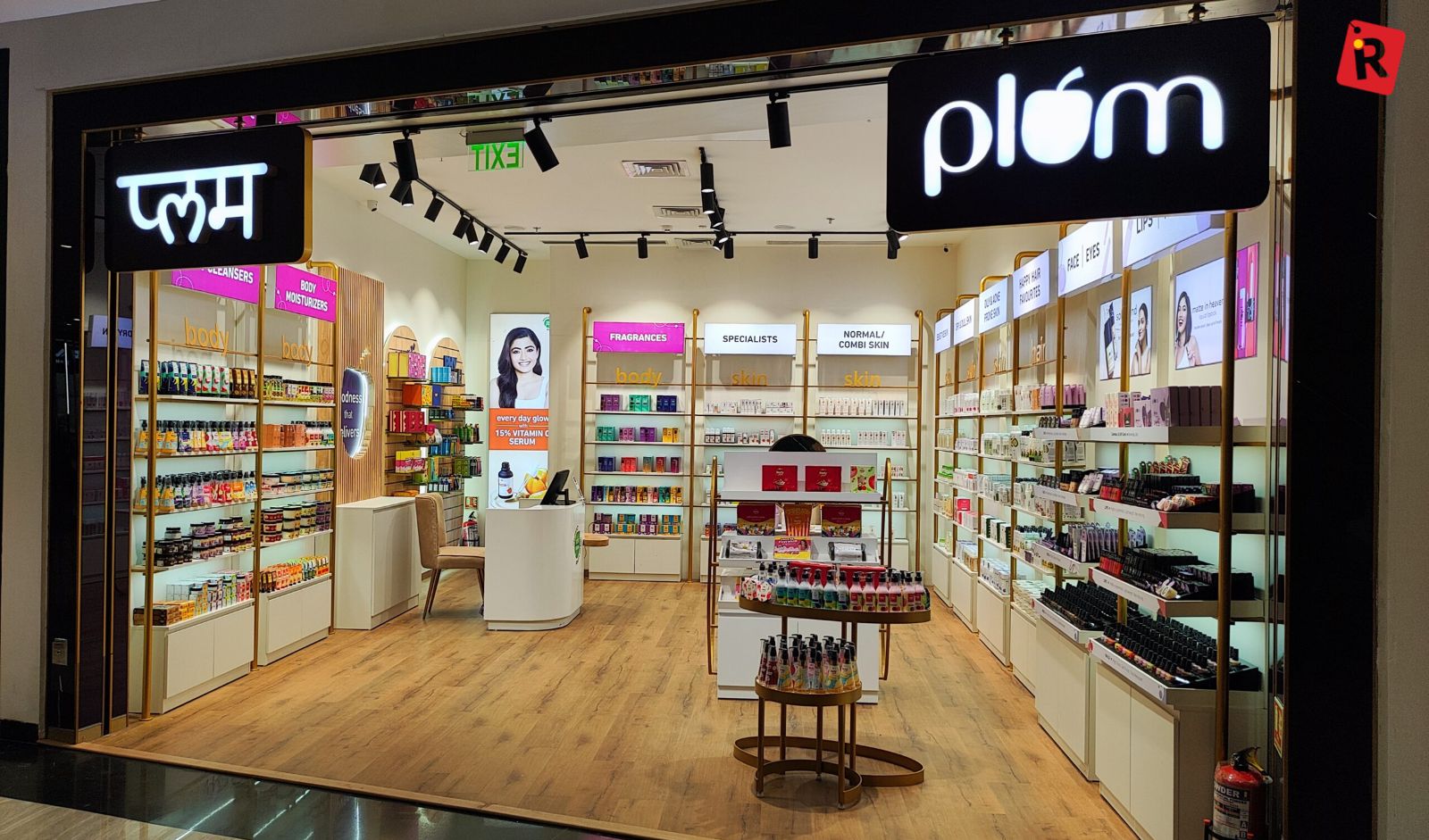
The company currently has close to 50,000 retail touchpoints across India, with general trade accounting for the bulk of its offline presence. It also operates through modern trade and has around a dozen exclusive Plum stores designed to offer consumers a more complete brand experience.
The scale-up, however, is not stopping there.
Plum is targeting more than one lakh general trade outlets over the next 12 months, with expansion planned across geographies. In modern trade, the company intends to remain more selective, prioritising stores that already attract its target beauty and skincare consumers. Exclusive stores will also be added in markets where the brand sees sustained local demand.
Store expansion comes with a profitability test
For retailers, expanding the physical footprint can quickly increase fixed costs through rentals, fit-outs, manpower and inventory. Plum’s approach highlights the importance of ensuring that individual stores can justify the investment.
“A compact store typically takes an investment in the tens of lakhs, depending on the location and fit-out. When we evaluate a site, we look for payback in less than a year. That keeps us disciplined about the rent and upfront investment the store’s sales can support,” Prasad said.
The focus on a sub-one-year payback period illustrates one of the central challenges of offline expansion: store growth has to be supported by store-level economics.
For retailers, a location that generates footfall is not necessarily a successful store if its rental and operating costs absorb too much of its revenue. This makes site selection, local demand assessment and the ability to achieve sufficient sales productivity critical as brands move beyond their initial cluster of successful stores.
Physical stores have to offer something digital cannot
For beauty brands in particular, the offline channel can also serve a role that goes beyond distribution.
Product discovery may increasingly happen online, but physical stores allow consumers to test textures, understand product application and receive personalised recommendations. Plum sees this as an important part of converting shoppers who may already have product awareness but remain uncertain about making a purchase.
Prasad pointed to Plum’s Black Rice & Nia-TXA Jelly Serum as an example. A consumer may understand the ingredients from online content but still be unsure about the product’s texture or how it fits into her existing routine.
“A tester answers that in seconds. An advisor can then help her work out where it fits alongside the products she already uses at night. For a first-time buyer, that conversation can be what gives her the confidence to take it home,” he said.
This creates another consideration for retailers expanding offline: stores need to provide a reason for consumers to visit rather than simply replicate the product catalogue available online.
Tier II and III markets emerge as a major growth engine
Geography is another critical component of Plum’s offline strategy. While metros remain important, smaller cities are increasingly contributing to the brand’s physical retail performance.
Tier II and III cities together accounted for roughly seven in ten rupees of Plum’s general trade sales in Q2 FY26, highlighting the importance of smaller markets to its offline strategy.
Among individual markets, Lucknow stood out for the size of its business, while Kochi recorded consistent growth across several quarters. Imphal, meanwhile, saw a sharp pickup during the second quarter.
The performance reinforces the opportunity beyond India’s largest urban centres, but it also underlines why retailers cannot simply replicate a metro expansion playbook across every market. Local consumer preferences, retail ecosystems, store formats and demand intensity can vary significantly from one city to another.
For Plum, the strategy therefore combines broad distribution through general trade with a more selective approach to modern trade and exclusive stores.
The next challenge: scaling without diluting economics
Plum’s expansion illustrates a broader challenge facing India’s consumer brands as they move deeper into offline retail. Distribution can be scaled relatively quickly, but profitable physical retail requires a more granular understanding of each market and each store.
The question for brands is increasingly not how many stores they can open, but how effectively each new physical touchpoint can contribute to growth.
For Plum, that means combining its digital strength with a significantly wider general trade network, selective modern trade expansion and exclusive stores where consumer demand can support the economics.
As the company targets more than one lakh general trade outlets, the next phase of its offline journey will test whether it can maintain that balance between reach, consumer experience and profitability at scale.
-
Kent RO Systems has been diversifying from water purification to air purification, kitchen appliances, energy-saving fans and most recently clean energy solutions.
-
The brand recently opened a new store in Gurugram, strengthening its presence in a market it considers relevant for its craft-led offerings.
-
What began as a fast-fashion business subsequently evolved into a technology-driven, circular fashion model focused on demand-led production. The shift has shaped VIRGIO's current operating approach, which combines real-time consumer insights, smaller pro
-
Festive beauty demand is shifting towards skin preparation, premium products, curated kits and omnichannel shopping, while lip products, eye palettes and setting sprays continue driving seasonal sales across key markets.






Copyright © 2009 - 2026 Franchiseindia.com Ltd