






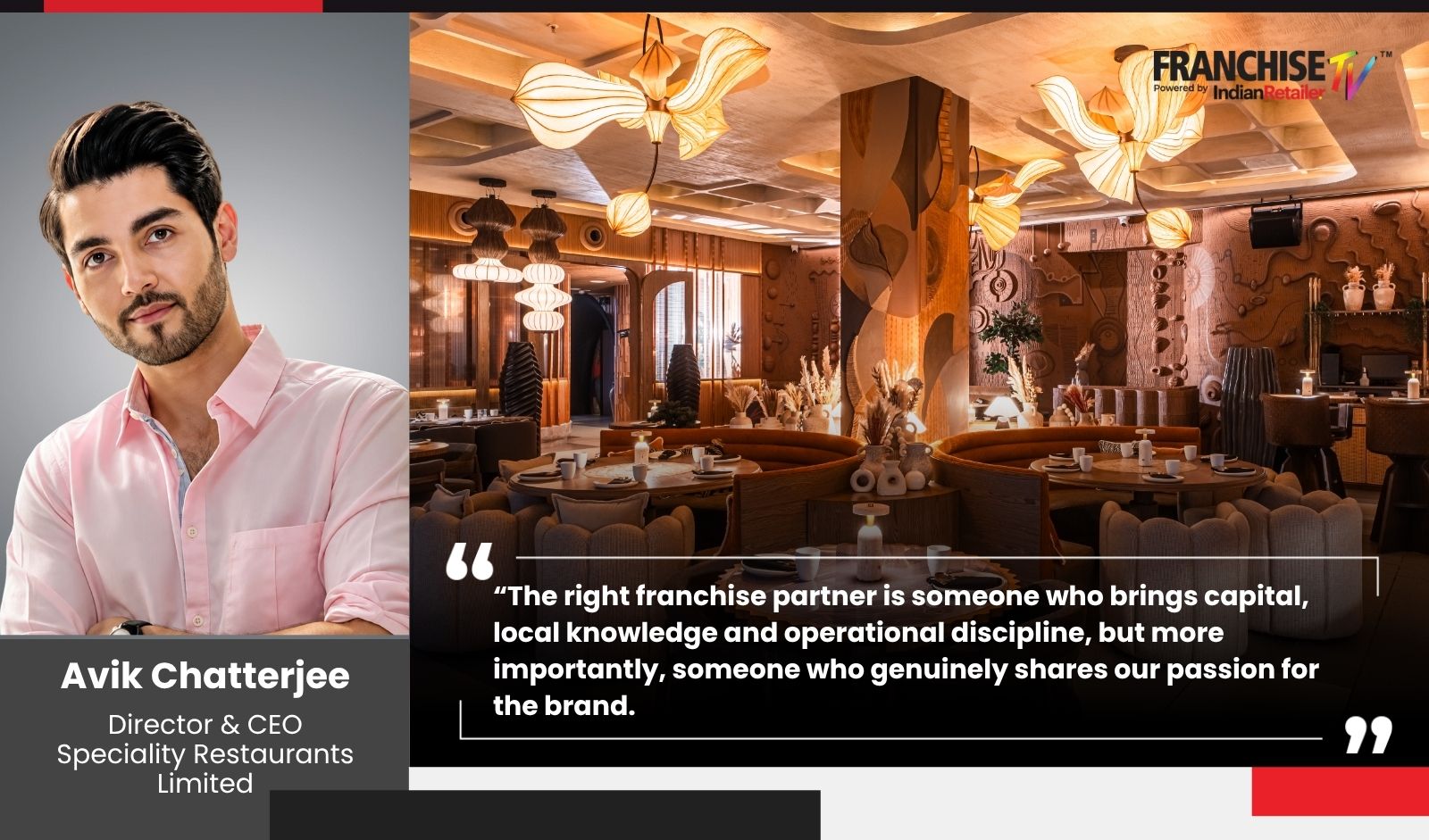
Speciality Restaurants Limited is focusing on measured expansion, stronger unit economics and a mix of company-operated and franchise-led outlets as it enters its next phase of growth. The restaurant company currently operates 118 outlets across 20 active brands and formats.
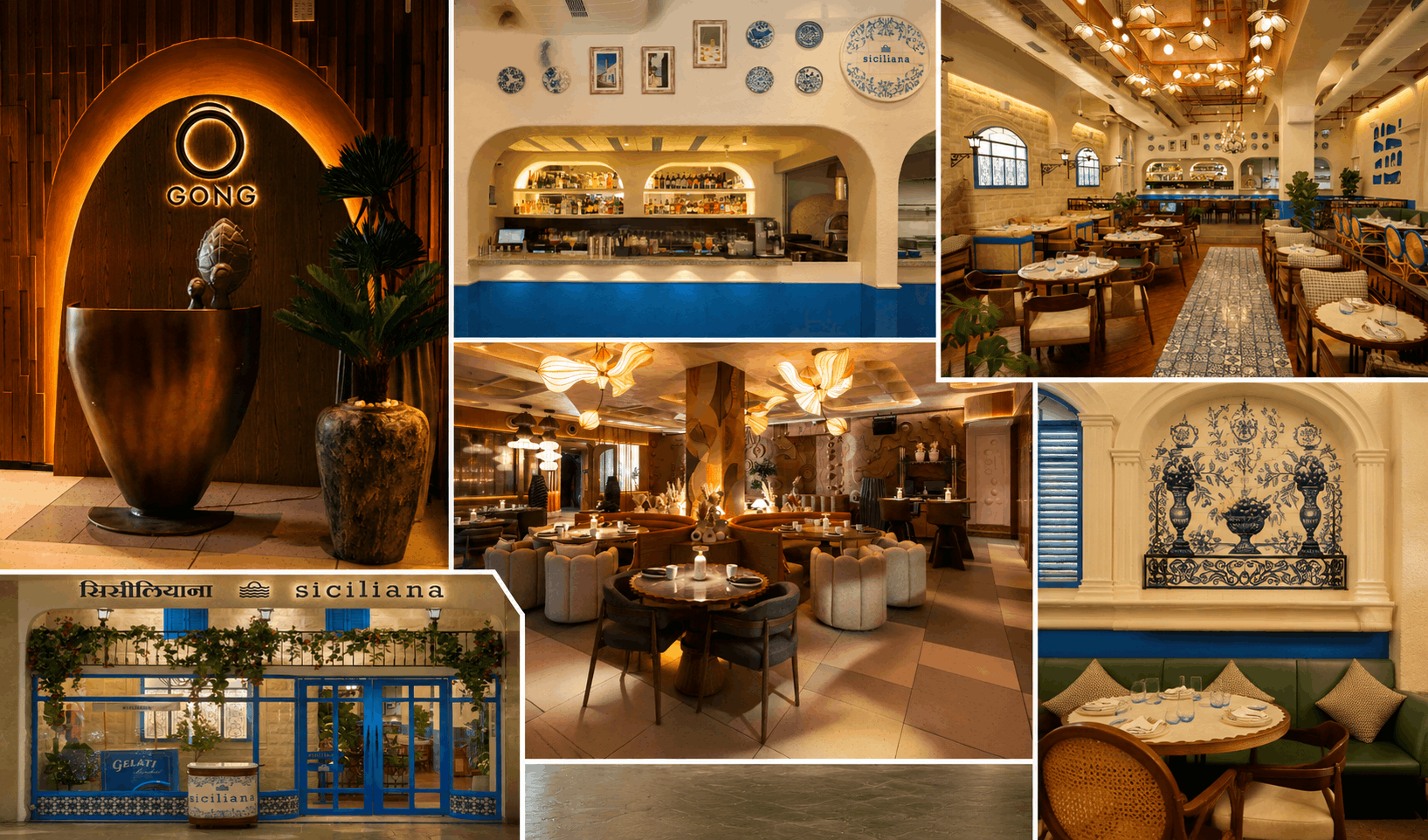
The company’s portfolio includes Mainland China, Asia Kitchen by Mainland China, Oh! Calcutta, Sigree Global Grill, GONG, Café Mezzuna, Siciliana, Episode One and Sweet Bengal, among others.
Building Brands, Not Just Outlets
For Speciality Restaurants, expansion is being guided by the strength and scalability of individual brands rather than simply increasing the number of restaurants.
“Our philosophy has always been simple: build brands, not just restaurants. For us, every brand needs to have a clear identity, a strong consumer proposition and, importantly, the ability to deliver consistently as it grows,” said Avik Chatterjee, Director and CEO, Speciality Restaurants Limited.
The company currently has 110 company-operated outlets and eight franchise-led outlets. According to Chatterjee, the decision between company-owned and franchised formats depends on the brand, its lifecycle and operational complexity.
“For some brands, company-owned outlets make more sense because maintaining direct control over the experience is important. For others, franchising can help us expand faster and enter markets where a strong local partner can add value,” he said.
Franchising With Local Partnerships
Speciality Restaurants sees franchising as a way to enter markets where local knowledge and operating capabilities can support expansion. However, the company is taking a controlled approach to franchise-led growth.
“The right franchise partner is someone who brings capital, local knowledge and operational discipline, but more importantly, someone who genuinely shares our passion for the brand,” Chatterjee said.
The company places emphasis on standard operating procedures, training and regular audits to maintain consistency across franchise locations. This becomes particularly important as restaurant brands expand across different cities and consumer markets.
Investment and Return
Its franchise models usually demand an investment of Rs 75 lakh to Rs 1.25 crore depending on the brand and the city. The payback period is indicative of four to five years depending on the location, business area and competitive conditions.
Specialty Restaurants does not have a one-size-fits-all model of expansion. It studies the commercial viability of each market before deciding on a format.
Expansion in Cities
The company currently operates out of nine cities in seven states, with a stronger presence in Eastern and Western India. It is now looking at opportunities in Northern markets while continuing to assess individual cities based on their potential.
Between August and November 2026, the company has scheduled nine openings across Mumbai, Pune and Delhi. Four additional restaurants are planned across Bengaluru and Kolkata.
The broader ambition is to maintain a pace of eight to 10 restaurant openings annually. With newer formats such as WALTERS in the QSR segment and Sweet Bengal Confectioneries, the company sees potential to significantly increase its overall network.
Location Drives Format Decisions
Real estate and location strategy remain important considerations for both company-owned and franchise-led expansion.
“Location is critical to the success of a restaurant. We look at several factors before entering a market, including the catchment, demographics, visibility, accessibility and rental economics,” Chatterjee said.
The company also sees potential in Tier II and emerging markets, although it believes formats need to be adapted to local demand. Factors such as consumer profile, market size and operating economics will determine whether a particular brand can be successfully introduced.
Focus on Unit Economics
As the restaurant industry becomes increasingly competitive, Speciality Restaurants is placing greater emphasis on repeatable unit economics before scaling a format.
“We look at a combination of metrics rather than any one number. Same-store growth, revenue per outlet, margins, store-level EBITDA, occupancy and labour costs, customer frequency and payback period are all important,” Chatterjee said.
For the company, scalability means being able to replicate a successful restaurant model without weakening its economics or customer experience.
Testing New Concepts
Speciality Restaurants is also developing newer concepts, including Siciliana and WALTERS. The company says it follows a test-and-learn approach before committing significant capital to a new format.
“We prefer to test, learn and then scale, rather than commit significant capital upfront. This allows us to understand what is working, make changes where required and then take the concept forward with greater confidence,” Chatterjee said.
The approach is intended to reduce expansion risks while helping the company understand consumer response, pricing, menus and operating requirements.
Changing Consumer Expectations
Younger consumers are increasingly looking for experiences alongside food, prompting restaurant companies to rethink formats, menus and engagement.
“Consumers today are looking for more than just a meal. They want experience, discovery and value, and that is changing the way they choose where to eat,” Chatterjee said.
Speciality Restaurants is responding through changes in menus, formats, ambience and digital engagement while retaining the distinct identity of each brand.
Quality Over Outlet Growth
Looking ahead, Chatterjee believes organised restaurant businesses will benefit from rising incomes, urbanisation and a young consumer base. However, high real estate costs, manpower expenses, inflation and competition remain challenges.
“I believe the businesses that will do well are those that focus on quality growth rather than simply adding outlets. Growth has to be supported by good unit economics, a strong customer proposition and the ability to consistently deliver the experience that the brand promises,” he said.
For Speciality Restaurants, the longer-term objective is therefore not only to increase its restaurant count but to build differentiated brands that can be replicated across markets while maintaining operational discipline.
“Scale is important, but it is not the only measure of success. I would like Speciality Restaurants to be a company that is respected for the brands it has built, the experiences it creates for its guests and the way it operates its business,” Chatterjee said.
For Further Franchise Info Contact




Copyright © 2009 - 2026 Franchise Tv.